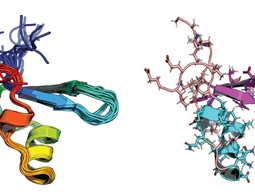
Atomic techniques reveal the evolution of a bacterial protein
Researchers show how bacteria have adapted a sensing mechanism that allows them to live in different environments.
Researchers show how bacteria have adapted a sensing mechanism that allows them to live in different environments.

A mutational change of an enzyme’s dynamics increases its activity on a chromatin histone, ultimately causing a common lung cancer.

A low-cost diagnostic tool can detect a range of viruses without the need for expensive materials or facilities.
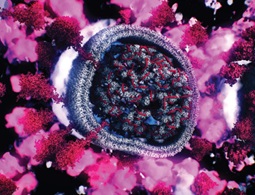
An interactive platform helps users visualize where SARS-CoV-2 mutations start, how wide they spread and how infectious they are.
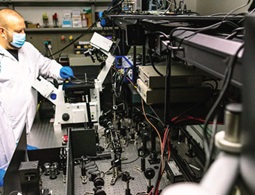
Tiny light-emitting probes give researchers a better option for noninvasive imaging of living tissue.

A database of newly generated stem cell lines could provide the key to understanding the genetic factors that drive Klinefelter syndrome and related diseases.

Stem cell trafficking to the bone marrow is improved by an enzyme manufactured in silkworms and yeast.

A decades-old technique for probing protein motions proves more accurate than current practices.

Custom-fabricated lenses make it easy to attach high-tech microscopes directly to cell incubators.

A nutritious millet crop grown mainly in West Africa could be genetically improved for large-scale agriculture in Saudi Arabia.

A method that lights up tags attached to selected proteins can help to purify the proteins from a mixed protein pool.

A sequencing approach can home in on a rare mutation within a large number of cells, revealing implications for CRISPR genome editing and early cancer detection.