

KAUST establishes Quantum Foundry for national quantum hardware development in Saudi Arabia
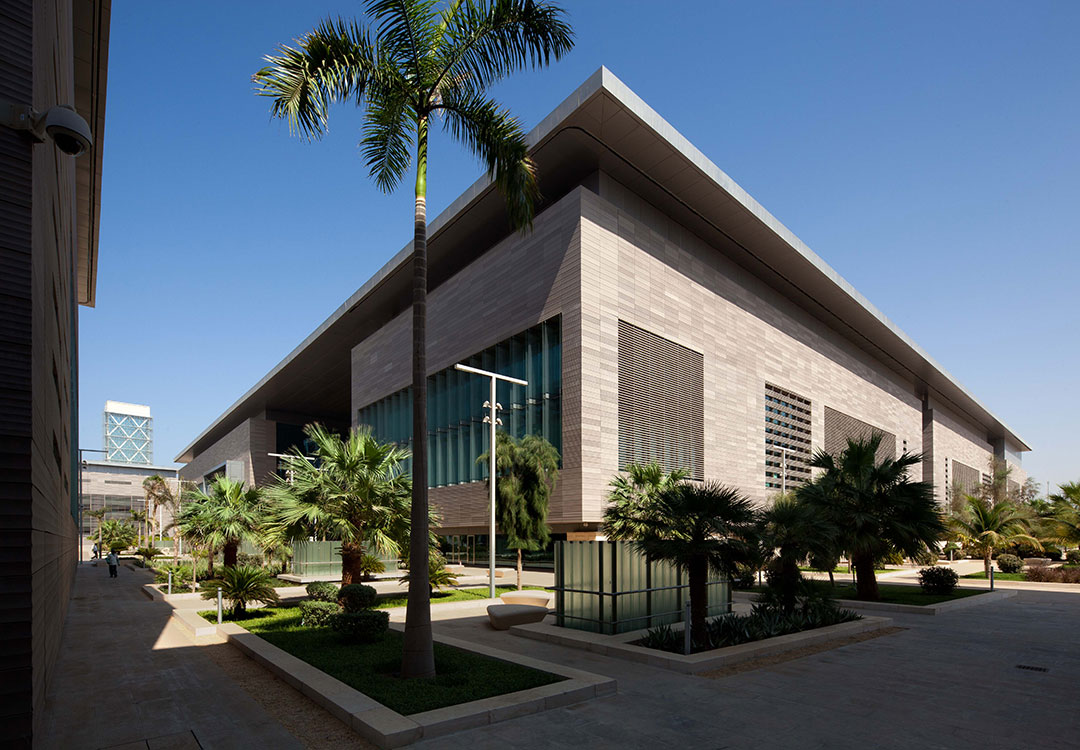
King Abdullah University of Science and Technology (KAUST) has established the KAUST Quantum Foundry, a program designed to strengthen Saudi Arabia’s ability to fabricate commercial and reproducible quantum hardware. By enabling structured, shared access to KAUST quantum cleanrooms, the Foundry supports device prototyping and process development, allowing industry and academic partners to collaborate on emerging quantum technologies.
Traditionally, quantum devices are typically fabricated through bespoke, laboratory-specific processes that are difficult to reproduce or scale beyond individual research groups.
Building on KAUST’s existing cleanroom infrastructure and Core Labs expertise, the Quantum Foundry introduces a quantum-specific operating model that distinguishes it from general nanofabrication facilities. This model focuses on process standardization and the development of Process Design Kits (PDKs), tools that enable researchers to design and fabricate devices using consistent, well-defined processes.
The KAUST Quantum Foundry is being launched as a phased initiative, with capabilities expanding over time as processes, expertise, and infrastructure are established. As it matures, the Foundry is intended to support collaboration across superconducting, photonic, and hybrid quantum platforms, while creating clear pathways for technology transfer and early-stage commercialization through KAUST’s innovation ecosystem, including the National Transformation Institute (NTI).
By establishing the Quantum Foundry, KAUST reinforces its role as a national hub for advanced research infrastructure, supporting Saudi Arabia’s long-term innovation priorities and laying the groundwork for future applications of quantum technologies across science, industry, and emerging technology sectors.
The Quantum Foundry initiative provides a shared foundation for applying quantum technologies, which are revolutionizing materials discovery and enabling ultra-sensitive sensors, to KAUST's strategic missions, advancing energy, health, food, and water security. Working alongside artificial intelligence, these quantum computing, simulation, and device capabilities address complex scientific challenges beyond the reach of classical approaches, translating strategic priorities into long-term research impact.