

Professor Raquel Peixoto recognized as one of 50 people changing the world
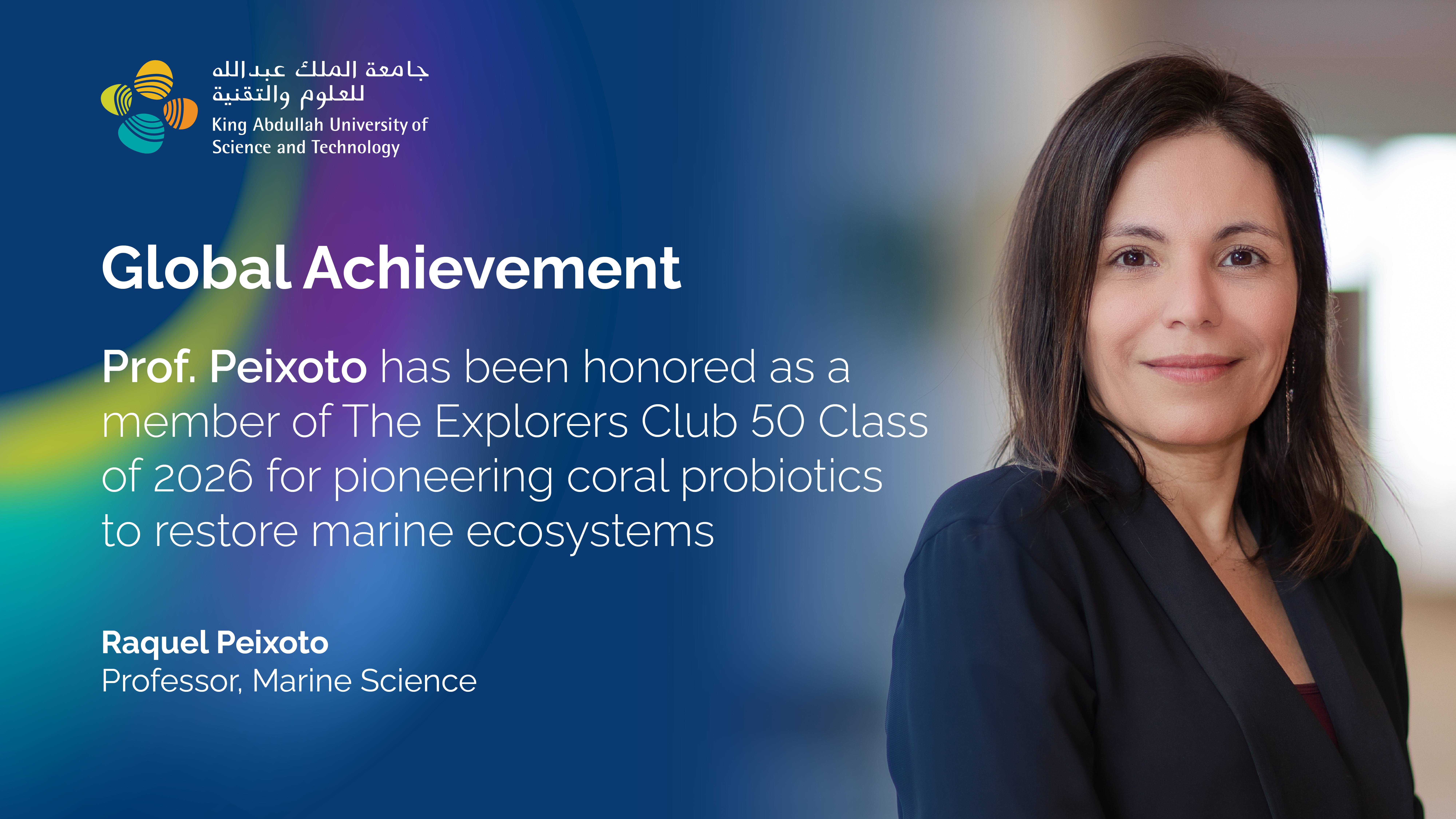
Professor Raquel Peixoto from King Abdullah University of Science and Technology (KAUST) has been recognized as one of “50 people changing the world” for her groundbreaking work pioneering coral probiotics.
Her innovative, nature-based approach harnesses beneficial microbes to protect and restore coral reef ecosystems under climate stress.
The recognition comes from The Explorers Club, a prestigious multidisciplinary professional society dedicated to advancing field research, scientific exploration, and conservation. Each year, the club honors 50 extraordinary individuals whose work is advancing science, exploration, and solutions to global challenges, often beyond the public spotlight.
Known as the Explorers Club 50 (EC50), the program celebrates emerging and established leaders who are shaping the future of the planet, life upon it, and humanity’s relationship with the natural world. Honorees are selected for their creativity, impact, and commitment to addressing global challenges through exploration and discovery.
A professor of marine science and chair of KAUST’s Marine Science Program, Peixoto is internationally recognized as a pioneer in the field of coral probiotics. She is also spearheading global initiatives to promote microbial conservation and microbial-based products.
Her research has demonstrated for the first time that probiotics can mitigate coral bleaching and prevent coral mortality, laying the scientific foundation for scalable, nature-based solutions to climate-driven reef degradation.
“I am deeply honored to be recognized among this remarkable group of people. That was a wonderful surprise.” Peixoto said. “This recognition reflects the power of science translated into real-world solutions - where innovation, collaboration, and nature itself can work together to build resilience in a rapidly changing world.”
From exploration to impact
Through the EC50 program, The Explorers Club has redefined modern exploration, highlighting diversity not only in background and geography but also in approaches to problem-solving, field science, and visions for the future. Since its launch, EC50 has recognized honorees from 55 countries, selected from several thousands of nominees worldwide.
Reflecting this ethos, Peixoto’s work bridges fundamental microbial ecology with applied innovation. Through initiatives such as the Coral Probiotics Village, the development of scalable probiotic delivery systems, and landmark field trials, her research has set new benchmarks for translating science into action.
These efforts have influenced global conservation strategies and contributed to international policy discussions on climate resilience and biodiversity protection.
Global science and policy leadership
In addition to her research leadership at KAUST, Peixoto serves as president of the International Society for Microbial Ecology and co-chair of the Conservation Committee at the International Coral Reef Society, where she leads climate delegations to United Nations climate conferences. Her work continues to shape global dialogue at the intersection of science, policy, and environmental stewardship.
Peixoto joins a distinguished cohort of EC50 honorees whose work is redefining exploration and inspiring new ways of thinking about humanity’s role on Earth. The Explorers Club 50 Class of 2026 highlights changemakers who are creating new conversations, alliances, and possibilities for a more sustainable future.