

KAUST advances global dialogue on brain energy metabolism and neuroscience research
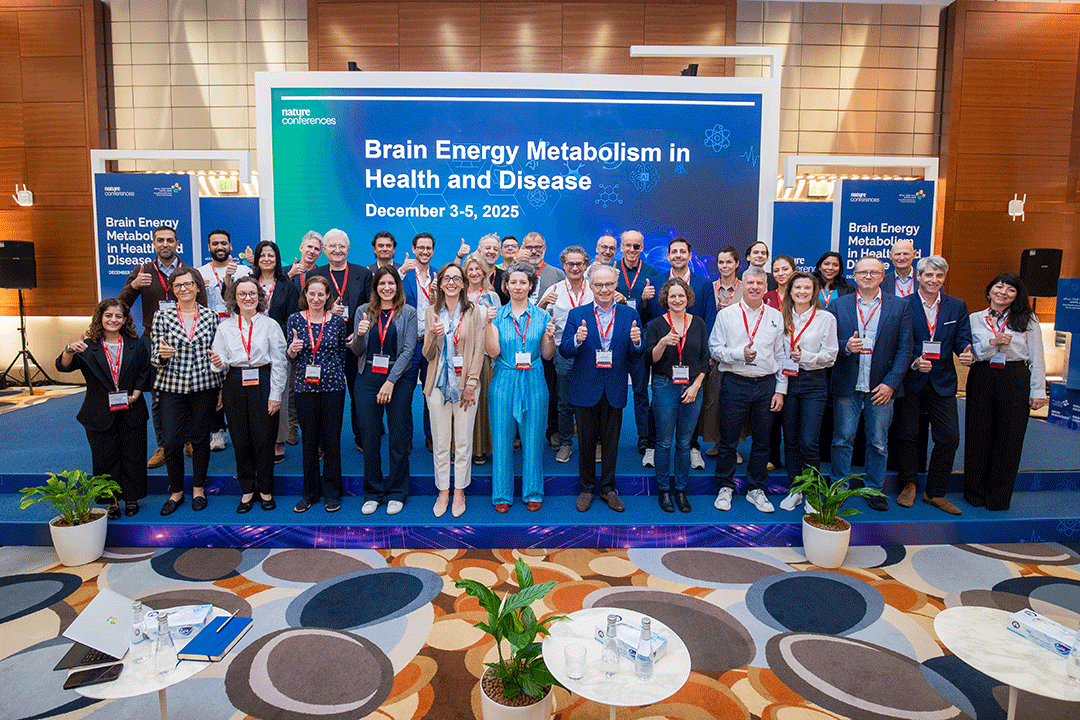
Researchers and speakers from KAUST and leading global institutions gather on campus for the Nature Conferences: Brain Energy Metabolism in Health and Disease.
One of the most complex objects in the known universe, the human brain weighs only about 1.3 kilograms yet contains billions of neurons that drive thought and coordinate the body’s responses, shaping how people engage with the world.
Researchers at King Abdullah University of Science and Technology (KAUST) are collaborating with global scientists to unravel this complexity and unlock new frontiers in neuroscience that can support better cognition and, ultimately, better health in line with the wellbeing goals of Saudi Arabia’s Vision 2030.
From December 3 to 5, KAUST hosted Nature Conferences: Brain Energy Metabolism in Health and Disease, convening leading global experts who shared insights on how the brain powers thought, behavior, and resilience. Nature, an internationally renowned publisher of high-impact scientific research, organized the event.
“By hosting this conference at KAUST, we underscore that brain health is the essential infrastructure of the emerging cognitive economy, and that KAUST’s interdisciplinary science, working with partners across the Kingdom and the world, will help safeguard brain energy and resilience, unlocking the creativity and innovation humanity needs for the future,” said President Sir Edward Byrne AC.
Brain conference gives a lot to think about
The Nature Conference explored how the brain uses energy and how those processes affect brain function and disease. More than 20 experts from KAUST and international institutions discussed advances in understanding metabolic interactions among neurons, glia (the brain’s support cells), and other brain cell types, as well as the brain’s role in whole-body energy regulation.
Sir Edward, a neuroscientist and neurologist, reflected on how his early work on mitochondrial dysfunction — when the cell’s energy producers stop working properly — shows why brain energy metabolism is key to understanding aging and neurodegenerative disease.
“This makes research in this field crucial worldwide. It’s important that Saudi Arabia plays its role in this major area of health and medicine.”
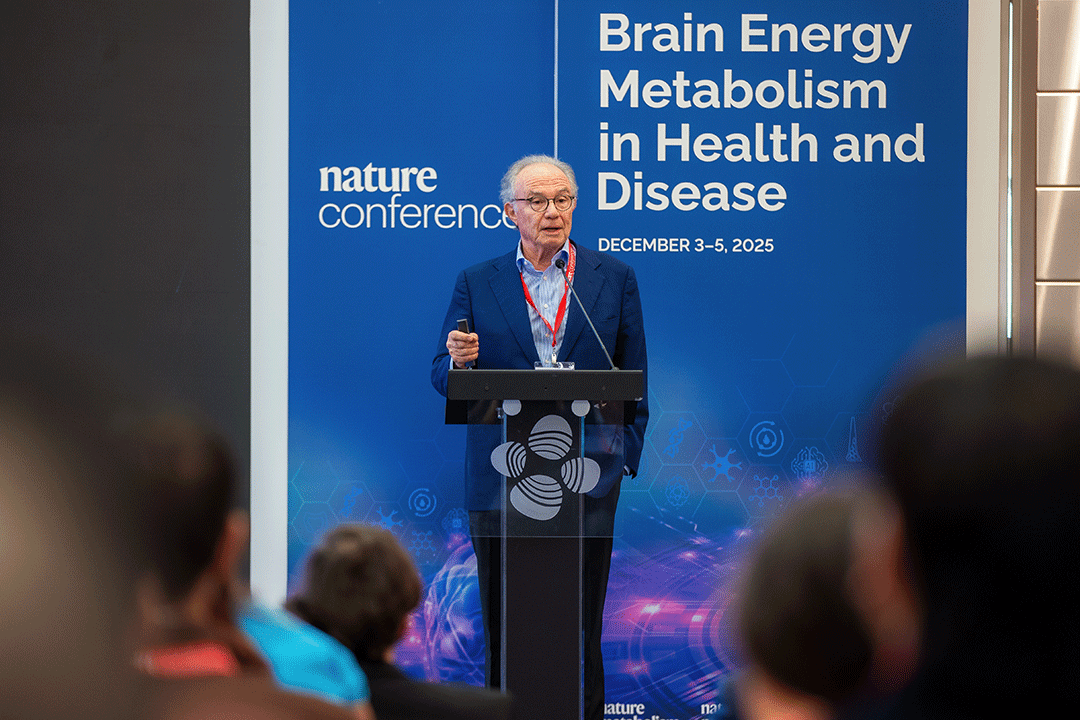
Fellow neuroscientist, KAUST Professor Pierre Magistretti, vice president for research, detailed his research showing how lactate produced by glia, the brain’s support cells, fuels learning, protects neurons, and opens new possibilities for treating disease, such as Alzheimer’s. In this field, he emphasized the essential role of global cooperation — a core KAUST value and a key rationale for hosting the conference.
“KAUST is definitely on the map regarding brain energy metabolism research, and we’re really very privileged to have such good collaborators,” he said.
Collaboration is key to neuroscience
By hosting the three-day event, KAUST reinforced its mission-driven role as a convenor of leading scientists and demonstrated a strong commitment to multidisciplinary collaboration across neuroscience, metabolism, engineering, AI, and systems biology. The conference also showcased KAUST’s growing scientific leadership in brain research.
“Based on the versatility of their function, we think that these could be involved both in normal cortical processing and in how their role changes in disorders.”
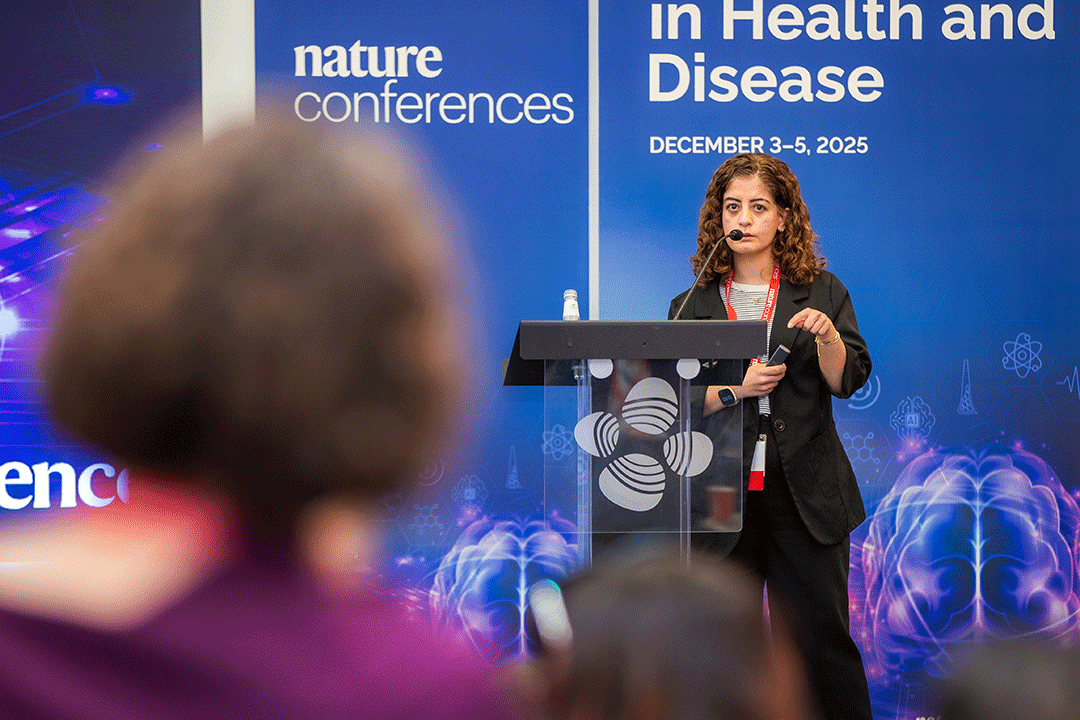
In her presentation, Ibrahim described how the brain blends visual information with internal states such as arousal.
Multiple events increase impact
On December 1, Ibrahim served as conference chair for another major neuroscience-focused event at the University — the KAUST Research Conference: Neuroscience Symposium 2025. Through such conferences, she noted, KAUST is building a growing neuroscience community committed to addressing critical challenges in the field.
“Understanding brain function with respect to normal functioning as well as pathological conditions is highly relevant to global health priorities as well as to the priorities of the Kingdom,” Ibrahim said. “Trying to understand brain function from a fundamental point of view — how it develops and functions — and then linking metabolic deficits to those fundamental processes is actually quite relevant.”
She added: “KAUST is figuring out ways in which we can come together, leveraging our expertise and interests, to actually solve challenges.”