

KAUST innovators named to MIT Technology Review Arabia’s Innovators Under 35 MENA list
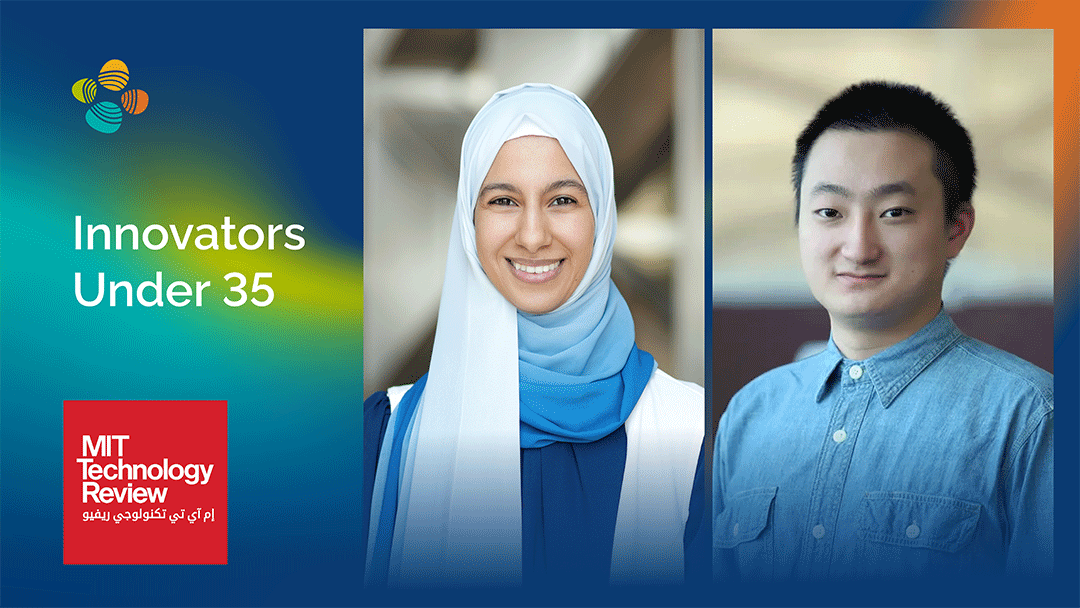
MIT Technology Review Arabia’s selection of a King Abdullah University of Science and Technology (KAUST) postdoctoral researcher and a Ph.D. candidate for its annual Innovators Under 35 MENA Award reflects KAUST’s role in attracting international talent and developing world-leading research and innovation within Saudi Arabia.
Whether focused on buildings or airspace, both innovators are designing intelligent infrastructure that can operate reliably and at scale in future cities. Only 20 innovators across the region were selected for the Innovators Under 35 MENA Award, two of whom were from KAUST. This recognition highlights the University’s mission-driven contribution to Saudi Vision 2030 and the Kingdom’s goal of a globally competitive, knowledge-based economy.
“Their achievements speak to the environment we have built here at KAUST,” said Professor Basem Shihada, computer science, the principal investigator for both KAUST projects. “The space, support, and mentorship our postdoctoral researchers and graduate students receive enable them to turn ambitious ideas into impactful solutions for Saudi Arabia and society.”
Yuxiang Liu
A Ph.D. candidate in electrical and computer engineering, 30-year-old Yuxiang Liu, from China, realized Sun-Fi — a spectrum-free optical wireless communication network designed for smart cities and sensor systems.
Working under the supervision of Shihada, Liu developed an integrated hardware-and-software system that transmits data using technology embedded in window glass, with optical sensors retrieving information from modulated natural sunlight. The system requires minimal power and no additional spectrum beyond the Sun.
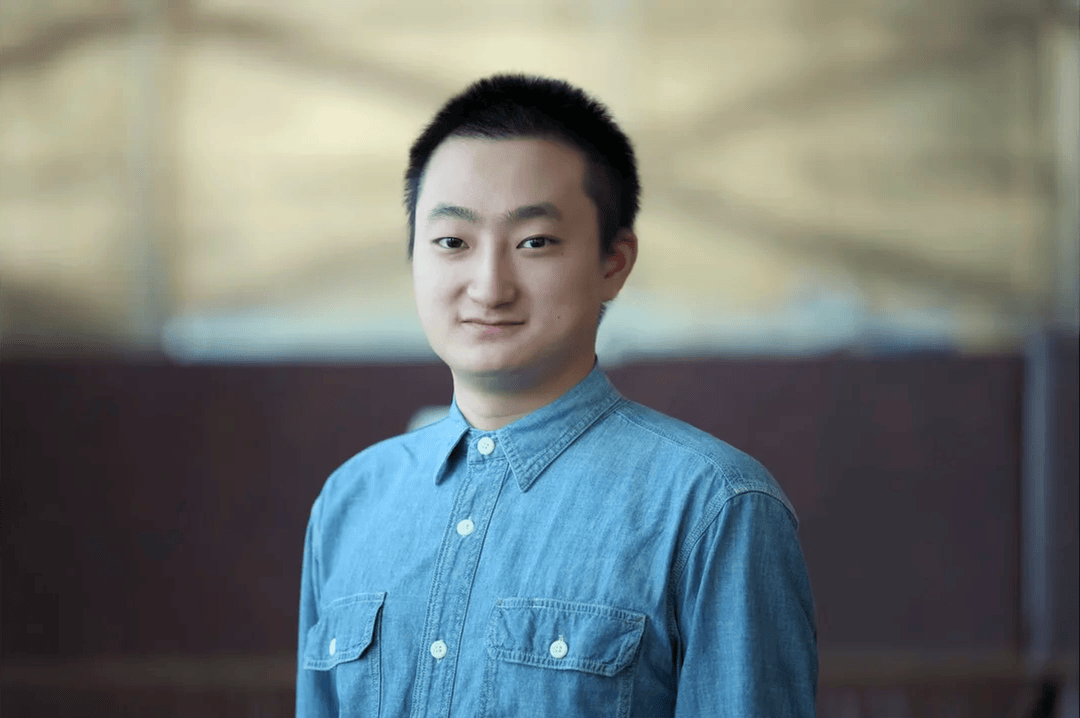
Sun-Fi supports multi-user communication in smart buildings, enabling secure, low-power connectivity for a wide range of sensors. Developed at KAUST, this innovation transforms sunlight into a functional communication system.
Balsam Alkouz
Dr. Balsam Alkouz, 30, developed a system during her Ph.D. at the University of Sydney that enables multiple small drones to work together to deliver supplies more reliably than any single drone operating alone. Now a KAUST Global Postdoctoral Fellow in the Computer, Electrical and Mathematical Science and Engineering Division, she is extending this work at KAUST, with a focus on drone swarming for reliable connectivity and networking services.
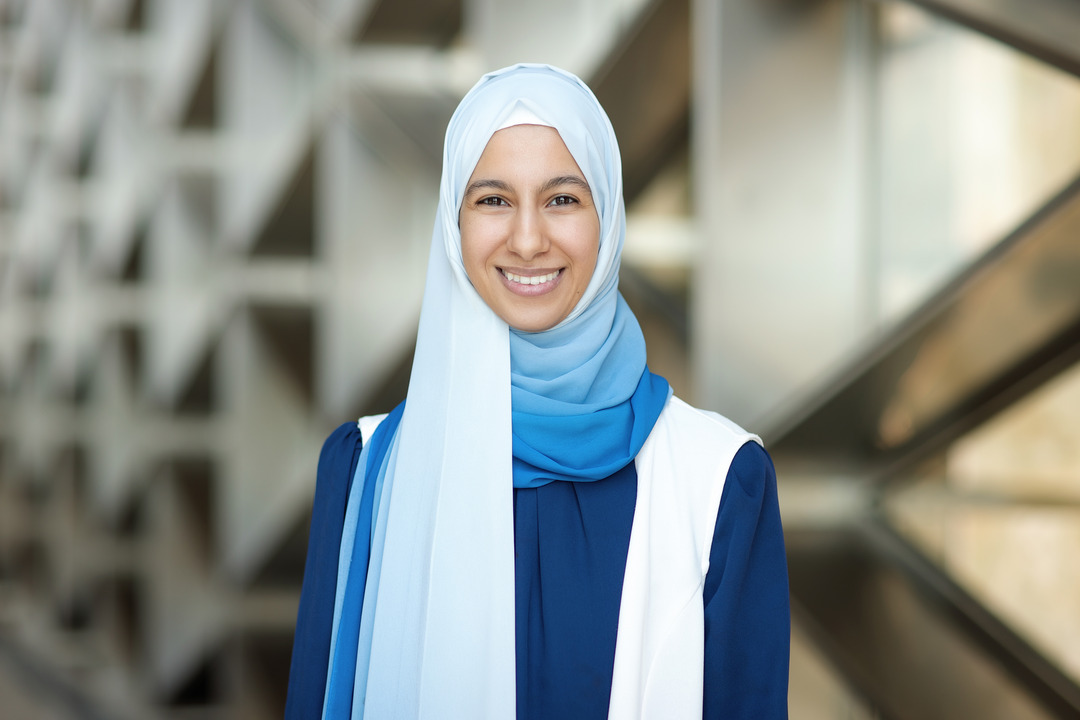
Also working under Shihada’s supervision, Alkouz drew inspiration from natural systems such as flocks of birds. Her approach allows drone swarms to operate within an intelligent framework that coordinates networking, flight formations, and task distribution to maximize efficiency and resilience.
One key application of Alkouz’s system is the delivery of urgent medical supplies or the rapid deployment of communications in disaster zones, positioning it as a reliable tool for smart cities and crisis response.