

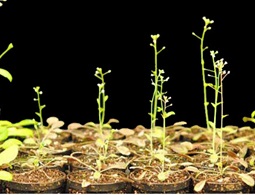
Herbicide resistance: shedding light on the shikimate pathway
Resistance to a popular herbicide provides insight into the control of a key biosynthetic pathway.
Resistance to a popular herbicide provides insight into the control of a key biosynthetic pathway.
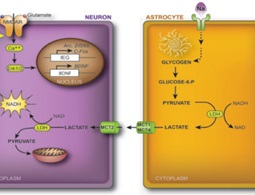
Lactate plays an unexpected role in brain function.

An enzyme involved in maintaining genome fidelity goes through seven steps to recognize its DNA substrates.
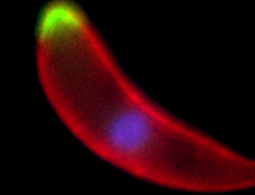
Enzymes crucial to parasite growth offer clues in fight against malaria.
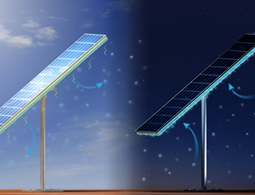
A moisture-absorbing cooling composite enhances solar panel efficiency and durability in hot, humid climates.

Immediate international collaboration is needed to reverse current trends in global land degradation by transforming food systems.


Intensity fluctuations from miniature LEDs provide ultrafast generation rates.
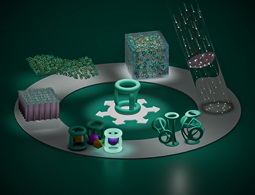
Reactive materials that light up, move or change shape in response to external molecular stimuli are poised to disrupt a raft of technologies.

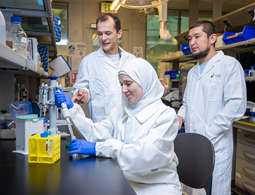


Studying the physics behind this fleeting fluid phenomenon could improve various industrial processes.


A wearable, optoelectronic patch worn on the skin could transform blood pressure monitoring for patients with chronic health conditions.

Proud to share a significant discovery from KAUST's Center of Excellence for Renewable Energy and Storage Technologies (CREST). Our scientists have identified a critical molecular solution to enhance aqueous battery life and performance: the strategic use of sulfate ions.
Published in Science Advances, this research reveals how sulfate ions stabilize water molecules to dramatically reduce parasitic reactions that degrade the battery anodes. The study shows that this simple, cost-effective addition can extend battery lifespan by over 10 times, paving the way for safer and more economical energy storage solutions.
This collaborative effort, bringing together diverse expertise in battery design, electrochemical modeling, and advanced spectroscopy, underscores CREST's commitment to leading renewable energy innovation. This breakthrough has immense potential for large-scale energy storage, supporting the integration of solar power into grids and contributing to the Kingdom's ambitious energy transition.

Weak discontinuities in limestone rock samples introduce noise into acoustic imaging with implications for monitoring lab-scale hydraulic fracturing.
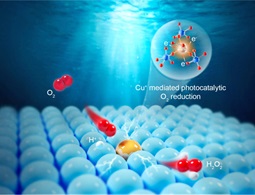
A novel material is shown to be one of the most efficient photocatalysts for solar-driven production of hydrogen peroxide.



A study of global coral reef distributions reveals that reefs exhibit universal spatial properties conforming to mathematical power laws.


Microchip designs can be streamlined by incorporating both high-level concepts and low-level wiring details in the same modelling framework.
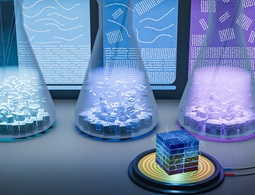
By choosing the best chemical to dissolve polymer components, researchers can squeeze more electricity from leftover heat.