Filling in the gaps for future solar cells
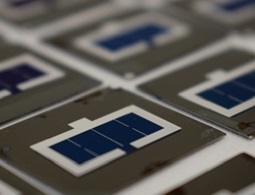
The successful partnering of perovskite and silicon solar cells leads to solar cells with higher efficiencies that can also be mass produced.
The successful partnering of perovskite and silicon solar cells leads to solar cells with higher efficiencies that can also be mass produced.
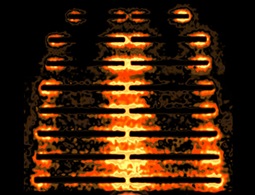
Scientists working in KAUST’s Core Lab facilities are continuing to push the boundaries of what the university’s major instruments can do.
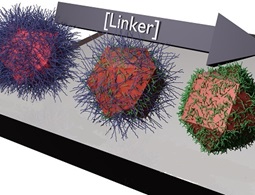
Understanding the optimal process for fabricating coupled nanocrystal solids could help researchers to improve optoelectronics devices.
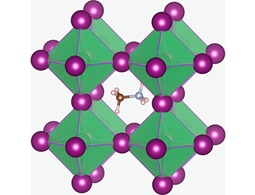
Solar cells based on single-crystal perovskite films hit a new efficiency record of 21.9 percent.

Device controlled solely by voltage paves the way for spintronics with ultralow power consumption.
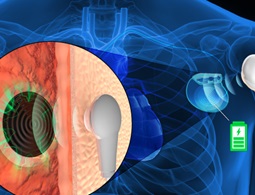
A way to remotely charge batteries through flesh could help develop components for permanent implantable medical devices.
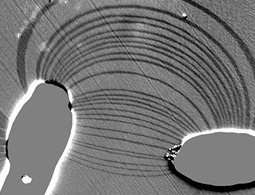
The flow of an electrical current can be imaged directly using magnetic bubbles.
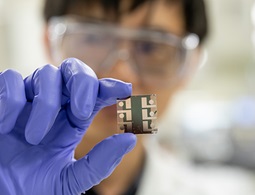
Unconventional perovskites with an inverted structure see a leap in efficiency and longevity with an amine-based additive.
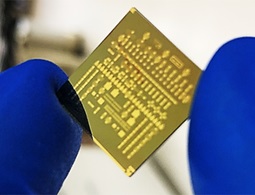
A simple, cost-effective technique uses solution-based printing to make better ultrathin transistors.
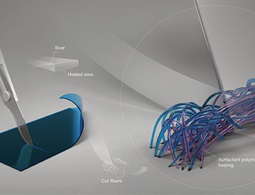
Sensors that are worn on the skin could soon be powered by our own body heat.
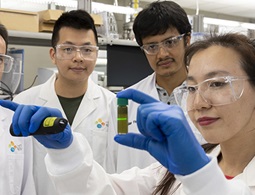
Tungsten disulfide helps to channel charge in flexible photovoltaics.
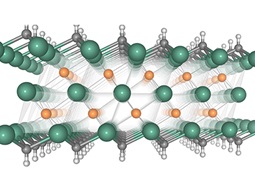
A class of atomically thin 2D compounds, known as MXenes, have a unique combination of properties that are useful for electronic and sensing applications.