
A touch of zirconium to better catch the sun
Zirconium-doped transparent electrodes boost the power conversion efficiency of perovskite-based tandem solar cells.
Zirconium-doped transparent electrodes boost the power conversion efficiency of perovskite-based tandem solar cells.
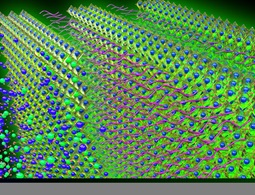
A precise method for stacking semiconductor thin films enhances optoelectronic device performance using quantum effects.

Changes in composition are shown to affect light-harvesting layer crystallization and perovskite solar cell efficiency.

A three-component light-harvesting layer boosts performance in an organic solar cell.

Ruthenium oxide is used to integrate energy-storing microsupercapacitors and thin-film electronics at the transistor level.

Record-breaking, high-efficiency single crystals bring perovskite solar cells closer to market.

A low-temperature method for making high-performance thermoelectric materials could recapture lost energy.
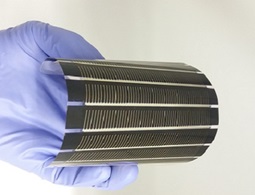
Simulations unveil efficiency targets and design rules to maximize the conversion of light into electricity using organic solar cells.

Inkjet printing could produce high-efficiency organic solar cells with commercial potential.

Arranging nanowires in bent configurations may make them less likely to fail inside electronic devices.
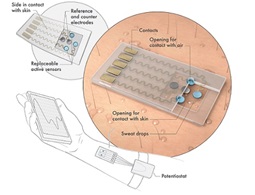
Nanotech-powered electrodes help solve the challenges of using sweat to assess biological conditions in real time.
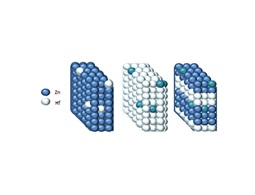
Small tweaks in component ratios generate electronically different layers from the same material to create transparent transistors.