Windows to a sustainable future
For researchers seeking entrepreneurial opportunities, KAUST can provide the perfect springboard.
For researchers seeking entrepreneurial opportunities, KAUST can provide the perfect springboard.
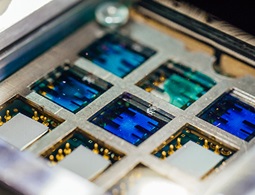
Printable solar materials could soon turn many parts of a house into solar panels.
Tantalum nitride as thin layers improves the extraction of electrons from silicon solar cells.

Nanoparticles with a shell structure improve the performance of zinc-oxide photodetectors.
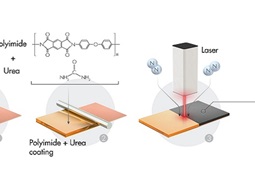
Laser-scribed disordered graphene significantly improves sodium-ion battery capacity.
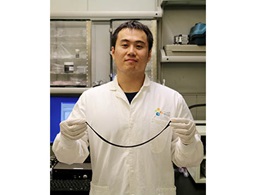
A metal carbide within a hydrogel composite senses, stretches and heals like human skin for use in medicine and robotics.
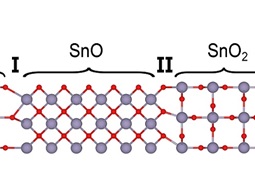
The interface between two tin-oxide semiconductors can exhibit unexpected metallic properties.

Perovskite particles could improve the performance of solar cells and light-emitting diodes via a simple process to stabilize the nanocrystal surface.
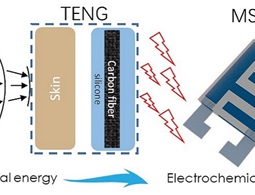
Standalone power modules that harvest and convert vibrations from their surroundings into electricity could soon fuel future microsystems.
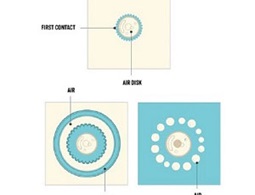
Spray coating and inkjet-based electronics manufacture are among the industrial applications in which liquid droplets are applied to a surface. But minuscule air bubbles that get trapped beneath the droplet as it lands can affect the coating’s quality and uniformity.
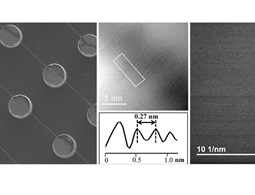
New method offers a means of efficient and high-throughput technique to study the structure of DNA.
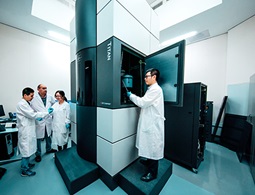
Materials that normally become damaged inside electron microscopes can now be imaged with atom-scale resolution.