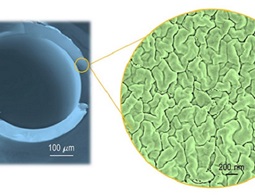
Cleaning up with cellulose
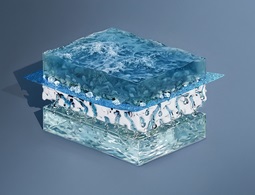
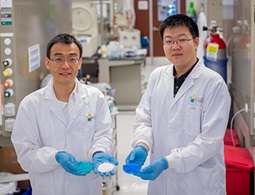
Environmentally friendly method for making membranes adds greener options for processing industrial waste.
Environmentally friendly method for making membranes adds greener options for processing industrial waste.
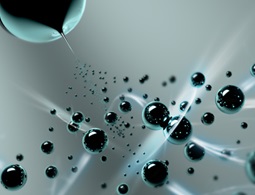
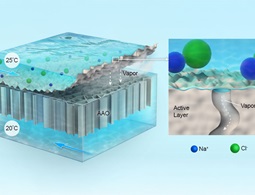
Electrosprays of water cannot reliably probe the air-water interface.
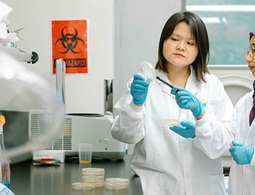
A combined treatment may help tackle the rise of E. coli PI-7 in Saudi Arabia’s wastewater systems.
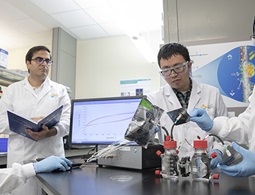
Helpful microbes inhale CO2 through a porous cylindrical electrode and exude useful chemicals.
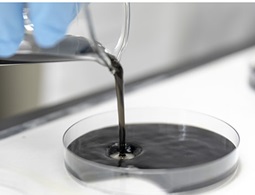
An inexpensive hydrogel-based material efficiently captures moisture even from low-humidity air and then releases it on demand.
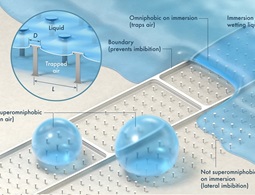
Immersion could become the ultimate test for assessing the wetting properties of coating-free microtextured surfaces.
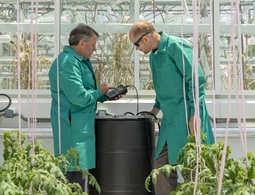
Research to optimize aquaponics systems could inform a new era of urban food production.
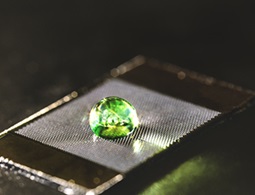
Tiny nature-inspired cavities that trap air can stop liquids from sticking to surfaces without the need for coatings.
A low-cost method for collecting water from the atmosphere could be used to provide potable water to dry, inland regions.
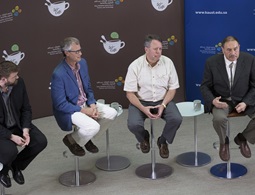
A plant scientist, a water specialist and a petroleum engineer walk onto a panel, “how do you define sustainability?” one asks.
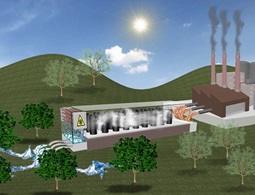
A 3D solar-steam generator design squeezes every last drop of energy from sunlight to produce fresh water.
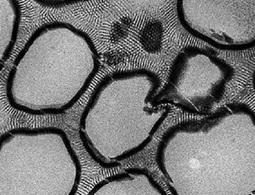
A fast and safe method to prepare a 3D porous material that mimics the shape of a honeycomb could have broad applications from catalysis to drug delivery or for filtering air to remove pollutants or viruses.