

New KAUST membrane technology could make desalination more sustainable
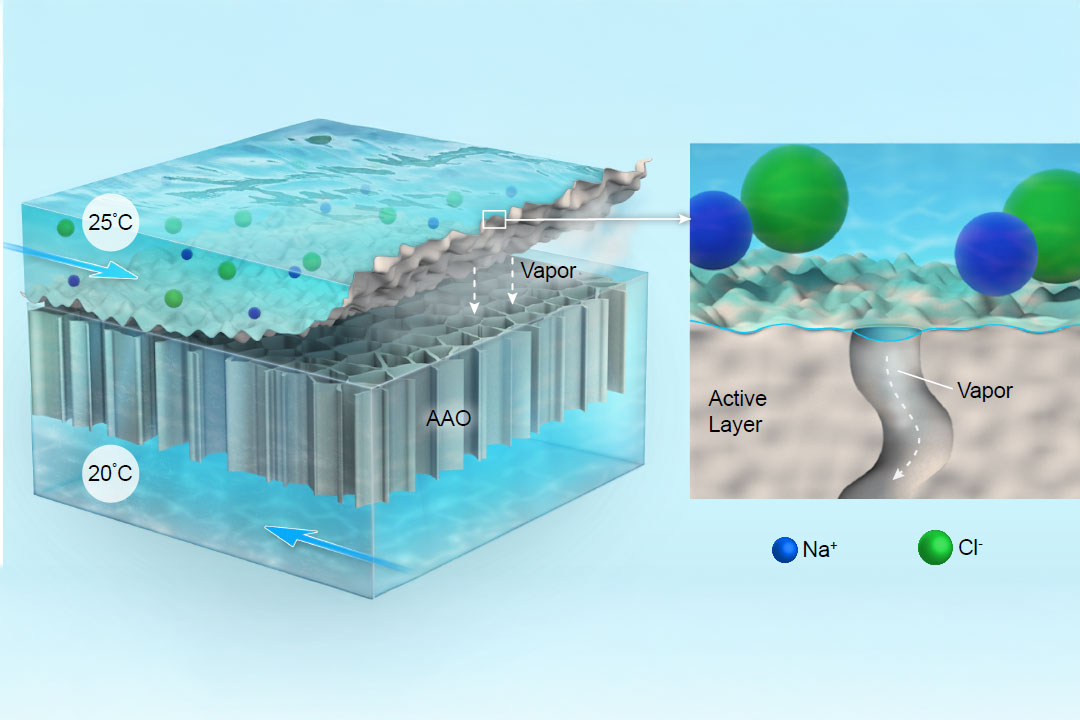
Scientists at King Abdullah University of Science and Technology (KAUST) have developed a new desalination membrane that improves the efficiency of converting seawater and concentrated brines into freshwater. The research introduces a scalable polymer membrane that operates at ambient temperature and pressure, delivering high salt rejection with substantially lower energy demand than conventional approaches. The technology is now being evaluated at pilot scale at KAUST, bringing it closer to real world use.
Desalination plays a central role in water systems across arid regions, and continued innovation is essential to improve efficiency and flexibility as demand grows. Many existing technologies, which generally require high energy inputs or face limitations when treating concentrated brines, benefit from the economy of scale and remain costly for small scale usage in remote areas. The KAUST membrane addresses these constraints by enabling freshwater production under milder operating conditions, expanding the scale of utilization and the range of waters that can be treated efficiently.
The research introduces new subnanoporous hydrophobic thin films for membrane distillation process. These membranes are engineered to allow water vapor to pass while blocking salt and contaminants with high efficiency, maintaining ultrahigh salt rejection even when processing brines that are typically difficult and costly to treat.
Reliable and efficient water production is a long-term strategic priority for the Kingdom of Saudi Arabia. Saudi Arabia is among the world’s largest producers of desalinated water, and demand is expected to increase as populations grow and industrial activity expands. Technologies that improve performance while reducing energy use and operational costs are therefore increasingly important. Unlike many advanced desalination concepts that remain confined to laboratory testing, the KAUST membrane is already being evaluated at pilot scale on campus, with interest from industrial partners exploring pathways toward deployment.
“Water and energy are inseparable challenges for Saudi Arabia,” said Professor Noreddine Ghaffour, lead author of the study and a specialist in desalination and water treatment at KAUST. “This work shows that it is possible to desalinate not only seawater, but even highly concentrated brines, using far less energy than traditional approaches. KAUST provides an environment where fundamental materials science can be translated into practical technologies that respond to real needs.”
Beyond freshwater production, the membrane technology could also help address the management of concentrated brines and produced water generated by existing desalination plants and oil production sites, offering a pathway to improve water recovery while reducing environmental impact.
The research supports ongoing efforts to strengthen water sustainability, energy efficiency, and applied innovation. As pilot testing continues, the team will assess scalability and durability under various operational conditions, informing future applications across industrial and municipal water systems.