

‘Rising Stars’ in AI research explore reasoning, trust, and real-world impact
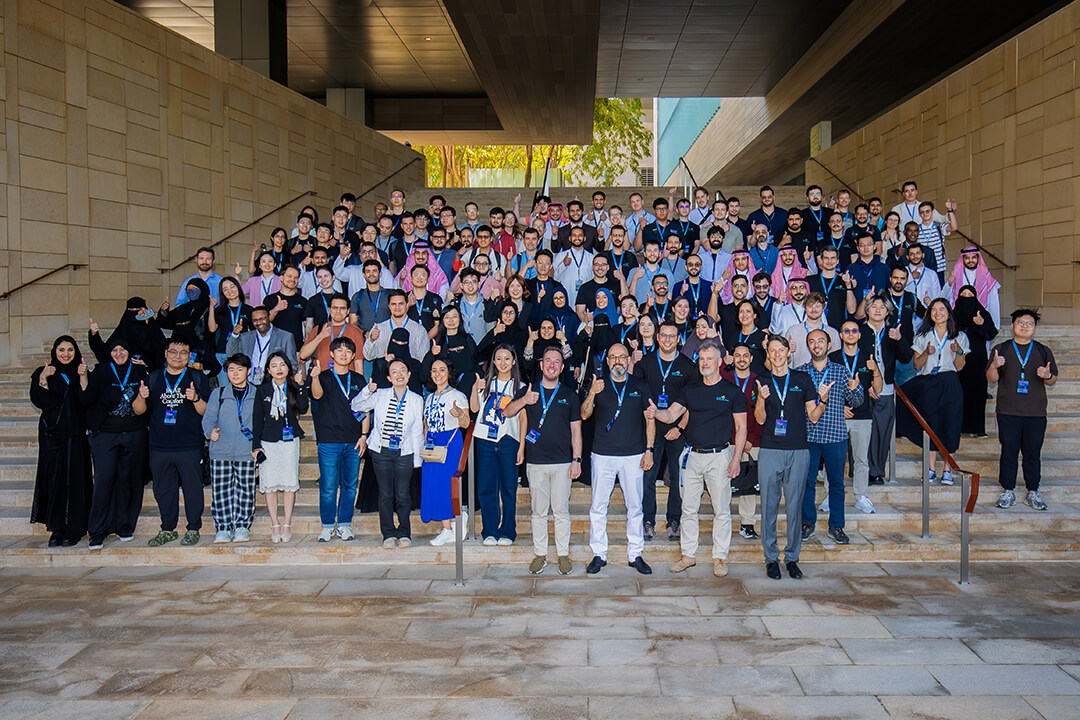
Early-career artificial intelligence researchers gather at KAUST for the fifth Rising Stars in AI Symposium
As artificial intelligence grows more capable and more closely scrutinized, questions of reasoning, reliability, and impact are taking center stage.
At its fifth Rising Stars in AI Symposium, King Abdullah University of Science and Technology (KAUST) convened 25 exceptional early-career researchers selected from more than 430 applicants to explore how the next generation of AI will be built and how it can be trusted.
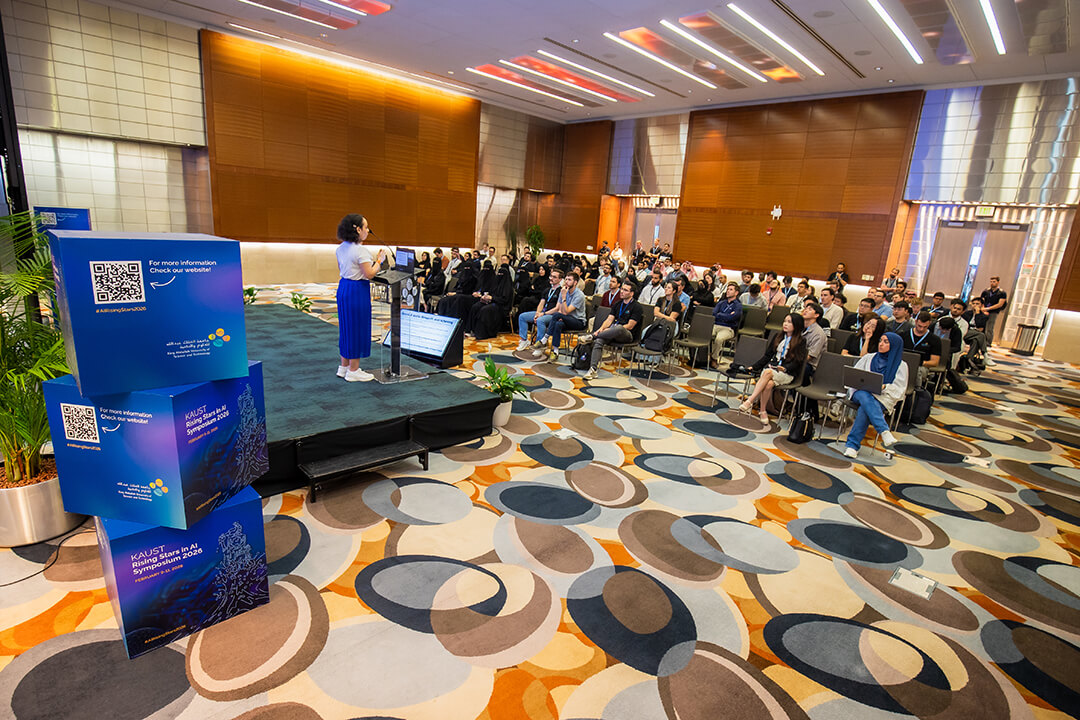
All eyes are on Dr. Sahar Abdelnabi, a principal investigator at the ELLIS Institute Tübingen, as she discusses her research on how AI models alter their behavior when aware they are being evaluated.
For Dr. Sahar Abdelnabi, a principal investigator at ELLIS Institute Tübingen, whose research examines how AI models alter their behavior when they know they are being evaluated, KAUST’s February 9–11 symposium was more than a platform to present her work. It was a space to connect and explore AI’s direction with fellow researchers.
“This event is a very useful tool for collaboration and networking,” she said, noting that her work aligns with broader trends highlighted during the Center of Excellence (CoE) for Generative AI event. “There are a lot of people working on reasoning models, which I think reflects the progress in the AI field in general.”
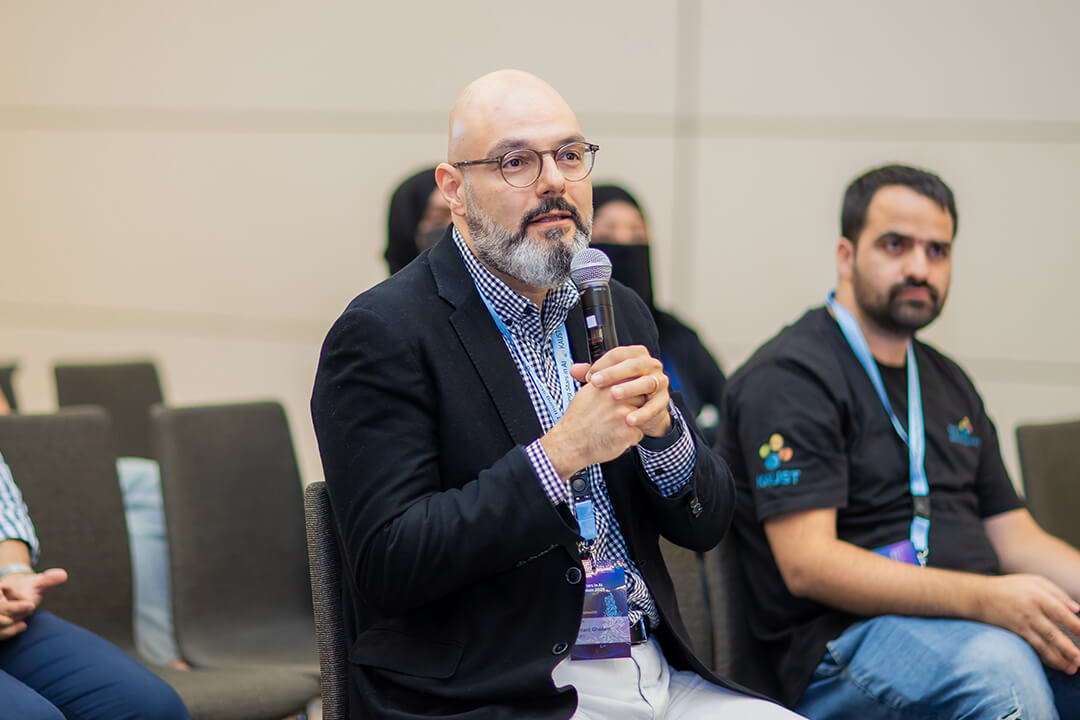
Professor Bernard Ghanem, chair of the KAUST Center of Excellence for Generative AI, engages with presenters at the fifth Rising Stars in AI Symposium.
Rising Stars assembled senior Ph.D. students, postdoctoral fellows, and junior faculty from around the world. Across keynotes, panels, and poster sessions, several themes emerged: the rapid evolution of reasoning models; AI’s convergence with global challenges; embodied systems; and the growing importance of trustworthy AI.
“KAUST brought in rising stars who have published significant research in top tier AI venues. Their work includes general-purpose AI models, methods, and theory as well as AI applications to energy, health, food, and water,” said Professor Bernard Ghanem, chair of the CoE. This year’s gathering reflected a focus on the intersection of AI and global challenges, he added. “That’s what will drive significant real-world impact going forward.”
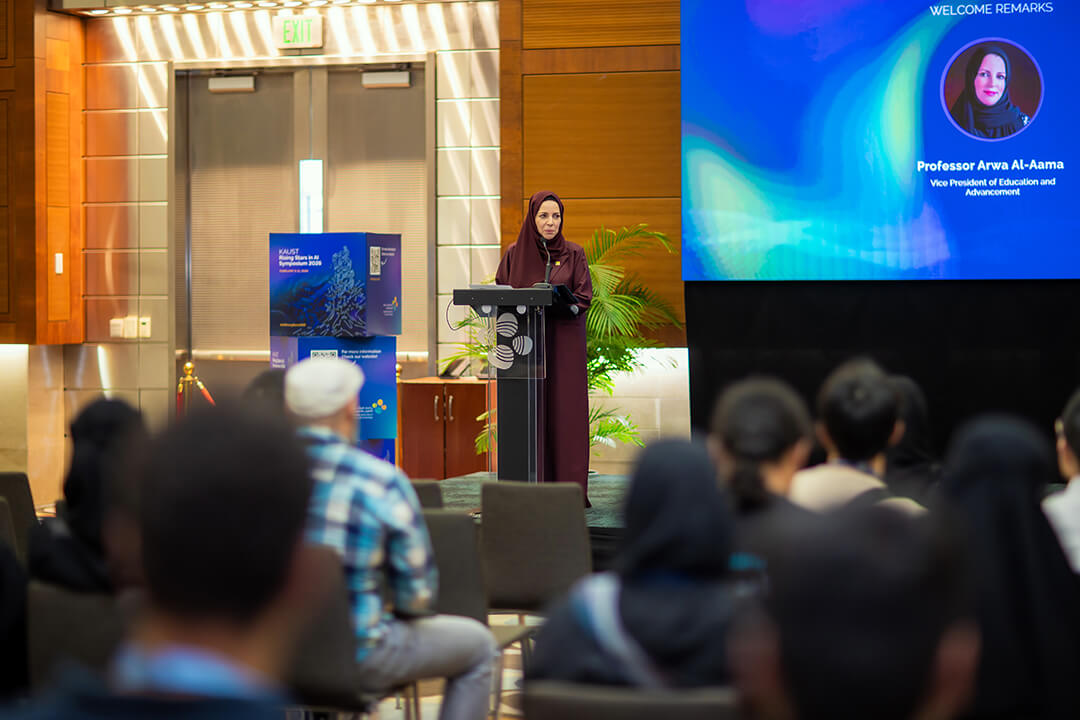
Professor Arwa Al-Aama, vice president for education and advancement at KAUST, addresses the Rising Stars in AI Symposium
Professor Arwa Al-Aama, vice president for education and advancement, said the annual symposium captures the core of KAUST’s academic mission — developing talent, advancing discovery, and preparing the next generation of leaders who will shape the future of science and technology. “Events like this remind us that investing in emerging scholars is one of the most powerful ways we can influence the trajectory of the field of AI.”
Frontiers of contemporary AI research
Rising Stars presentations covered a range of contemporary AI research, spanning reasoning models, safety and robustness, multimodal systems, medical and scientific applications, and brain-inspired approaches. From foundational theory to practical deployment challenges, discussions pointed to how AI is advancing across priority disciplines.
Badr AlKhamissi, a Ph.D. candidate at the Swiss Federal Institute of Technology in Lausanne (EPFL), presented papers exploring how large language models (LLMs) might be compared with human brain representations and how more brain-inspired AI systems could be built. His work sits at the intersection of neuroscience and AI.
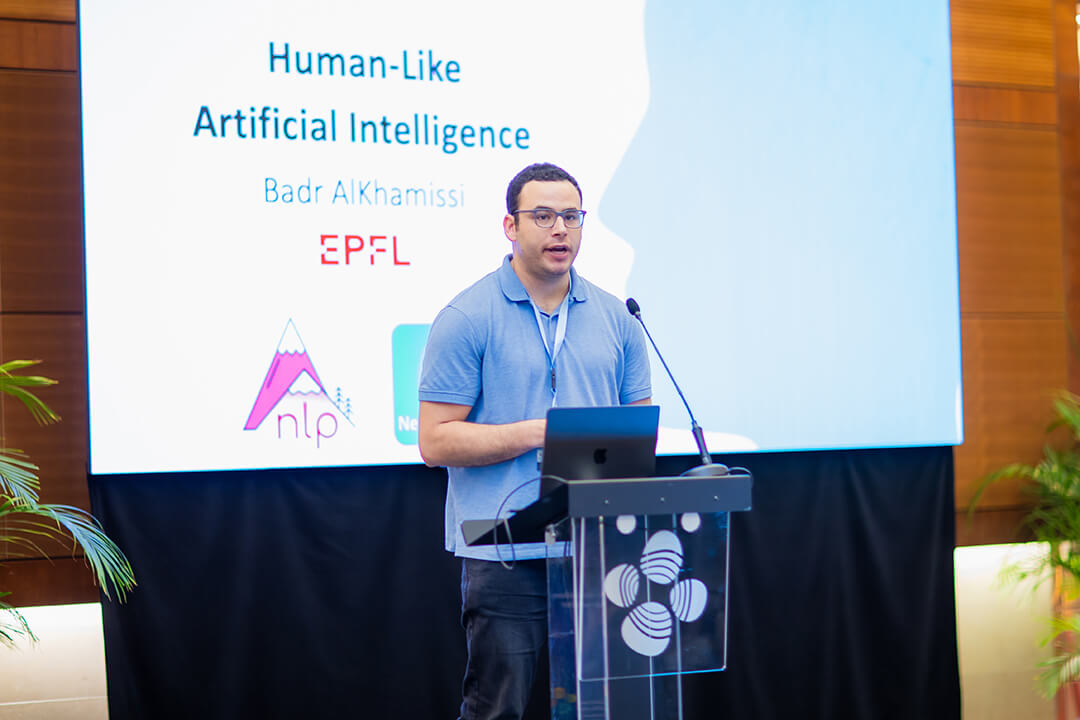
Badr AlKhamissi, a Ph.D. candidate at the Swiss Federal Institute of Technology Lausanne (EPFL), presents his research at the intersection of neuroscience and AI.
“The goal here is to build more human-like or brain-like models, and the main idea there is you want to use those models in the end for medical applications,” AlKhamissi said.
Originally from Egypt, AlKhamissi described the symposium as an opportunity to meet peers, increase visibility for a critical research area, and contribute to advancing AI science in the Middle East and across the Arab world. “You want to develop models that can take into account the diversity in the different populations.”
For KAUST Ph.D. student Yulian Wu, who researches trustworthy AI decision-making and AI alignment, Rising Stars highlights cutting-edge developments each year. She said staying current requires constant ideaexchange and exposure to leading-edge research — one reason she both attended and helped organize this year’s event. “We want to connect the people outside of KAUST with the people in KAUST.”
Dylan Ashley, a Dalle Molle Institute for Artificial Intelligence Research Ph.D. student and KAUST researcher, is designing next-generation robots built specifically to run advanced AI systems and operate safely in the real world. He said attending Rising Stars exposed him to “state-of-the-art, deep insights into the latest and greatest in AI.”
Shaping the long-term vision of AI
Lively poster discussions and informal exchanges reinforced the symposium’s role as a forum for collaboration. Event co-organizer Professor Maurizio Filippone, associate professor of statistics, said the event connects international AI talent with KAUST’s research strengths while aligning with the Kingdom’s expanding AI ecosystem.
“We really wanted to engage with what’s going on in the industry here in Saudi Arabia, in AI, and mix it up with all this talent that came from everywhere in the world,” he said. Alongside presentations from early-career scientists, the symposium featured overviews of KAUST research and reflections from faculty on the long-term direction of AI.
During his keynote address, Professor Jürgen Schmidhuber, co-chair of the CoE for Generative AI, argued that while LLMs are powerful prediction machines, they still fall short of true artificial general intelligence, which will require AI capable of acting in and understanding the real world.
“As soon as we have an artificial scientist that discovers a new pattern in incoming data and a new physical law, that will be roughly the same time we will have artificial composers that do not just repeat and regurgitate stuff that sounds very much like existing songs, but will have people saying, ‘That sounds like one of the best songs ever written by humans,’” Schmidhuber said.
Industry partnerships as a path to AI impact
Dr. Yaser Al-Onaizan, deputy CEO and president of AI products at HUMAIN, a PIF company building the full AI value chain, said in his keynote that AI must move beyond impressive benchmarks to deliver measurable value in practical applications.
He described KAUST as a key partner in advancing that effort. “KAUST is important not only on the talent side — the students, the hirings, and all that — but also on bringing in real-world problems to academia to solve and then bring the solutions back to the real world.”
As artificial intelligence continues to evolve rapidly, the Rising Stars in AI Symposium made clear that the next breakthroughs will be shaped not only by algorithms, but by the people building them.
Closing the event with an invitation to deepen collaboration and recruitment, Professor Omar Knio, dean of the Computer, Electrical and Mathematical Sciences and Engineering Division, told participants: “Maybe, if the stars align for you and for us, we will be able to call you KAUSTians in the not-too-distant future.”