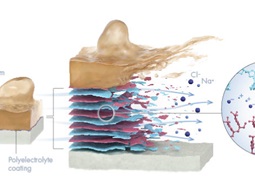
Peel-off coating keeps desalination cleaner and greener
A polyelectrolyte coating enables clean seawater desalination systems without harmful chemicals.
A polyelectrolyte coating enables clean seawater desalination systems without harmful chemicals.
An experiment, elegant in its simplicity, helps explain why water becomes electrified when it touches hydrophobic surfaces.
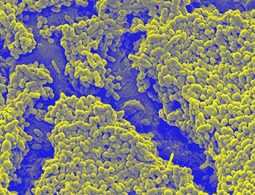
A new electroactive bacterium could help fuel wastewater treatment reactors.
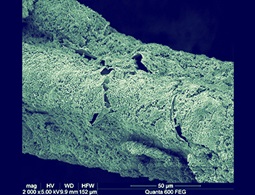
Combining solar-harvesting materials with carbon-dioxide–consuming microbes could be an efficient way to generate clean fuels.

Light-responsive building blocks provide organic membranes with light-controlled permeability and selectivity.

Models based on images from unmanned aerial vehicles and satellites can help farmers to monitor the health of individual trees.
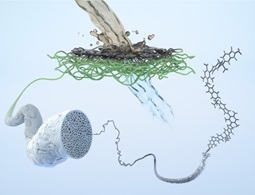
High-capacity oil-adsorbing mats could be deployed in oil spill emergencies to limit ecological damage.
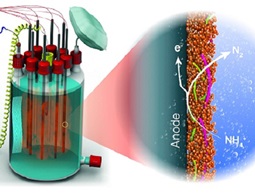
More energy-efficient wastewater treatment may be possible by harnessing anammox bacteria’s surprising ability to "breathe" solid-state matter.
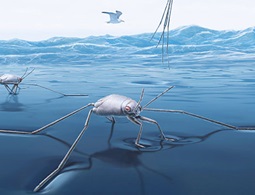
A study of marine Halobates species highlights how their waterproofing techniques, size and acceleration capability helped them colonize the ocean.
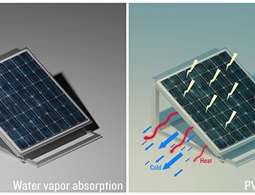
Polymers that absorb water from the atmosphere can make it easier to run photovoltaic devices in hot climates.
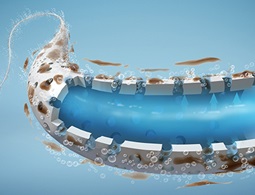
Carbon dioxide bubbles could be a fast and environmentally friendly way to unclog seawater filters and keep the supply of drinking water flowing.
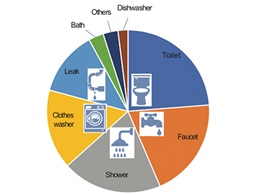
With about half the world’s population living close to the coast, using seawater to flush toilets could be possible with a salt-tolerant bacterium.