

Professor Sahika Inal earns Germany’s most prestigious research award
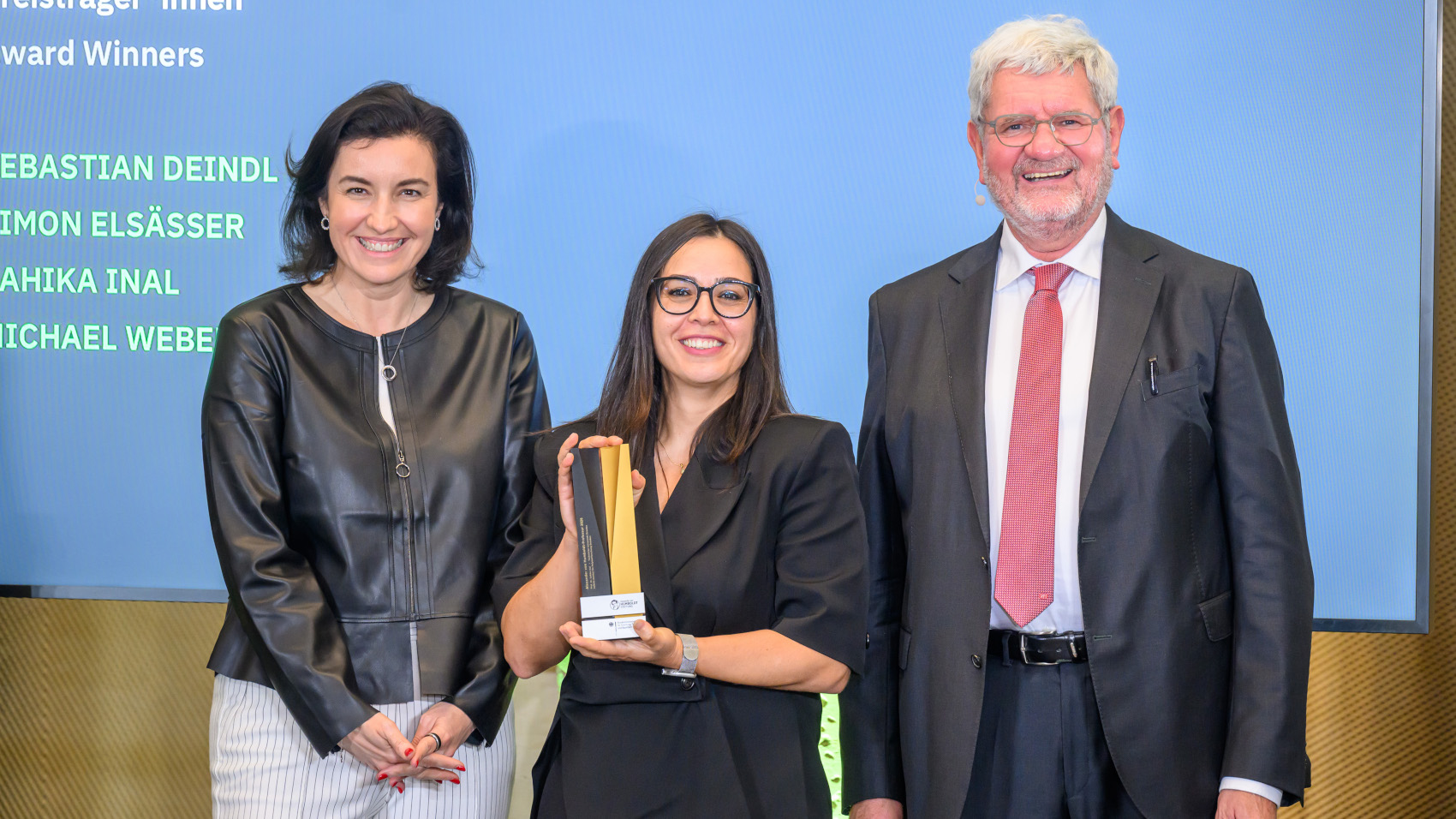
KAUST Professor Sahika Inal is a recipient of the Alexander von Humboldt Professorship. Copyright - Humboldt-Stiftung/David Ausserhofer
King Abdullah University of Science and Technology (KAUST) is home to world-leading faculty whose expertise is increasingly sought by research institutions worldwide.
Professor Sahika Inal has earned the Alexander von Humboldt Professorship, awarded in partnership with Dresden University of Technology and the Leibniz Institute of Polymer Research Dresden, recognizing her global leadership in next-generation bioelectronic materials and health technologies.
“Receiving this award is a great honor,” Inal said. “It reflects the strong support for my work at KAUST and highlights the key role KAUST plays in advancing research excellence to address national and global health challenges.”
The German Federal Ministry of Education and Research funds the Alexander von Humboldt Professorships through the International Research Fund for Germany, with awards of up to €5 million.
One of the world’s most prestigious academic awards, the professorship supports recipients in establishing long-term research programs, including building a team, developing laboratory infrastructure, and supporting Ph.D. and postdoctoral researchers. Inal received the professorship for her work on organic bioelectronic materials.
“KAUST’s excellent infrastructure and interdisciplinary environment have made it possible to combine chemistry, electronics, materials science, and biology in new ways,” Inal said, adding that her goal with the Alexander von Humboldt Professorship is to create a leading center for bioelectronic materials and devices to bridge fundamental science with real-world applications. “The foundation established at KAUST is laying the groundwork for bioelectronic technologies that can seed and accelerate the field in Germany.”
“I see bioelectronics evolving from passive, singular devices into intelligent and integrated systems that act as part of living organisms,” she said. Building on her team’s work at KAUST, Inal will develop devices that record and modulate cellular signals, alongside systems that mimic synaptic behavior. Her work aims to expand the portfolio of portable sensors and advance bio-inspired sensor hardware.
Inal added: “In the years to come, we will move beyond observing biology to interacting with it, alongside a growing emphasis on translating technologies from the bench to the bedside.”
For Dresden-based institutions, the award provides access to a leading researcher in a rapidly advancing field. For KAUST, it highlights the strength of its Biomedical Sciences Division and globally recognized faculty, as well as its ability to attract and support top international talent while strengthening links with leading research ecosystems.