

Red Sea offers best location for solar and wind energy storage in Saudi Arabia
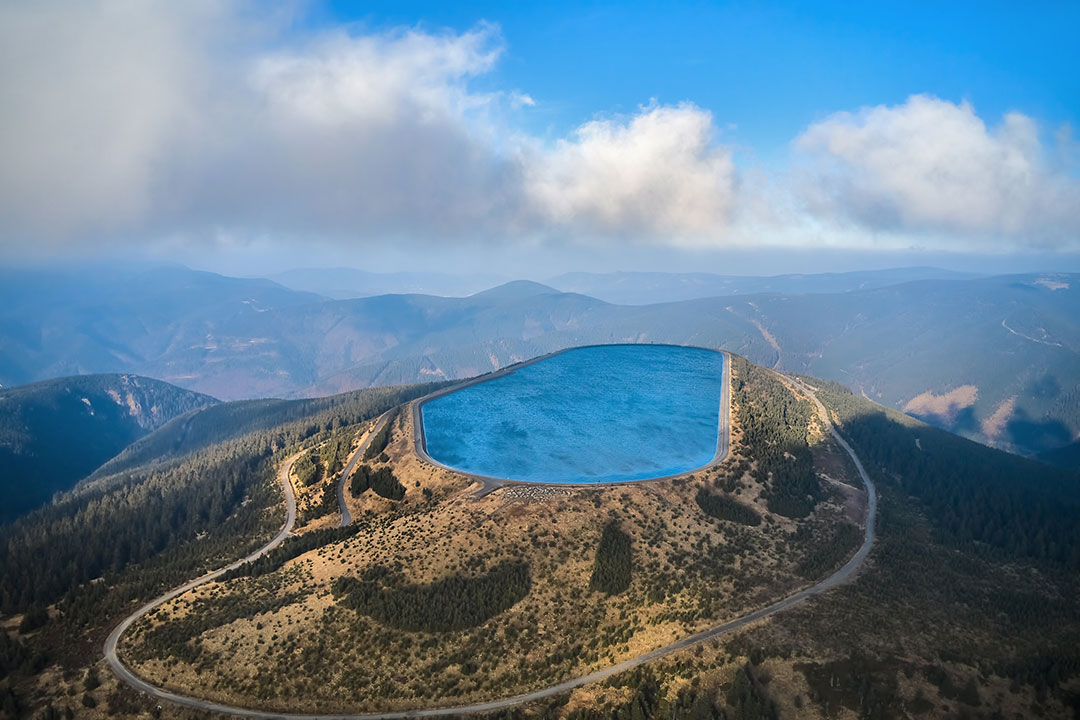
A new KAUST study has identified the best of 10 proposed sites across Saudi Arabia to store solar and wind energy. Following several scientific and economic considerations, Professor Yoshihide Wada, KAUST scientist Julian Hunt and their colleagues identified two sites, both along the Red Sea, as most feasible.
Along with accelerating the Kingdom’s transition to renewables, the proposed sites promise better water management, adding to the Kingdom’s food security.
The paper can be read in Renewable and Sustainable Energy Reviews.
“The Kingdom is rich in solar and wind power potential. We are interested in determining how transitioning to these two renewable energy sources can benefit water management in the Kingdom,” said Wada.
As part of its Vision 2030, Saudi Arabia aims to have at least half of its power capacity based on renewable energies. This achievement will require remarkable changes in the power industry, which was responsible for around half of the carbon dioxide emissions by the Kingdom in 2022.
While renewable energy is undoubtedly necessary for the sustainable future Saudi Arabia envisions, a challenge is storing the energy for times of high demand. In Saudi Arabia, electricity consumption almost doubles in some years from the winter to summer months, which gives tremendous value for infrastructure that can keep energy stored in the cooler months from solar and wind and use the energy to generate electricity in the hotter months.
One of the solutions the Kingdom is investing in is batteries, but batteries store energy over daily cycles. For longer, seasonal cycles, seasonal pumped hydropower storage is under consideration. Here, desalinated water can be stored in reservoirs in high mountains and released upon demand to generate power and supply water.
Seasonal pumped hydropower storage sites are not cheap, however, costing around $10 billion each. Therefore, it is imperative to accurately assess a proposed site to judge its feasibility. For its assessment, the scientists considered several factors, including evaporation of the stored water, the salinity of the water, and the feasibility of building solar or wind plants nearby.
“These storage sites have extraordinary upfront investments, so their value must be estimated as accurately as possible. Our study incorporates water management into the design, giving a more holistic estimate on how large-scale projects support the adoption of renewables in Saudi Arabia,” said Hunt.