

Meet the Ibn Rushd Fellows shaping the future of Saudi science
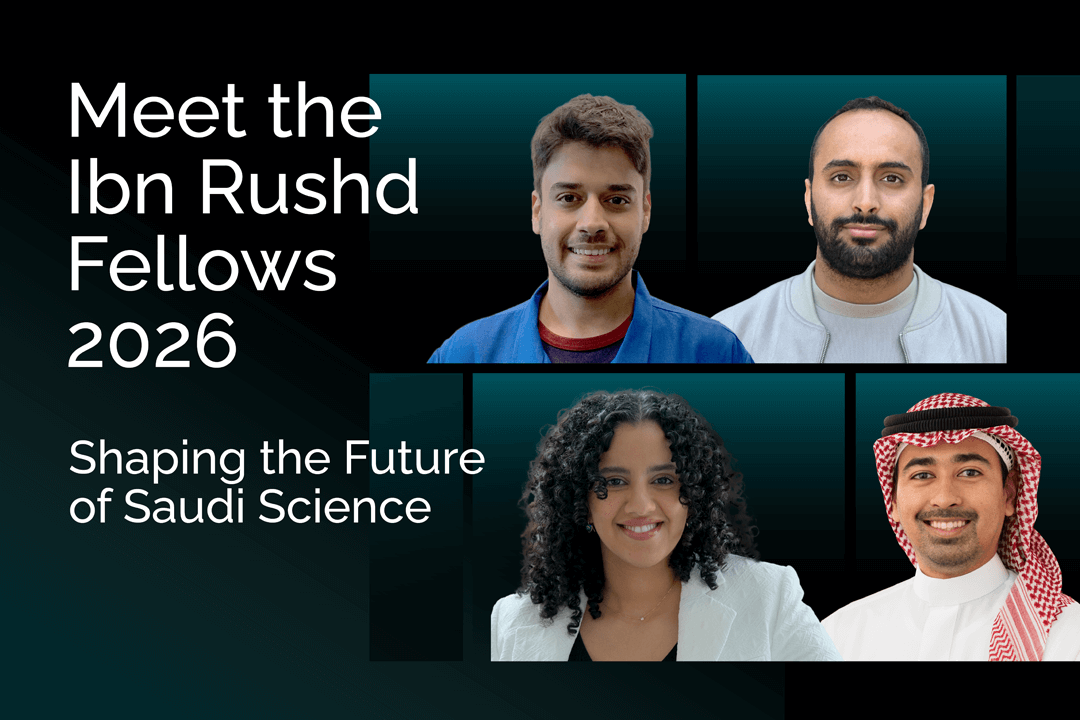
As part of its ongoing effort to attract and nurture Saudi Arabia’s most exceptional scholars for mission-driven discovery and innovation, King Abdullah University of Science and Technology (KAUST) celebrates the latest recipients of the prestigious Ibn Rushd Fellowship Program.
The Ibn Rushd Fellowship supports promising early-career scientists from across the Kingdom to pursue up to three years of postdoctoral research at world-renowned institutions. The KAUST-led initiative advances the University’s mission of innovation and excellence in support of Saudi Vision 2030 by developing talent in priority fields and elevating the profile of Saudi academia nationally and globally.
Named after the 12th-century polymath Ibn Rushd, the fellowship honors scholars whose academic paths and research ambitions reflect the next generation of Saudi research leadership.
Abdullah Alghamdi
Abdullah Alghamdi specializes in cancer stem cells, microfluidic systems, and advanced fluorescence imaging. He earned his master’s and Ph.D. in bioscience from KAUST, and his bachelor's degree in medical and molecular biology from the Massachusetts College of Pharmacy and Health Sciences.
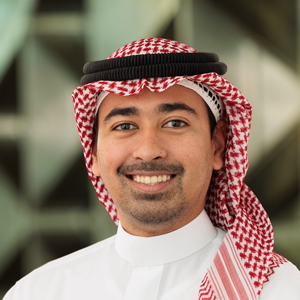
During his time at KAUST, Alghamdi developed microfluidic-based advanced imaging platforms to study hematopoietic stem cell migration behavior under physiological flow. He has presented his work at international conferences and received recognition for his contributions to the field, including the KAUST Dean’s Awards.
As an Ibn Rushd Postdoctoral Fellow, Alghamdi will conduct research at the University of California, San Diego, focusing on engineering human microvessel platforms to examine how cells and pathogens navigate vascular barriers. His work aligns with Saudi Arabia’s health and wellness research priorities and supports the development of next-generation diagnostic and therapeutic platforms, while maintaining strong scientific ties with KAUST.
Abdulrahman M. Alfaraidi
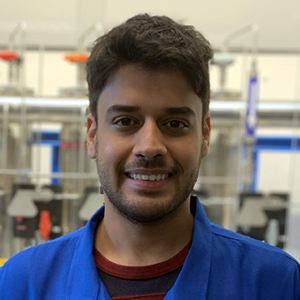
Abdulrahman M. Alfaraidi is a Ph.D. candidate at Harvard University. His research focuses on electrochemical engineering to understand and control transport and reaction phenomena in aqueous flow systems for energy conversion. He is a KAUST Gifted Student Program (KGSP) alumnus and holds a bachelor’s degree in chemical engineering from the University of Southern California and a master’s degree in materials science and engineering from KAUST.
Under the Ibn Rushd Fellowship, Alfaraidi will conduct postdoctoral research at Lawrence Berkeley National Laboratory, designing and studying electrochemical reactors for chemical production. His work advances electrochemical technologies that support Saudi Arabia’s future energy and chemical industries.
Ahmed Hajr
Ahmed Hajr is a Ph.D. candidate at the University of California, Berkeley, where he researches strong light-matter interactions in superconducting quantum circuits for applications in quantum computing. While earning his bachelor’s degree in physics from King Fahd University of Petroleum and Minerals, he conducted research in computational spintronics at KAUST and high-Q superconducting resonators at Lawrence Berkeley National Laboratory.
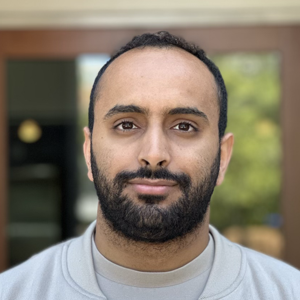
Hajr has received multiple research awards from UC Berkeley, as well as the Kavli Graduate Student Fellowship, which supports his work on new driving schemes for the transmon qubit — a superconducting circuit used to store and process quantum information. He has presented his research at leading conferences, including the APS Global Physics Summit and the International Conference on Quantum Materials and Technologies.
As an Ibn Rushd Postdoctoral Fellow at the California Institute of Technology, Hajr will investigate next-generation hybrid qubits by combining the intrinsic nonlinearity of superconducting circuits with the exceptional coherence of mechanical oscillators — tiny vibrating structures that stably store and transfer quantum information.
Amani Alghamdi
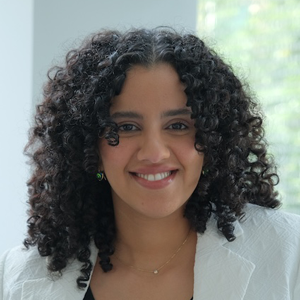
Amani Alghamdi is a Ph.D. candidate in chemistry at Northwestern University, advised by Professor Franz Geiger. She is a physical chemist specializing in nonlinear optical spectroscopy and interfacial chemistry, with research focused on how hydration and ion-specific interactions govern interfacial reactivity relevant to catalysis, energy, and sustainability.
Under the KAUST Ibn Rushd Postdoctoral Fellowship, Alghamdi will pursue postdoctoral research at the Massachusetts Institute of Technology, supervised by Professors Yang Shao-Horn and Keith Nelson. Her work aligns with KAUST’s and Saudi Arabia’s priorities in sustainable energy and advanced materials.
Afnan Alghannam
Afnan Alghannam earned her Ph.D. in chemical engineering from the University of California, Berkeley, and has authored multiple high-impact publications focused on catalyst design and performance.
Under the KAUST Ibn Rushd Postdoctoral Fellowship, Alghannam is researching innovative approaches to upcycle plastic waste into valuable chemicals in collaboration with researchers at the University of California, Santa Barbara. Her work aligns with national priorities in sustainability and carbon circularity, supporting Saudi Arabia’s transition toward a more resource-efficient and environmentally responsible economy.