

Professor Mohamed-Slim Alouini elected to the U.S. National Academy of Engineering
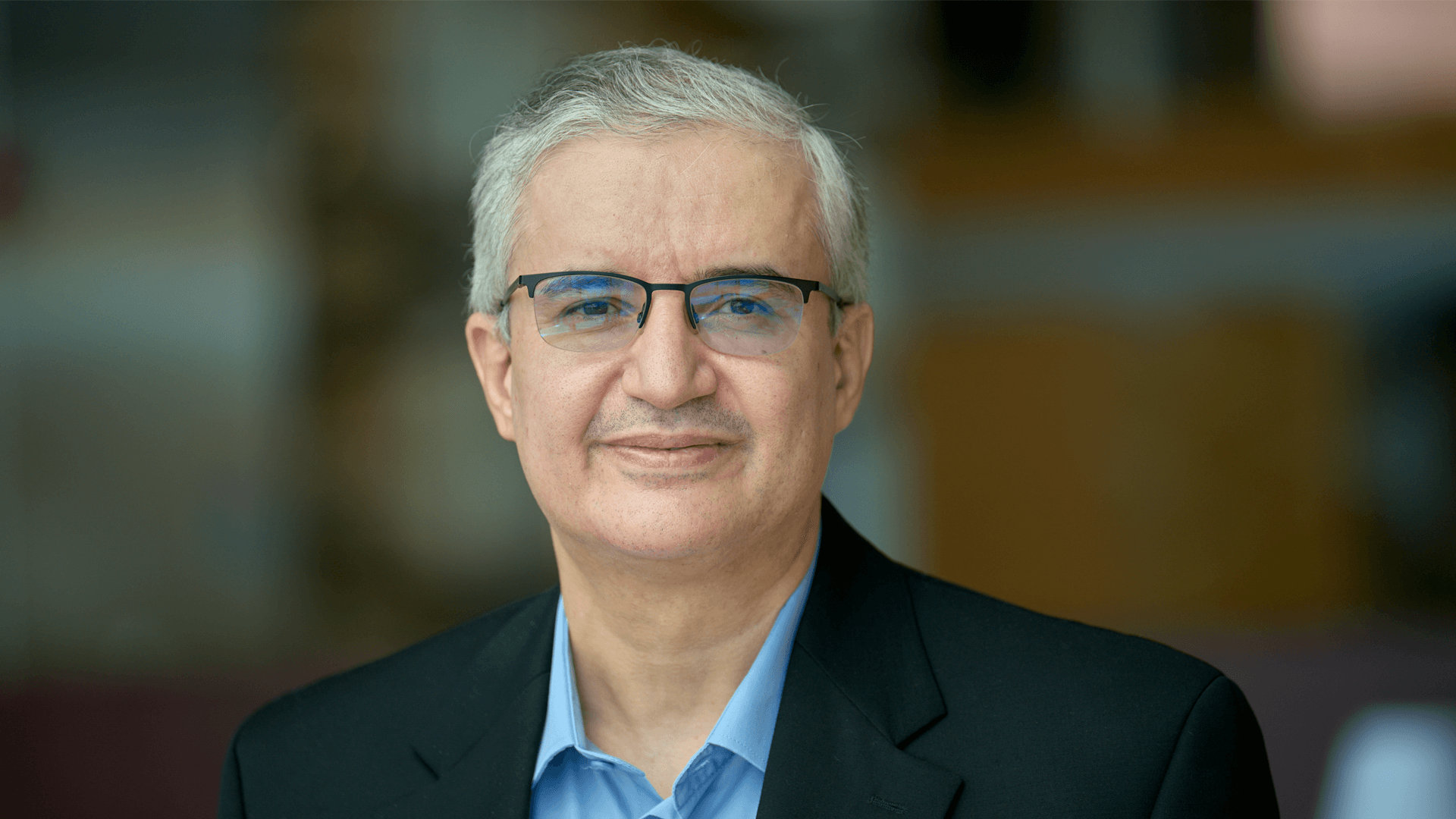
Professor Mohamed-Slim Alouini, Al-Khawarizmi Distinguished Professor of Electrical and Computer Engineering at King Abdullah University of Science and Technology (KAUST), has been elected to the U.S. National Academy of Engineering (NAE), one of the most significant professional distinctions for engineers worldwide.
While KAUST has previously counted NAE members among its ranks, Alouini is the first faculty member to be elected to the prestigious academy while serving at the University. His achievement underscores KAUST’s mission-driven focus on translating research into real-world impact, aligned with Saudi Vision 2030 and delivering global benefit.
“I consider this significant personal and professional honor a direct reflection of the exceptional support KAUST has provided me during my nearly 17 years of service, empowering me to pursue research that advances engineering knowledge and translates science into action,” Alouini said. “This is a collective achievement, not only for me, but for my students, collaborators, and colleagues. I am delighted to represent KAUST and Saudi Arabia within a global community of engineers dedicated to addressing shared challenges.”
Professor Omar Knio, vice president of academic affairs and dean of the Computer, Electrical and Mathematical Sciences and Engineering Division, said Alouini’s NAE election is a landmark achievement for both KAUST and the Kingdom. “It underscores the University’s ability to attract and support world-leading scholars who are advancing global engineering frontiers while aligning with national priorities. This recognition reflects both individual excellence and the strength of our research ecosystem.”
Serving also as the UNESCO Chair on Education to Connect the Unconnected, Alouini was honored by the NAE “for his contributions to the modeling and evaluation of wireless communication systems.” His current work emphasizes non-terrestrial networks, particularly stratospheric high-altitude platform station (HAPS)–based networks, which extend reliable connectivity to remote and underserved regions and support applications ranging from emergency response to environmental monitoring.
“Conducting research on connecting the unconnected — for both people and Internet of Things (IoT) devices in remote areas — is essential to promoting rural inclusion, enabling smart agriculture, strengthening environmental monitoring, and improving disaster response,” Alouini said. “In this context, our research at KAUST aims to: (1) ensure equitable access to digital services, (2) support sustainable development, and (3) enhance resilience in times of crisis.”
Alouini holds a Ph.D. in electrical engineering from the California Institute of Technology (Caltech), Pasadena, U.S., and a Habilitation à Diriger des Recherches from Sorbonne University’s Pierre and Marie Curie Campus, Paris, France.
He joined KAUST in 2009 as a founding faculty member and has received numerous honors and awards throughout his career, including the 2020 Kuwait Prize in Applied Sciences and the 2022 UNESCO The World Academy of Sciences (TWAS) Award in Engineering Sciences. In addition to his research and teaching roles, he is a Fellow of the African Academy of Sciences, a Fellow of UNESCO TWAS, and a foreign member of Academia Europaea.
The NAE’s 2026 class was announced on February 10, 2026. Alouini and his fellow inductees will be formally inducted during a ceremony at the academy’s annual meeting, to be held at its headquarters in Washington, D.C., October 3-5, 2026.