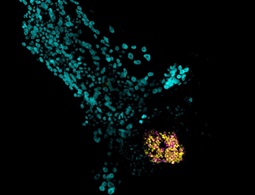
New gene-editing technique offers path to precision therapies
PNP editing emerges as a versatile and programmable tool for site-specific DNA manipulations.
PNP editing emerges as a versatile and programmable tool for site-specific DNA manipulations.

Drugs that inhibit a key protein should offer new targeted cancer therapy for leukemia and breast cancer.

A first complete genome map of einkorn reveals evolutionary origins and potential for enhanced wheat breeding.

Tiny packets of molecular cargo shed by cancer cells seed the foundations for metastasis at distant sites in the body.
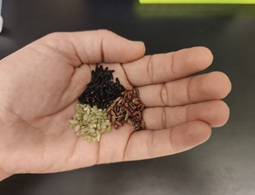
Fundamental research offers opportunities for new varieties of pigmented rice and a resource to address malnutrition.

More effort is needed to bring salt-tolerant crops to the farmers who need them.

Biopharming technique yields cost-effective and environmentally friendly antimicrobial peptides.
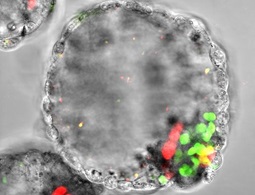
Pioneering single-cell sequencing technology sheds light on risk of mitochondrial genome editing and hidden mitochondrial mutations in human oocytes and synthetic embryos.

Evolution of lactate-mediated nerve signaling probably enabled memory systems, a comparative gene study shows.

Structural biology study reveals dynamics of DNA ligation during genome replication.

Textbook model of lagging-strand synthesis may be too simplistic for human DNA.
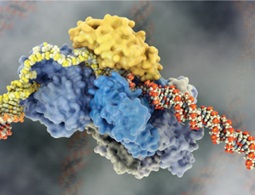
Better understanding of the mechanisms involved in DNA repair may pave the way for developing inhibitors to improve the effectiveness of radiation therapy.