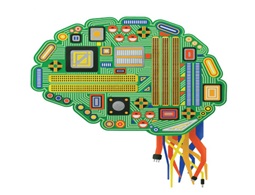
Brain-on-a-chip would need little training
A neural network that mimics the biology of the brain can be loaded onto a microchip for faster and more efficient artificial intelligence.
A neural network that mimics the biology of the brain can be loaded onto a microchip for faster and more efficient artificial intelligence.
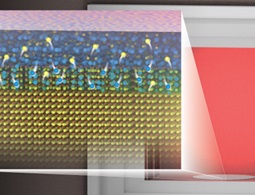
Researchers have made unparalleled ultrawide-bandgap semiconductors through temperature and timing, just like baking bread.

Flying drones connected by a cable tethered to a ground station could be a flexible solution for enhancing wireless connectivity in temporary hotspots.

Advanced laser-printing techniques prove ideal for creating tiny optical communication devices with complex internal structures.
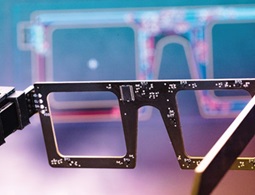
An assistive technology uses magnetic skin to support freedom of movement for people with quadriplegia.

Roads installed with wireless charging technology could become an integral feature of our cities in an electric vehicle future.
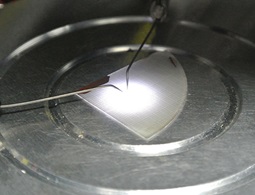
A single semiconducting material can produce white light by emitting light across the visible spectrum.

Laser writing breathes life into high-performance sensing platforms.
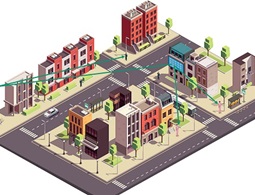
A mathematical model shows specialized reflective panels could be deployed on a large scale to enhance communication networks in urban areas.
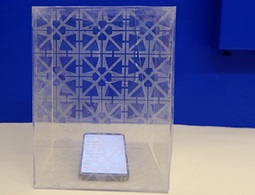
A printable ink that is both conductive and transparent can also block radio waves.

A two-dimensional material mimics the human temperature-sensing system.

A multisensory graphene-based skin can sense in extreme environments where other sensors cannot be used.