Best thermal stability and efficiency in organic solar cells
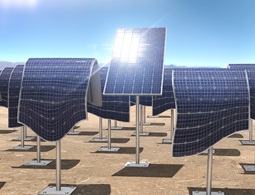
Multicomponent mixtures could provide organic solar cells that defy heat and achieve record efficiency.
Multicomponent mixtures could provide organic solar cells that defy heat and achieve record efficiency.

Solid-state radiofrequency reflectors will enable seamless wireless connectivity in the Hyperloop evacuated-tube transport system.

The molecular structure of organic semiconductors is key to the outdoor stability of organic solar cells.

A residual-based approach that detects and corrects voltage and frequency anomalies could protect power grids against covert cyberattacks.

Gallium oxide offers resistance to radiation and high temperatures, and could be used for data storage and computing in extreme conditions.

A comparison of different solar-cell technologies shows that an organic material is better at staying cool than common silicon, and how a windy environment can help.
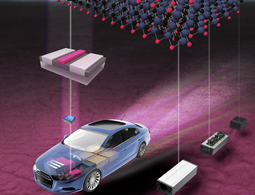
Using a two-dimensional material to electrically connect to high-power semiconductor transistors improves device performance.

Light-sensitive memory elements that can be programmed optically offer promise for more efficient real-time image analysis.

A strategic means to assess, plan and manage a nation’s digital assets across the entire value chain is essential to achieve digital sovereignty.

Next-generation silicon chips based on spintronics could improve global cybersecurity.

A simple modification of a semiconductor laser's shape can improve the quality of its beam.

Combining UV sterilization with vacuum sealing significantly extends the shelf-life of a variety of foods.