

Scientists discover corals can be trained to resist disease
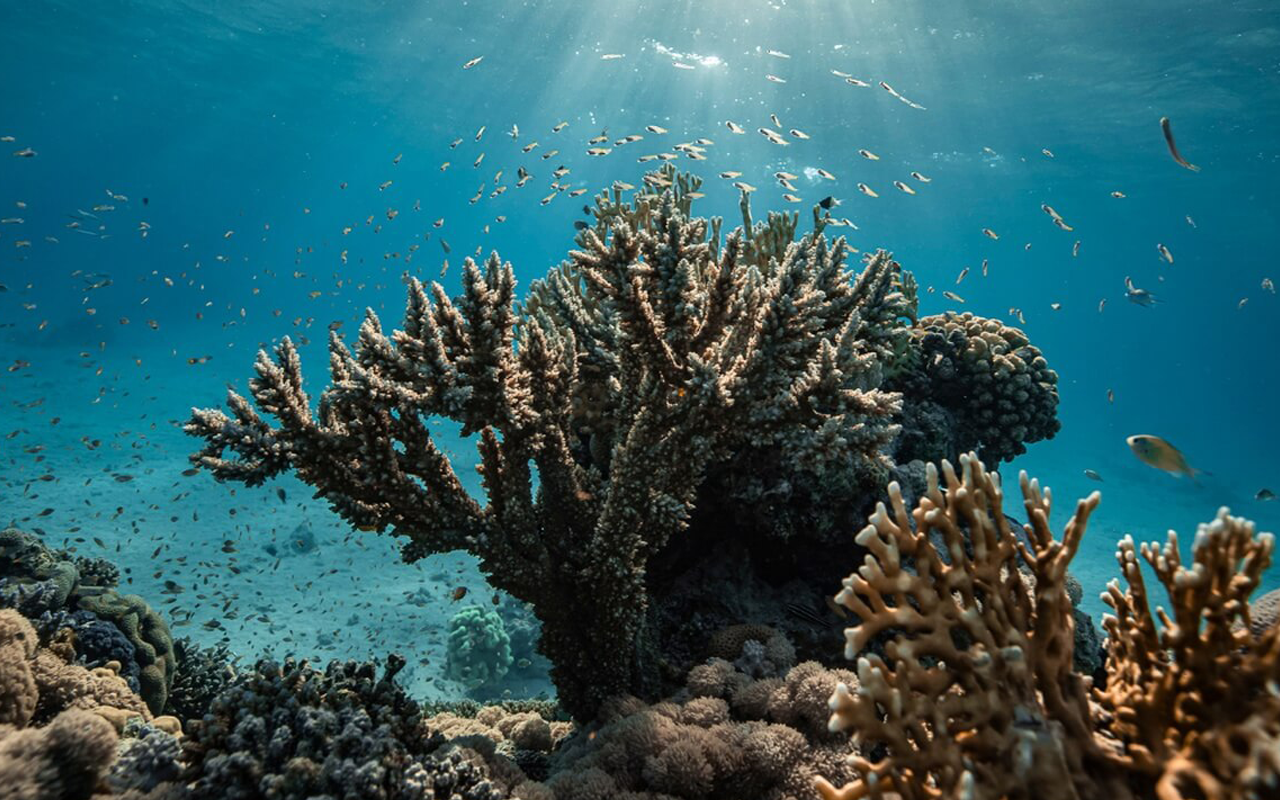
THUWAL, Saudi Arabia — Scientists at King Abdullah University of Science and Technology (KAUST) have discovered that corals can be trained to better resist disease before an outbreak occurs, a finding that could one day help protect reefs around the world.
The study, published in ISME Host Microbe, showed that corals exposed to sub-lethal doses or inactive forms of a disease-causing pathogen became more resistant when they encountered the disease again later. The process, known as pathogen priming, is similar in concept to how vaccines prepare the body to recognize future threats.
The discovery is the first evidence that corals can develop a protective, immune memory-like response despite lacking the adaptive immune systems found in humans and other vertebrates.
For decades, scientists believed corals lacked the biological machinery needed to "remember" disease threats. The new findings suggest corals may be more sophisticated than previously understood, opening an new avenue of research into how reef-building corals defend themselves against infection.
"Coral disease is becoming an increasingly important challenge for reefs worldwide," said Professor Raquel Peixoto, professor of Marine Science at KAUST and senior author of the study. "What surprised us was finding that corals exposed to a pathogen were significantly better able to respond when they encountered the same disease agent again. It suggests corals can be trained to strengthen their natural defenses, something that was not previously demonstrated."
The findings come at a time when coral reefs face growing pressure from warming oceans and other environmental stressors. Disease outbreaks can spread rapidly through reefs and coral nurseries, causing significant losses and undermining restoration efforts.
Researchers believe the discovery could eventually provide a new tool for coral conservation. By preparing corals before they are exposed to disease, pathogen priming could help improve survival in nurseries, restoration programs, and other high-value reef environments.
"Most people don't think of corals as animals that can learn from previous disease exposure," said Matteo Monti, a postdoctoral fellow at KAUST and lead author of the study. “Yet that is exactly what we observed.
This is not a vaccine in the way we think about human medicine, but the principle is similar. The most exciting part of this work is that it raises entirely new questions. If corals can develop this kind of protection, we now need to understand how widespread it is, how long it lasts, and whether it can be used to support conservation efforts in the future.”
The research also revealed that the protective effect is linked not only to changes within the coral itself, but also to changes in its microbiome, the community of microorganisms that live alongside and support coral health.
The discovery builds on KAUST's wider research into coral resilience and reef restoration. While previous work has explored the use of beneficial microbes, or probiotics, to support coral health, pathogen priming turns the microbial “dark side” into an ally by using weakened or inactive disease-causing microbes to train corals to recognize and resist future infections.
Together, the approaches could form part of a broader coral health toolbox designed to strengthen reef resilience in the years ahead.
Conducted using corals from the Red Sea, the research could have implications far beyond the region. The team has filed a patent application related to the use of pathogen priming to strengthen coral disease resistance and is now working to test the approach across additional coral species, pathogens, and environmental conditions. If successful, the technique could eventually provide coral nurseries and restoration programs with a new tool to help protect reefs before disease outbreaks occur.