When autocomplete results are available use up and down arrows to review and enter to select.
Filters 1
Clear filters
Date
Categories
Topics
- Applied Mathematics and Computational Sciences 0
- Applied Physics 0
- Artificial Intelligence 0
- Awards & Recognition 7
- Bioengineering 0
- Bioscience 0
- Chemical Engineering 0
- Chemistry 0
- Computer Science 0
- Coral 0
- Earth Science and Engineering 0
- Electrical Engineering 0
- Energy 0
- Energy Resources and Petroleum Engineering 0
- Environmental Science and Engineering 1
- Food 0
- Health 1
- Marine Science 0
- Material Science and Engineering 0
- Mechanical Engineering 0
- Plant Science 0
- Press Release 8
- Red Sea 0
- Statistics 0
- University 88
- Water 0
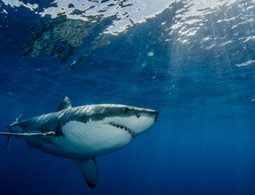
Getting to know 'Jaws'
Diving into unchartered waters of the ‘twilight zone’
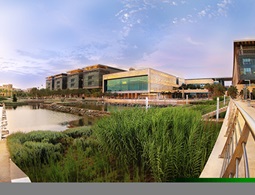
Science for society: innovation and translation research
KAUST places great emphasis on translating university know-how into real-world impact, say Kevin Cullen, vice president of Innovation and Economic Development, and John Tannaci, associate vice president for research.
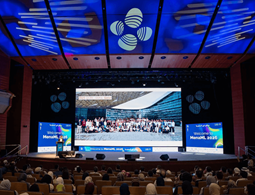
KAUST, in collaboration with MCIT, to host the second edition of the MENA Machine Learning Winter School (MenaML)
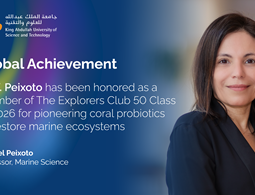
Professor Raquel Peixoto recognized as one of 50 people changing the world
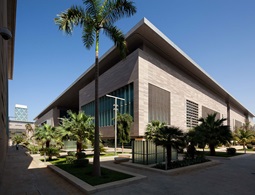
KAUST establishes Quantum Foundry for national quantum hardware development in Saudi Arabia
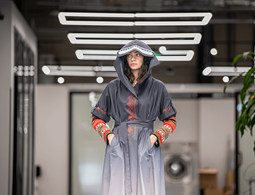
KAUST converts Red Sea seaweed into economic and environmental value
KAUST is converting Red Sea Sargassum into economic and environmental value through collaborations with KBD, Coastline Company, the Fashion Commission, and PYRATEX. The work reduces waste, supports coastal jobs, and builds new circular-economy industries for Saudi Arabia.
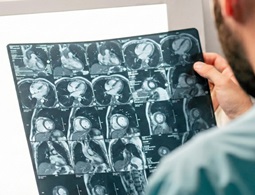
Smarter MRI image analysis for the whole heart
A Bayesian approach that selects the most informative frames for manual labeling could speed up real-time heart MRI analysis.
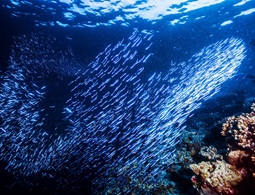
Potential gains from replenishing reef fish stocks revealed
Ensuring sustainable management of coral reef fisheries could provide food security and public health benefits for generations to come.
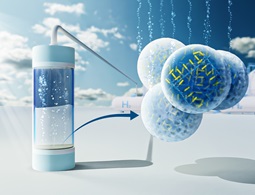
Turning infrared solar photons into hydrogen fuel
Infrared-absorbing photocatalysts capture heat from sunlight to drive efficient hydrogen production.
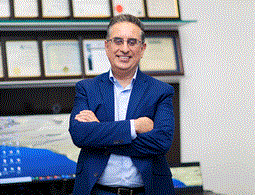
New dean Professor Husam Alshareef focuses on impact, talent, and national priorities
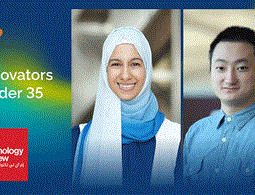
KAUST innovators named to MIT Technology Review Arabia’s Innovators Under 35 MENA list
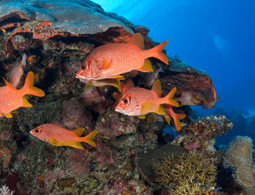
KAUST study shows recovering reef fish stocks could boost sustainable food supply by nearly 50%

Tiny sensor could transform head injury detection
After losing his brother to undetected head trauma, a KAUST researcher helped design a sensor that instantly distinguishes minor bumps from dangerous blows.
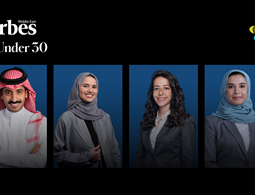
Four KAUST innovators named to Forbes Middle East 30 Under 30 2025
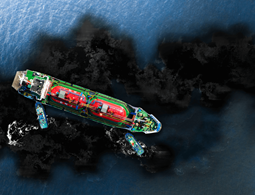
Synthetic data can accurately track environmental disasters
A breakthrough for environmental monitoring. KAUST scientists and @SARsatX show that AI trained on synthetic data can spot oil spills with high accuracy. Faster detection, better protection, less harm to our oceans.
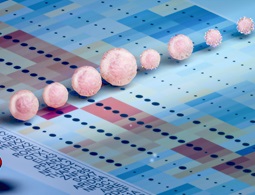
Cell atlas offers clues to how childhood leukemia takes hold
Blueprint of blood cell development traces molecular pathways of health and disease.
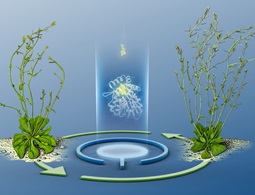
Hidden flexibility in plant communication revealed
Findings reveal how plants control powerful growth regulators through adaptable molecular strategies, offering new perspectives for agriculture.
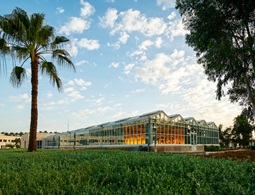
KAUST and CIMMYT collaborate to discover climate-resilient food crops in Saudi Arabia
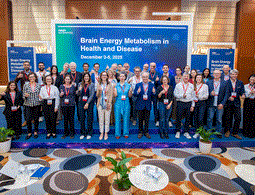
KAUST advances global dialogue on brain energy metabolism and neuroscience research
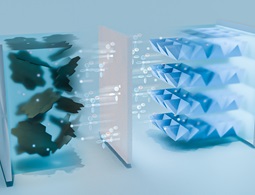
A single additive enables long-life, high-voltage sodium batteries
A new electrolyte additive helps sodium batteries achieve lithium-like performance, offering a practical pathway to scalable, lithium-free energy storage.
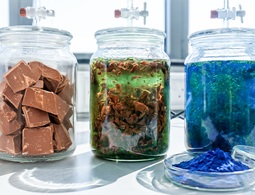
Algae and the chocolate factory
Ancient algae turn chocolate factory waste and other organic matter into valuable bio-based products, supporting a sustainable circular bioeconomy.