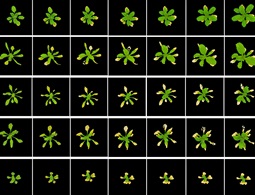
Beating the curse of dimensionality
A partial matching approach can overcome the dimensionality "curse" of continuous measurements over time to yield more accurate future predictions.
A partial matching approach can overcome the dimensionality "curse" of continuous measurements over time to yield more accurate future predictions.

Statistical tools help fine-tune the parameters and approximations of models used to make sense of large spatial datasets.

A mixed-precision approach for modeling large geospatial datasets can achieve benchmark accuracy with a fraction of the computational run time.

The evolving periodicity of the brightness of certain types of stars can now be described mathematically.

The statistics used to understand social networks reveal the diversity of functional connections in the brain.

Predicting areas of the Red Sea most susceptible to overheating by the end of the century could help conservation efforts to protect its precious coral reefs.

Large-scale analysis of pedestrian data from three European cities examines how building density and street design influence pedestrian behavior.

A high-frequency model developed using data from new high-precision rain gauges gives fresh insight into the dynamics of rain and runoff events.

A prediction model that considers multiple landslides over time in a given region may improve the accuracy of early warning systems.

Harnessing the power of deep learning leads to better predictions of patient admissions and flow in emergency departments.

Prediction of wind speed and direction for up to several hours in advance improves Saudi Arabia’s wind energy potential.
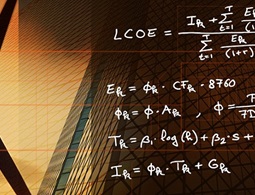
High-resolution analysis of wind speed across Saudi Arabia can help fast track the expansion of the Kingdom’s emerging world-class wind energy industry.