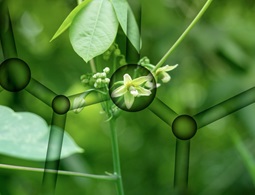
Safeguarding the right to be forgotten
An open-source software can help align artificial intelligence applications in healthcare with data privacy regulations.
An open-source software can help align artificial intelligence applications in healthcare with data privacy regulations.

A "deep" many-layered neural network does the heavy lifting in calculating accurate predictions from large complex environmental datasets.

Solid-state radiofrequency reflectors will enable seamless wireless connectivity in the Hyperloop evacuated-tube transport system.

Long-term satellite data shows a significant cooling effect of vegetation on land surface temperature.
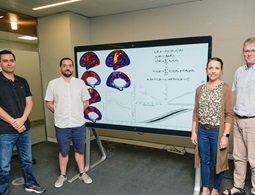
An efficiency upgrade for an already fast approximation method enables accurate near-real-time modeling of complex systems and large datasets.

Skin organoids offer a powerful platform for drug discovery in the ongoing fight against the virus formerly known as monkeypox.

New research into how humans and animals use complexity to make decisions offers some tantalizing insights into the nature of intelligence.
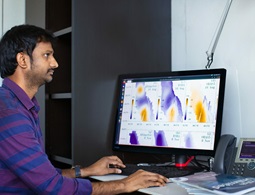
A data-driven modeling system that reconstructs oceanic circulation of the Red Sea highlights the importance of developing region-specific historical datasets.

Applying a penalty for increasing complexity provides better control over flexible statistical models.

Weather variability and extreme events affect the optimal design and operation of renewable energy systems, particularly for striking a trade off between life cycle cost and carbon dioxide emissions.

A competition on spatial statistics showcases the global state of the art in analyzing vast spatial datasets.
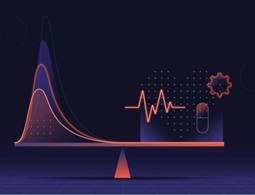
An asymmetric statistical model provides a better fit for imbalanced data with rare "positives," such as longitudinal health datasets.