

Bold ambitions, bright future: KAUST welcomes new students
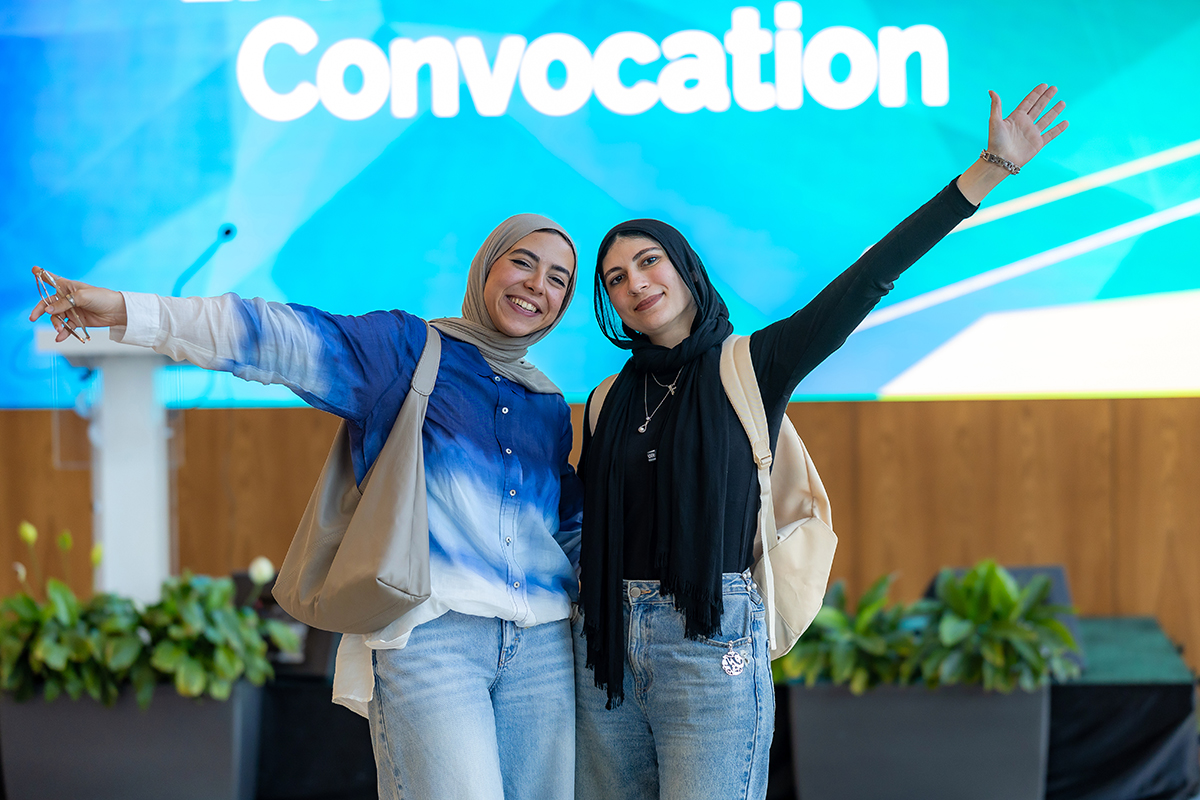
KAUST welcomes students to a new academic year during its 17th Annual Academic Convocation.
Incoming students are not simply arriving at King Abdullah University of Science and Technology (KAUST) to earn graduate degrees. They are coming with questions to explore and ambitions to make a measurable impact in Saudi Arabia and around the world.
At its 17th Annual Academic Convocation on September 1, formally opening the 2026-27 academic year, KAUST welcomed 558 new graduate students — the largest incoming class in the University’s history.
Female students represent approximately half of the incoming class, which includes students from 55 nationalities.
“It is an absolutely huge step for this university,” KAUST President Sir Edward Byrne AC said about the University achieving gender parity with its newest cohort of students. Sir Edward highlighted the opportunities awaiting the incoming class, including access to world-class faculty and extensive research facilities, as they begin their graduate studies at KAUST. “Enjoy your journey here and thrive.”
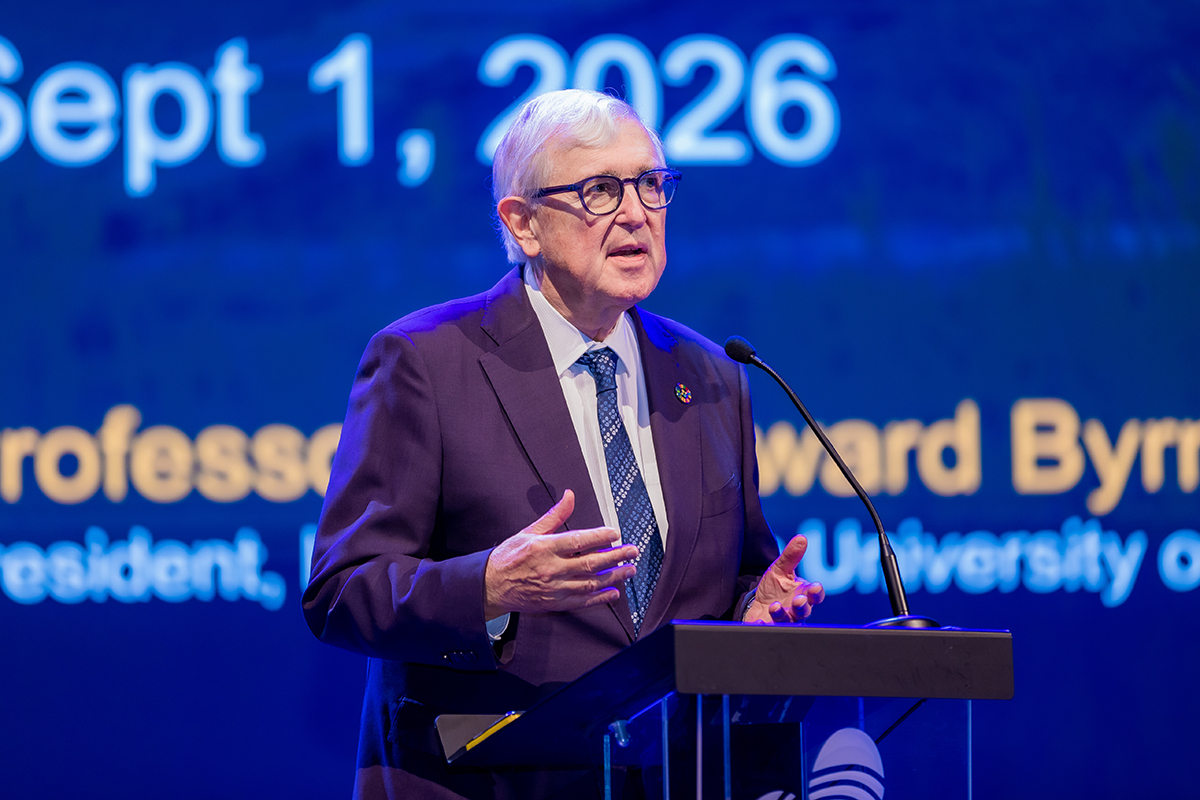
President Sir Edward Byrne AC addresses students during Convocation 2026.
Interim Senior Vice President for Education and Advancement Professor Arwa Al-Aama challenged the incoming class to consider what they hope to accomplish during their time at KAUST. She said: “As you begin your journey here, I would like for you to think about one question: What will you make possible here?”
Ambitions take shape
Jood Ali, a Saudi master’s student in bioengineering, has several developing research interests, including whether patterns of electrical activity in the brains of rats might be reliably related to comparable patterns in humans.
She is a KAUST Gifted Student Program (KGSP) alumna who completed a KAUST Saudi Summer Internship with the University’s biostatistics program. Ultimately hoping to explore computational neuroscience, she sees KAUST as an enabler of her research goals, thanks in large part to its advanced capabilities in artificial intelligence.
“I want to know how those networks give rise to consciousness,” the new student said. For that long-term goal, she sees KAUST as an environment where she can pursue it.
James Cole, a British master’s student in applied physics, is still determining his research direction. However, his long-term passion is nuclear fusion. With KAUST’s graduate support allowing him to focus fully on his studies, Cole plans to join a “niche group” on campus exploring fusion — the “Holy Grail” of clean energy. He believes fusion has the potential to one day provide abundant clean power for applications including Saudi Arabia’s desalination sector.
“I’m glad to be at this amazing university,” he said.
Hanwei Liu, a Chinese master’s student in marine science, wants to deepen her understanding of marine ecology, particularly the relationships among different trophic levels and energy transfer through marine food chains.
Liu was attracted to KAUST in part by its proximity to the Red Sea, which she considers one of the world’s most important ecosystems. “I always think marine science is a super underestimated subject,” she said.
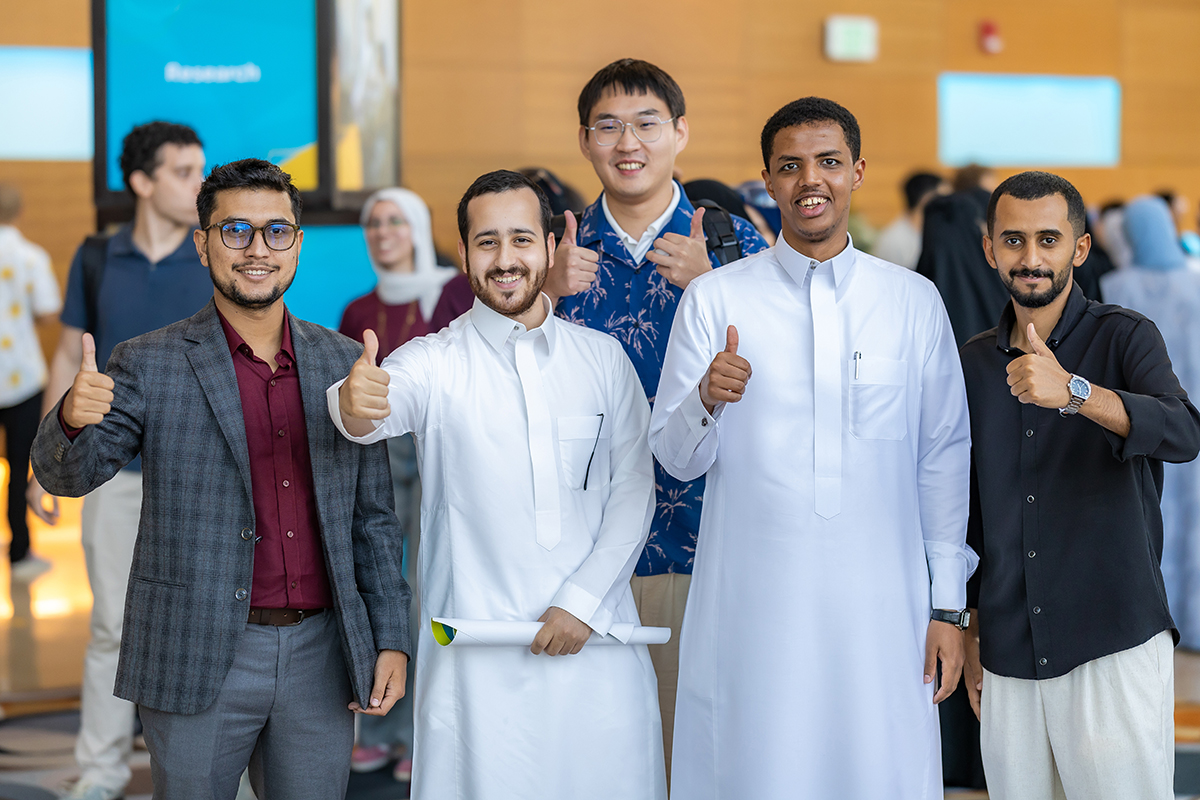
Thumbs up for a new academic year at KAUST.
But while the Red Sea is an attractive feature of KAUST, Liu noted that there are “a lot of seas in the world.” For her, the greater appeal is the breadth of research platforms and opportunities KAUST offers. She sees the University as a powerful research environment for pursuing a subject close to her heart — animal life and nature.
Investing in Saudi talent
KAUST has a responsibility to provide an environment where students can grow academically, professionally, and personally, but Al-Aama emphasized that what students do with those opportunities is ultimately up to them.
“The value of your KAUST education will be measured not only by what you learn, but what you choose to do with it,” she said, adding that the ultimate question for all new students is how they will use what they gain at KAUST to contribute to Saudi Arabia and the world. “Every generation of students leaves its mark on KAUST. Yours will too.”
For Ibrahim Murtada, a Saudi master’s student in computer engineering, KAUST is a place where ambitious students can develop their capabilities through advanced education. He sees personal development as an important part of his academic journey and those of others, believing that developing their capabilities can ultimately help them contribute to Saudi Arabia.