Deep neural networks that “get” spatial dependence
A deep-learning technique could offer accurate large-scale predictions in the field of geospatial statistics.
A deep-learning technique could offer accurate large-scale predictions in the field of geospatial statistics.
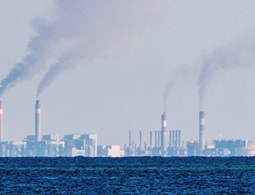
How pollutants disperse in the atmosphere can be modeled more reliably using a physically based geostatistical framework.
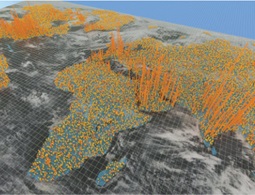
A faster and more statistically accurate modeling scheme enables better prediction of climate and environmental conditions at very large scales.
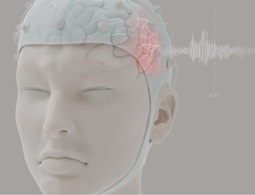
The statistics of extreme events helps to better understand epileptic seizures.

New insights narrow the gap between large-scale atmospheric models and microscale features of atmospheric winds.

Machine learning techniques used to analyze case data show promise for predicting the evolution of an epidemic.
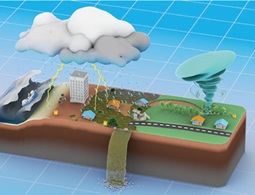
A corrected description of the "tail dependence" for extreme events leads to a better statistical model for environmental data.

Comparing different approximation methods for analyzing large spatial datasets allows for a better understanding of when these methods become insufficient.

The statistics of extreme events reveal that cryptocurrency prices tend to fall in tandem but rise more independently.

Cold still causes far more deaths than heat in India.

Stacked deep learning offers a better way to detect hacking into industrial control systems.

New modeling shows that heatwaves across Europe have increased in both frequency and spatial extent over the past century.