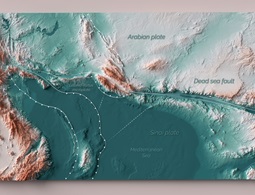
Fewer major earthquakes for the northern Dead Sea Fault
A new analytical technique enables reassessment of plate boundaries and improved slip rate estimations along the Dead Sea Fault.
A new analytical technique enables reassessment of plate boundaries and improved slip rate estimations along the Dead Sea Fault.
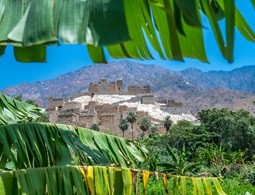
Long-term satellite data shows a significant cooling effect of vegetation on land surface temperature.
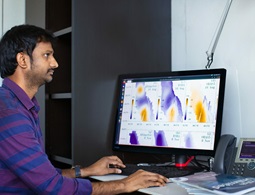
A data-driven modeling system that reconstructs oceanic circulation of the Red Sea highlights the importance of developing region-specific historical datasets.

Computer simulations show how nitrogen injections can help flush oil from underground storage.

Modeling air quality over the Arabian Peninsula reveals that pollution from anthropogenic sources is contributing to health risks and climate change.

Seasonal phytoplankton blooms in the Al-Wajh lagoon differ from those in the adjacent Red Sea due to regional water dynamics and nutrient availability.
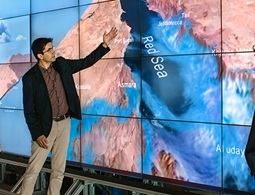
Simulations show that solar panel installations could go a long way toward addressing Saudi Arabia’s growing water crisis.
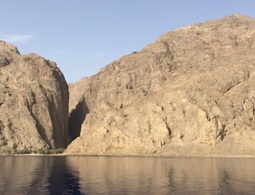
Saudi Arabia might not be shaken from its ambitious development goals, but it cannot rule out large earthquakes entirely.
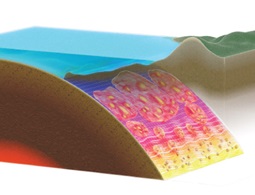
Studying slow, gentle and previously undetectable events will help reveal the origins of damaging earthquakes.

An extended epidemic model that accounts for uncertainty and the latest data can better predict the evolution of pandemics.

Trends in heat discomfort are more subtle than expected across Saudi Arabia and beyond.
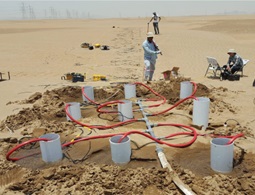
Geologic structures and deposits below planetary surfaces can be mapped faster than ever.