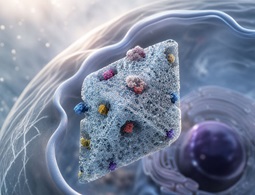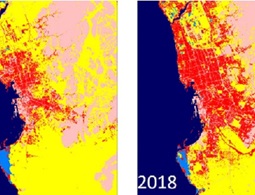
Jeddah gets caught in the rain
Understanding how storms unleash more rain over cities in the desert could improve water security in Saudi Arabia.
Understanding how storms unleash more rain over cities in the desert could improve water security in Saudi Arabia.

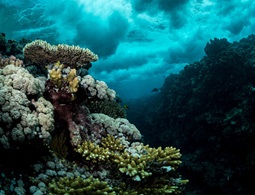
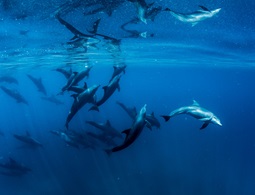
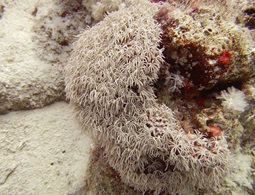
Simulations reveal unexpected connections in the Red Sea basin that could help marine conservation.
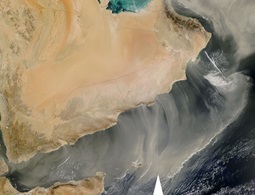
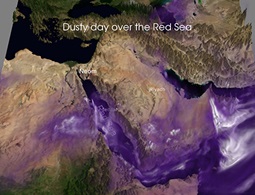
Summer dust has been increasing over the Arabian Peninsula for the past decade with global implications.
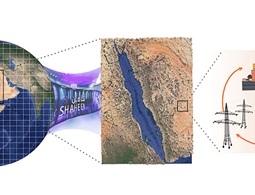
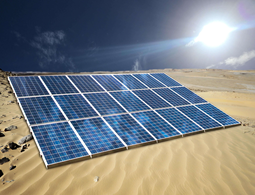
Mapping variations in sunlight across the Arabian Peninsula reveals a bright future for solar energy in the region.
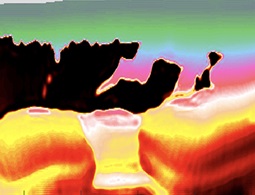
Automated imaging of underground salt bodies from seismic data could help streamline oil and gas exploration.
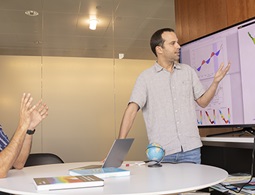
Exploring the links between natural climate cycles and the sea-surface temperature of the Red Sea reveals a cooling trend during the next few decades.
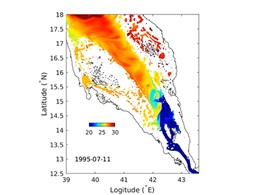
Powerful computer simulations are revealing new insights into water exchanges between the Red Sea and the Gulf of Aden.
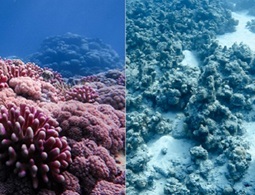
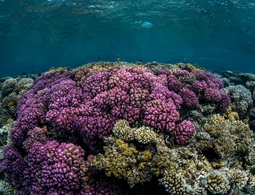
A remote sensing algorithm offers better predictions of Red Sea coral bleaching and can be fine tuned for use in other tropical marine ecosystems.
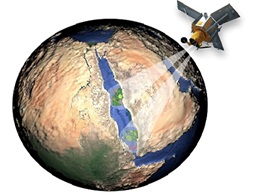
Algal blooms in the Red Sea can be detected with a new method that accounts for dust storms and aerosols.
World-class computing facilities at KAUST enable researchers to tackle complex questions in climate science and oceanography.
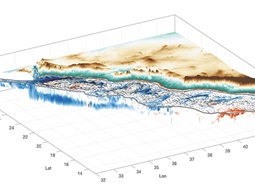
Modeling the 3D structure of Red Sea eddies shows how transport of energy and biochemical materials influences circulation patterns in the Red Sea.
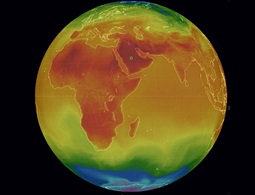
Investigating links between surface air temperatures and large-scale circulation patterns builds understanding of climate variability in the Arabian Peninsula.