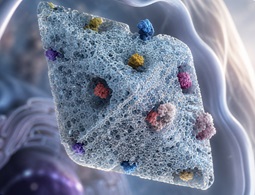
Recycling CO2 to fuel a carbon-neutral future
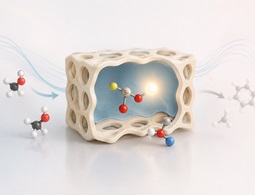
The conversion of captured CO2 into fuels and other valuable hydrocarbons could enable a sustainable nonfossil-fuel-based economy.
The conversion of captured CO2 into fuels and other valuable hydrocarbons could enable a sustainable nonfossil-fuel-based economy.
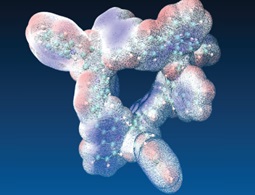
Polymer membranes with precisely controlled, uniform and very small pore structure could bring ion-sieving capacity to many applications.
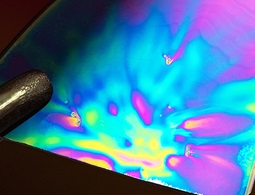
Perfecting the dimensions of chemical separation membranes is a step toward a sustainable chemical industry.

The system offers an economical way to source essential battery material.
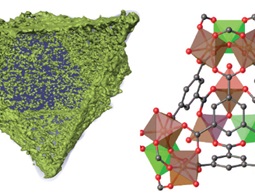
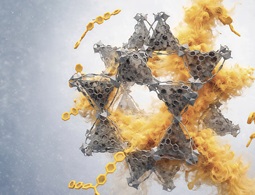
The tightly defined ratios of metals in metallic organic frameworks makes them ideal starting materials for novel catalyst creation.
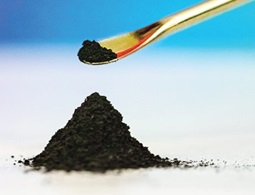
Catalyst nanoparticles trap an unprecedented range of wavelengths of light to convert carbon dioxide into methane.
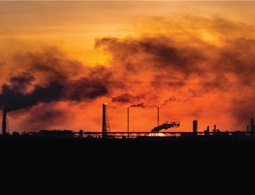
Volatile alkanes can rapidly acquire oxygen atoms in a free radical chain reaction, a process significant for fuel combustion and air pollution.
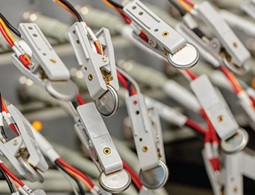
Nanostructure-templated electrochemical polymerization enhances speed and selectivity in organic membrane-based processes.
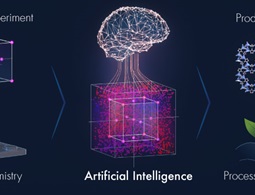
Chemistry computer algorithm does more with less experimental data to reveal the optimal way to make green materials.
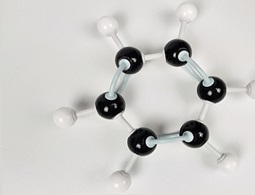
Looking closely at the chemical process that transforms methane into useful products could help unveil more efficient ways to use natural gas.
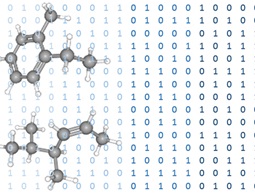
Machine learning models can rapidly and accurately estimate key chemical parameters related to molecular reactivity.
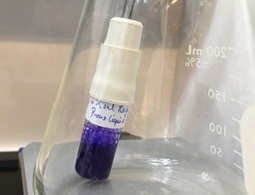
Modified metal-organic frameworks that can behave as porous liquids offer new possibilities for gas separation technologies.