A single additive enables long-life, high-voltage sodium batteries
A new electrolyte additive helps sodium batteries achieve lithium-like performance, offering a practical pathway to scalable, lithium-free energy storage.

Two-dimensional altermagnets could power waste heat recovery
Two-dimensional altermagnets that can convert a temperature difference into electricity could help recover low-temperature waste heat.
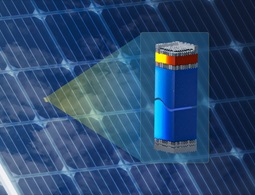
Interface engineering unlocks efficient, stable solar cells
An interface-focused strategy boosts efficiency and stability in perovskite/silicon tandem solar cells.
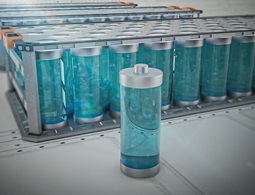
The right salt supercharges battery lifespan
Choosing the right ion ‘salt’ can help to improve the number of times a metal battery can be charged and discharged
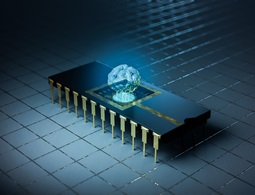
Light-powered ‘smart vision’ memories take a leap forward
Broadband, reconfigurable photonic memristors set the stage for next-generation artificial vision systems.
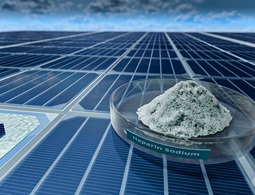
Natural polymer boosts solar cells
A thin layer of heparin sodium enhances the performance of perovskite solar cells.
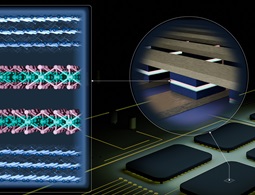
2D materials could boost magnetic data storage
An unconventional 2D ferromagnet might enable smaller and more reliable devices for data storage.

Onward and upward to smaller faster devices
The key to achieving greatly increased capacity and efficiency in semiconductor technology could be to build upwards, in vertical stacks of thin film transistors. © 2024 KAUST

Rethinking and rigor brings promising protein for cancer therapy
Drugs that inhibit a key protein should offer new targeted cancer therapy for leukemia and breast cancer.

Tough memory device aims for space missions
Gallium oxide offers resistance to radiation and high temperatures, and could be used for data storage and computing in extreme conditions.

Cool runnings
A comparison of different solar-cell technologies shows that an organic material is better at staying cool than common silicon, and how a windy environment can help.