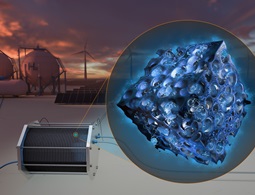
Green hydrogen from fluctuating power sources
Controversial catalyst additive improves stability in direct green hydrogen production.
Controversial catalyst additive improves stability in direct green hydrogen production.
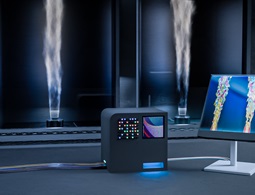
Advanced computer modeling reveals the complex combustion behavior of ammonia, a promising clean-burning carbon-free fuel, potentially accelerating its role in renewable energy systems.

After losing his brother to undetected head trauma, a KAUST researcher helped design a sensor that instantly distinguishes minor bumps from dangerous blows.
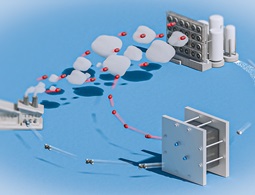
A KAUST-designed reactor uses renewable electricity to convert captured carbon into high-value chemicals, making CO₂ reuse economically viable.
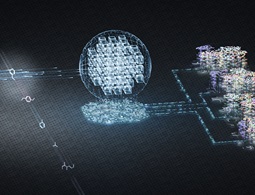
AI model overcomes sparse datasets to accurately predict the properties of experimental sustainable aviation fuels and other high-value target molecules.

Studying the physics behind this fleeting fluid phenomenon could improve various industrial processes.

Efficiently designed architecture makes it possible to manufacture passive strain sensors that are wireless, very sensitive, and extremely thin.
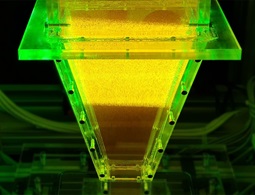
High-speed cameras show that vortices generated in turbulent fluids are more predictable and less chaotic than expected.
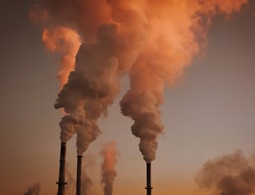
Automated system could be used to spot toxic emissions, air pollutants or diagnostic biomarkers.
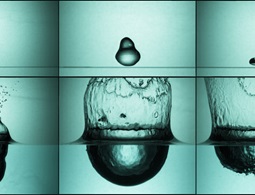
A better understanding of the dynamics of large water droplets falling into water has potential applications from fuel injection systems to climate models.

Chemical model could help to produce clean fuel from natural gas contaminant.

Complex patterns of motion emerge when water drops condense on an oiled surface.