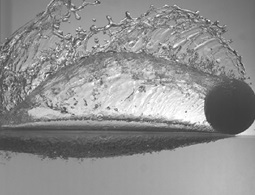
Underwater air pockets smooth out the bumps
Air cavities forming around skipping buoyant objects could help reduce drag and enhance underwater maneuverability.
Air cavities forming around skipping buoyant objects could help reduce drag and enhance underwater maneuverability.
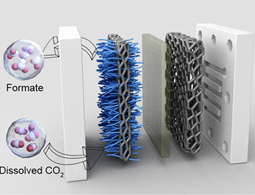
High-pressure experiments show the way to selectively recycle the greenhouse gas into a particular product.
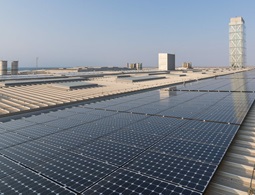
Weather variability and extreme events affect the optimal design and operation of renewable energy systems, particularly for striking a trade off between life cycle cost and carbon dioxide emissions.
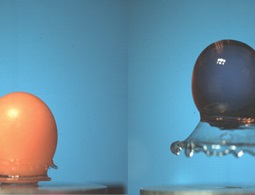
A drop of water is completely removed from a surface when a deformable sphere falls on it.
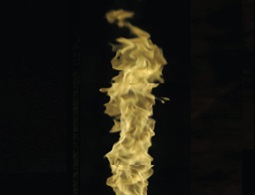
Using ammonia as a hydrogen-rich energy source requires technology that can spot pollutants in flames.
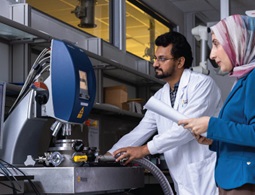
Resonating silicon microbeams sense temperature shifts induced by airborne molecules.

A universal mechanism could explain the formation of carbon nanoparticles in interstellar and terrestrial environments.
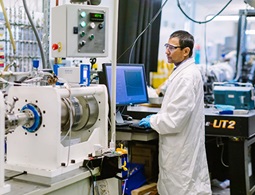
Clean and sustainable fuels could be derived by combining ammonia with complementary combustion-modifying additives.

Damage-causing bubbles might form at much lower impact velocities than expected.
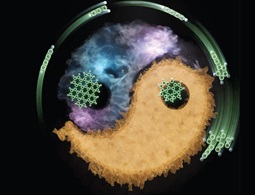
Unusual reaction pathways to hydrocarbon clusters could bring a paradigm shift to the understanding of soot and interstellar chemistry.
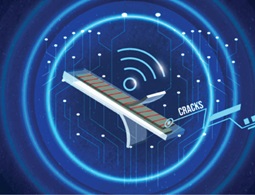
Incorporating regular cracks in electrodes for wireless strain sensors brings surprisingly better sensitivity.
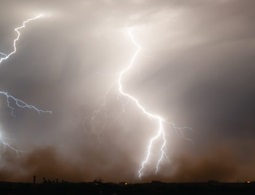
The intense sparks that occasionally accompany charged sandstorms can arise from turbulent movements of airborne dust.