Equipping Saudi talent with energy modeling skills to support AI growth
KAUST Academy collaborated with Vista Equity Partners and Energy Exemplar to deliver hands-on training in energy systems modeling, helping develop national expertise in power infrastructure planning to support Saudi Arabia’s growing AI and energy ambitions.
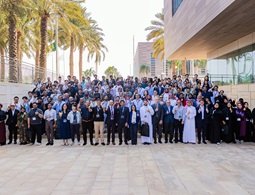
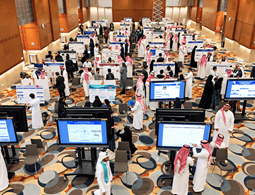
KAUST hosts the 13th Saudi HPC/AI Conference
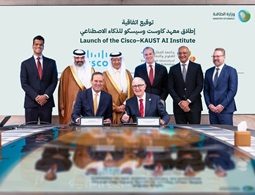
Cisco–KAUST AI Institute launches research into AI networks, data centers, and digital twins
The Cisco–KAUST AI Institute has launched its first collaborative research projects, advancing AI for data centers, smart-city networks, digital twins, and precision agriculture while strengthening AI research, talent, and infrastructure in Saudi Arabia.

KAUST and HUMAIN collaborate on cloud-based high-performance computing
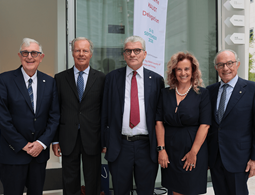
KAUST, Milano-Bicocca, and Bicocca Foundation partner to advance research and innovation
KAUST, the University of Milano-Bicocca, and Bicocca Foundation have formed a new partnership to advance research, education, and innovation across shared priorities including AI, health, sustainable energy, climate change, biotechnology, and food systems.
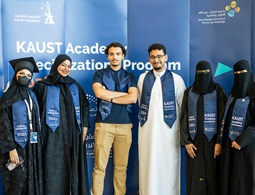
KAUST Celebrates 290 Graduates of Specializations Program, Strengthening Saudi Expertise in Technology
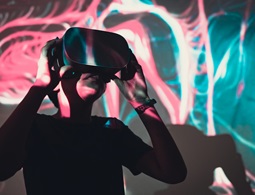
Virtual reality headsets open a window into the mind
AI models can use data from motion sensors to infer what users perceive, but the research reveals privacy risks.
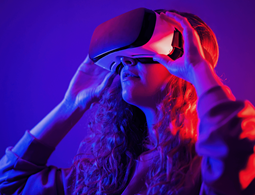
Computer science study reveals potential privacy risk in virtual reality headsets
KAUST researchers discovered that motion sensors in commercial VR headsets can capture subtle physiological signals that reveal information related to visual perception. Using an AI system called BRAVESPY, the team demonstrated that sensor data could potentially expose sensitive brain-related information without users realizing it.
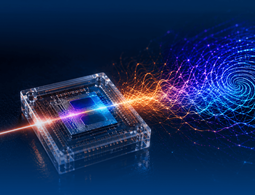
KAUST researchers develop new way for devices to prove their identity online
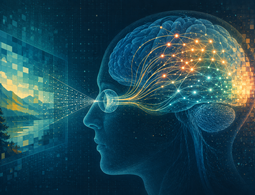
Seeing smarter with a light-controlled synaptic device
An optical synaptic device that both senses and processes visual information holds promise for wearable electronics and bioinspired machine vision systems.
Intelligent vision chip offers brainlike processing
Retina-inspired optoelectronic synapse can perform image processing and optical logic tasks.