

When autocomplete results are available use up and down arrows to review and enter to select.
Filters 1
Clear filters
Date
Categories
Topics
- Applied Mathematics and Computational Sciences 47
- Applied Physics 2
- Artificial Intelligence 0
- Awards & Recognition 1
- Bioengineering 1
- Bioscience 0
- Chemical Engineering 0
- Chemistry 0
- Computer Science 1
- Coral 0
- Earth Science and Engineering 3
- Electrical Engineering 3
- Energy 0
- Energy Resources and Petroleum Engineering 2
- Environmental Science and Engineering 0
- Food 0
- Health 0
- Marine Science 2
- Material Science and Engineering 0
- Mechanical Engineering 1
- Plant Science 0
- Press Release 0
- Red Sea 0
- Statistics 11
- University 0
- Water 0
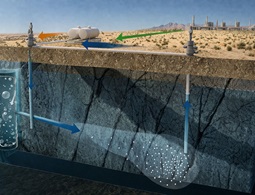
From gas to stone: KAUST demonstrates CO₂ sequestration underground with reduced water usage
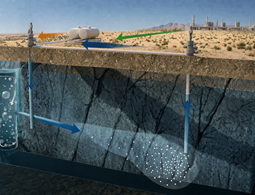
Carbon sequestration for arid regions overcomes water constraints
By recirculating groundwater, carbon emissions can be mineralized without additional water, enabling subsurface carbon dioxide storage in arid regions.
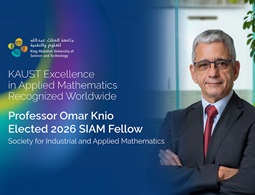
KAUST’s Omar Knio named SIAM Fellow for contributions to applied mathematics
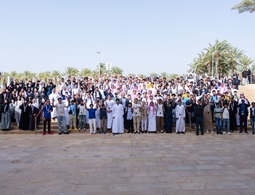
KAUST Concludes National Mathematics Competition Finals
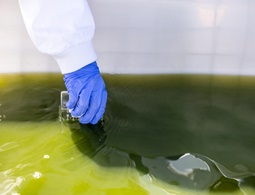
Harnessing algae’s green superpowers
Harvesting and processing micro- and macroalgae hold versatile industrial applications and could help meet food security and carbon neutrality goals.

Climate action needs a tree change
Despite scientific debate, protecting and restoring natural forests is essential for global climate mitigation and adaptation.

Clean jet fuel chemistry takes flight
AI-assisted search rapidly pinpoints high-performance catalyst for direct CO2-to-jet fuel conversion.
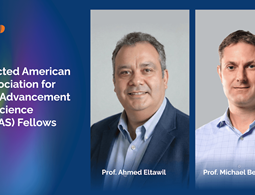
Two KAUST faculty elected Fellows of the American Association for the Advancement of Science
Two KAUST professors have been elected Fellows of the American Association for the Advancement of Science, recognizing internationally distinguished contributions to wireless communications and marine ecology. The honor highlights KAUST’s growing global impact across disciplines.
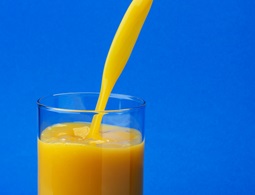
Natural solvents enable fully bio-based membranes
Vanillin and thymol replace fossil-based solvents to produce a fully bio-based ultrafiltration membrane that can clarify fruit juices.

Preparing Saudi engineers for the Kingdom’s future
From environmental policy to digital operations in global energy, KAUST prepares Saudi engineers with the skills, leadership, and global perspective needed to support Vision 2030 and the Kingdom’s evolving workforce.

AI-based hydrogen plant models improve power grid stability
Realistic AI models of hydrogen plants help stabilize power grids with high levels of renewable energy.

Where forests grow matters for their climate impact, global study finds

Plant diversity reduces the impacts of grazing pressure in drylands
A global field survey of dryland sites shows that plant species richness is the strongest predictor of resistance to overgrazing.
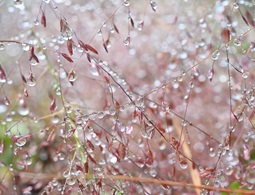
Water-repelling surfaces reveal surprising charging effects
When water leaves a hydrophobic material, it acquires an electrical charge that could affect liquid-handling processes.

Plant diversity predicts resistance to grazing pressure on drylands
Plant Diversity Helps Dryland Ecosystems Survive Grazing Pressure, Global Study Finds - KAUST-Led Study Reveals Plant Diversity Shields Dryland Ecosystems From Grazing
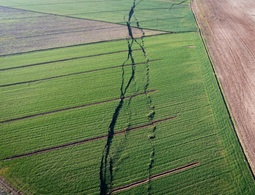
Asymmetric surface deformations reveal ongoing processes after earthquakes
Detailed satellite radar data highlight underlying post-seismic processes at work in the Earth’s subsurface following the 2023 Kahramanmaraş earthquakes.
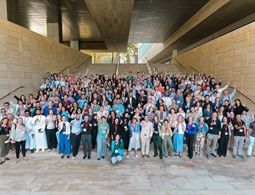
From reefs to resilience: Global experts convene at KAUST to advance One Health
Global coral reef experts convened at KAUST for the Nature conference Corals, Coasts and One Health, highlighting how reef health, coastal resilience and human well-being are interconnected — and why coordinated science, restoration and policy are critical to protecting reefs and communities.
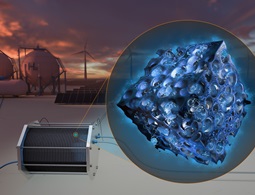
Green hydrogen from fluctuating power sources
Controversial catalyst additive improves stability in direct green hydrogen production.
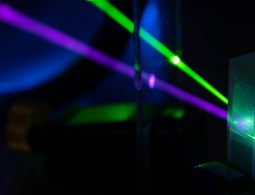
Quantum dot lasers outshine expectations
Resilient quantum dot lasers are set to make simpler, greener, and cheaper light-driven integrated circuits.