

01
Provide high-resolution rock sample imaging capabilities;
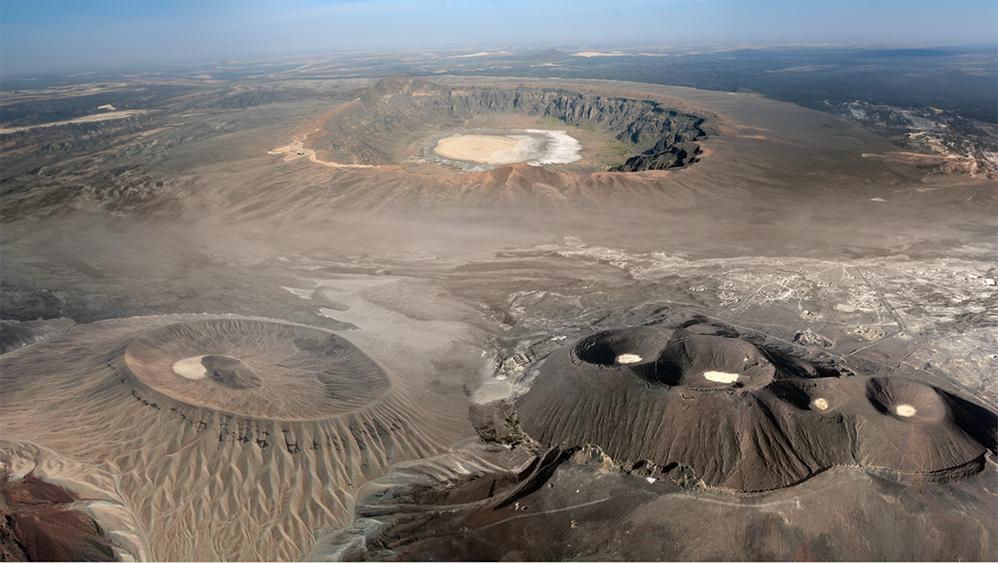
The Geo-Energy & Mineral Resources Platform is a unique facility consisting of over 3,200 square meters of world-class space for research in the area of petroleum engineering, geo-energy and mining materials, well integrity, and flow assurance. GEMs laboratories are a critical pillar of KAUST’s strategy and research capabilities. Its lab assets, together with KAUST’s world-class Core Laboratories, empower faculty, researchers, postdocs, and students to push the boundaries in subsurface energy research and explore the Kingdom’s mineral resources. The Platform lays the foundation for future scientific discoveries and economic developments.
Our staff consists of a seasoned platform manager and three highly skilled laboratory specialists. This experienced team ensures lab safety, supports testing programs, trains users, and maintains the Platform’s unique and advanced equipment to ensure it remains fully functional at all times. This guarantees that the Platform delivers the most accurate, reliable, repeatable, and impactful research results.
The Geo-Energy Mineral & Resources Platform offers the following capabilities:
Provide high-resolution rock sample imaging capabilities;
Allow reservoir rock/fluid characterization with focus on bulk chemistry of minerals and surfaces;
Enable the measurement of core and fluid parameters to assist in efficient recovery of hydrocarbons as well as safe storage of CO2 and hydrogen;
Emphasize on advanced applications for the energy sector with fundamental testing of geo-materials, discovery of coupled thermo-hydro-bio-chemo-mechanically processes and related emergent phenomena;
Allow a full mechanical characterization of rock materials and describe pre- and post-failure dynamic/static elastic properties, failure phenomena and more with its state-of-the-art rock mechanics equipment;
Provide several advanced sample preparation devices that ensure the best quality, integrity, and the highest possible success rate for any scheduled testing program;
Allow preparation and full characterization of cement and concrete products utilizing Saudi Arabia’s vast resources and serving its construction boom and decarbonization plans.
High-impact instruments supporting research
Manufacturer: MetaRock
We operate a triaxial testing system from MetaRock designed as a research solution for evaluating mechanical rock properties. The system consists of a single innovative 200k lbs load frame utilizing twin precision aligned ball screws and a high pressure (20,000 psi) and temperature (160degC) triaxial testing vessel. In addition, ultrasonic acoustic measurements and dual pore pressure loops inside of the vessel further enhance the testing and monitoring capabilities. Specifically designed software aids in running fully automated and highly precise test sequences and load cycles with this equipment.
Hence, rock specimens up to 1.5" in diameter and 3" in length can be subjected to realistic in situ stress, temperature, and pore pressure conditions down to several km depth. With this, their mechanical behavior during loading and unloading can be monitored and analyzed providing important understanding of rock deformation and quantifying their specific parameters that are critical for describing and forecasting mechanical rock behavior in the reservoir during drilling, production, and injection.
Manufacturer: Epslog
The Scratch Tester is able to automatically calculate and record:
Manufacturer: MetaRock
The Basic Core Flood System is designed to allow single or two-phase flow testing of 1.0” or 1.5” diameter samples up to 3.0” long at temperatures up to 80°C, confining pressures up to 10,000 psi, and pore pressure up to 2000 psi The tests that can be performed are:
Manufacturer: MetaRock
The advanced core flood system is designed to allow single or two-phase flow testing of 1" or 1.5" diameter samples up to 6" long at temperatures up to 120 degrees C, confining pressures up to 10,000 psi, and pore pressure up to 2000 psi.
The tests that can be performed are:
Manufacturer: MetaRock
The multi-role 10-cell system is designed to allow samples to be cleaned, saturated with fluid, and perform various tests while under isostatic stress.
The tests that can be performed are:
Manufacturer: MetaRock
The research grade helium porosimeter is designed for measurement of difficult samples such as shales and tight gas sands where the absolute highest precision is required. It is designed to accurately determine the grain volume of porous materials via the helium expansion method. The equipment can automatically calculate and record:
Manufacturer: MetaRock
The steady state permeameter, SSK-400, is designed to overcome the challenges associated with quantifying low permeability measurements and avoiding major pitfalls. The equipment can measure:
Manufacturer: Bioline Scientific
The One Attension Theta-High Pressure is a tensiometer for measuring wettability and interfacial tension at high pressures and high temperatures within enhanced oil recovery research. The instrument allows to explore wide experiments such as:
Manufacturer: Oxford Instruments
2 MHz models are the industry standard for routine measurements of relaxation distributions and basic petrophysical parameters, 12 MHz models are used for more sensitive measurements of relaxation distributions which allows to do Magnetic Resonance Imaging (MRI) on core samples. The instruments are capable of performing following:
Manufacturer: Tescan
CoreTom is a multi-resolution micro-CT system used for the non-destructive acquisition of 3D datasets of a sample internal structure. Its key specifications include: an open type directional X-ray source (30-180 kV) with a maximum operating power of 300 W, a large amorphous Si flat panel detector (2856 x 2856 pixels), and nine motorized axes to adjust the distance between the source-sample-detector. The system configuration permits to address a wide range of applications such as:










Rock Mechanics Technician

Platform Manager


Geoscience Research Specialist
Fluids interact with faults and fractures in the subsurface—a complex coupled system involving physical and chemical processes across multiple scales. The research combines mathematical and computational modeling with laboratory observations to uncover the fundamentals of friction and poromechanics.
The research is split into three (3) categories:
Fault poromechanics research advances the understanding of fluid–fault interactions and contributes to strategies that minimize seismic risks while maximizing fluid flow associated with subsurface energy operations, including CO2 sequestration and geothermal energy.
Insights can also be extended to other geohazard problems such as non-volcanic tremors and landslides.
RockGem address rock- and geomechanical behavior of fractured reservoir rocks (both carbonates and clastics) under drilling, completion, and production conditions – in particular in response to pore pressure changes and how they impact reservoir fluid flow and production. Results from these research activities – conducted mainly in GEMs state of the art rock mechanics laboratory – provide disruptive insights into rock’s constitutive behavior and associated fluid flow models.
Closed-Loop Reservoir Management (CLRM) represents a critical approach to optimize performance in geo-energy fields while systematically addressing risks from subsurface uncertainties, operational challenges, economic and environmental factors. This research focuses on developing the next generation of Intelligent Closed-Loop Reservoir Management (iCLRM) framework to achieve superior capabilities in real-time predictive modeling, accurate physics characterization, uncertainty quantification, and intelligent decision-making.
The framework blends cutting-edge computational methods with fundamental reservoir engineering principles to resolve challenging geo-energy problems.
Specifically, iCLRM incorporates several key components:
These technical advancements will position iCLRM as a practical and paradigm-shifting solution for the energy industries who seeks for efficient and sustainable management of geo-energy processes, from hydrocarbon and geothermal recovery to geological storage of CO2 and H2.
This research focuses on the development of advanced mineral extraction and processing technologies that minimize environmental impact while ensuring economic viability. We use a combination of thermodynamic modeling and process experiments with detailed mineralogical characterization, geo-metallurgical resource modeling, and stochastic optimization to achieve these goals.
Specific areas of interest include
Collaboration with the cement industry through the Future Cement Initiative (FCI), and with Maaden on ore reduction and processing are key aspects of this research theme.
Cutting-edge efforts in carbon mineralization and mineral extraction developed innovative solutions to address climate and resource challenges. The expertise spans both in-situ and ex-situ CO2 mineralization in basaltic and ultramafic formations, combining advanced geochemical modeling, field-based geological assessment, and laboratory experimentation. This involved the successful design and implementation of Saudi Arabia’s first CO2 mineralization pilot in Jizan – in collaboration with Aramco – as well as a novel technology for accelerated basalt dissolution and selective recovery of valuable metals.
In an environment where major mineral discoveries are less and less likely to be made at the Earth’s surface, new approaches to mineral exploration are required to secure future supply. Integrating recent advances in remote sensing technology, geophysical and geochemical exploration methods, geological modelling techniques, and machine learning tools establish a novel and intelligent exploration framework. The goal is to acquire high fidelity information for exploration targets and explicitly accounting for subsurface uncertainties.
Results help exploration companies to optimally allocate their resources for data acquisition and exploration drilling. This offsets increased costs from ever more complex exploration problems. In addition, the developed technologies have clear applications in the exploration for renewable energy resources such as geological H2, as well as low-carbon extraction and processing of minerals.
This research is fundamentally focused on understanding the regional geology of Arabia and the Red Sea in particular. It provides a critical foundation for hydrocarbon, mineral, and geothermal resource exploration, as well as underground gas storage and CO2 sequestration. The GEMs laboratory is equipped to prepare geological samples for optical and electron microscopic studies and XRF, XRD, and ICP-MS analyses.
GEMs cutting-edge research infrastructure enables advanced R&D in improved oil recovery through a comprehensive suite of experimental and modeling capabilities. The platform supports detailed investigations into conformance control and water shut-off techniques with specialized expertise in well testing and stimulation to assess reservoir performance and boost production.
We conduct advanced chemical treatment studies using tailored polymers and surfactants to address complex reservoir environments. This also includes active research in CO2-enhanced oil recovery (CO2-EOR) through core flooding experiments and numerical simulations.
Complementing these efforts is fundamental research in adsorption, wettability alteration, and interfacial dynamics, using microfluidic systems and core flooding setups. Advanced imaging tools such as micro-CT and NMR enhance these studies as they provide high-resolution insight into fluid-rock interactions and pore-scale flow behavior.
Chair
Research Professor
Co-Chair