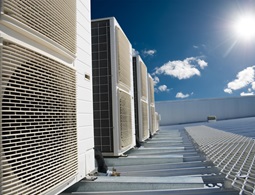
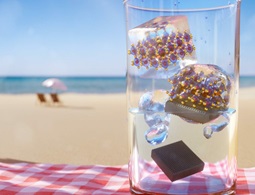
Cool runnings
A comparison of different solar-cell technologies shows that an organic material is better at staying cool than common silicon, and how a windy environment can help.
Laser treatment boosts battery performance
Pulses of light tune MXene's structure to improve energy storage and battery stability.
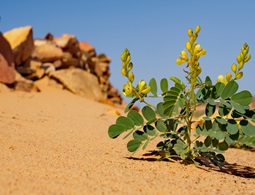
Desert microbes turn on drought tolerance when needed
Priming crop plants with a microbe sourced from the roots of desert plants could be a powerful tool to boost crop plant's resilience to drought.
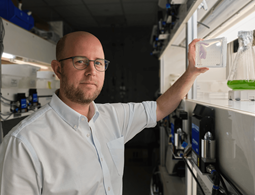
Tiny algae have huge potential for Saudi Arabia’s bioeconomy
A purpose-built lab is enabling bioprospecting for local strains of microalgae and helping to shape the future of Saudi Arabia’s algal biotech industry.
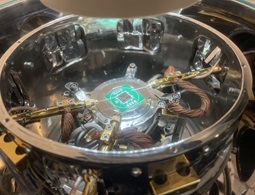
Protons set to power next-generation memory devices
A proton-driven approach that enables multiple ferroelectric phase transitions sets the stage for ultralow power, high-capacity computer chips.
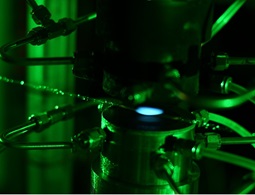
Freeze charges in flames
Laser experiments reveal how high voltage affects charged ions in burning fuel.
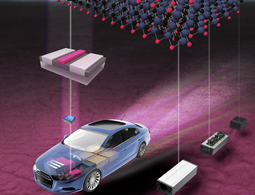
2D metal contacts stop transistor leakage currents in their tracks
Using a two-dimensional material to electrically connect to high-power semiconductor transistors improves device performance.
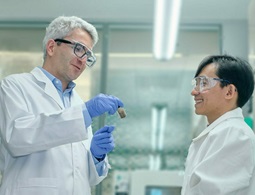
A better way to create space
High-strength but low-density mesh-like polymers with applications in adsorption are synthesized using a simple new method.
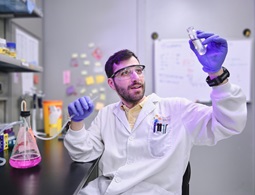
Leukemia spread fueled by messenger particles
Tiny packets of molecular cargo shed by cancer cells seed the foundations for metastasis at distant sites in the body.
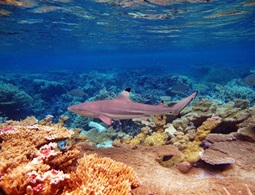
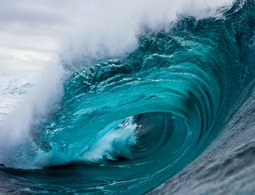
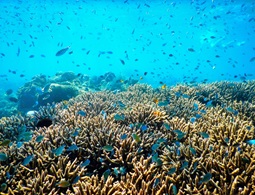
Ocean current comes to the rescue for Pacific island reefs
Surprising changes to a Pacific Ocean current during one of the strongest recorded El Niños saved a remote island’s coral reefs while others were devastated by mass bleaching.
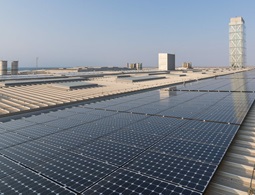
Balancing renewable energy systems in Saudi buildings
Weather variability and extreme events affect the optimal design and operation of renewable energy systems, particularly for striking a trade off between life cycle cost and carbon dioxide emissions.