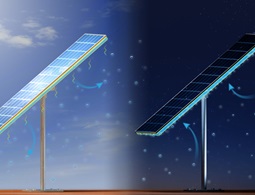
New cooling technology raises power and longevity of solar cells
King Abdullah University of Science and Technology (KAUST) and King Abdulaziz City for Science and Technology (KACST) have teamed up to make a significant breakthrough in solar energ.
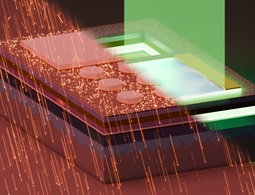
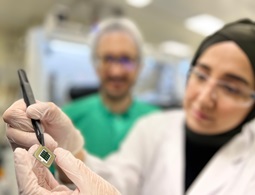
Our researchers have developed a novel composite material that passively cools solar cells. This innovative material absorbs moisture at night and releases it during the day, effectively keeping solar panels cooler, enhancing their power output, and extending their lifespan.
Tested for weeks in the Saudi desert, solar cells with this material showed superior performance. The material is also relatively cheap to fabricate and reduces maintenance needs, cutting electricity generation costs by 18%. Experiments in cold, wet climates confirm its universal applicability.
This work, led by Professor Qiaoqiang Gan and building on Professor Stefaan De Wolf's world-record solar cell designs, exemplifies KAUST's commitment to sustainable energy and cross-disciplinary innovation.

Combat climate change by eliminating easy targets
Swift action to curb methane emissions could rapidly bring down the rate of global warming, modeling shows.
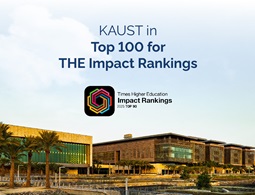
KAUST sustainability efforts recognized with its highest ranking in THE Impact Rankings
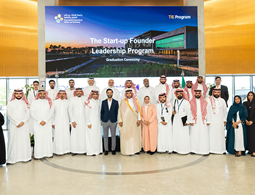
KAUST and NIDLP empower Saudi entrepreneurs
KAUST’s TIE program and NIDLP launched the “Startup Founder Leadership Program” in May 2025 to equip Saudi entrepreneurs with business skills and real-world connections. Co-developed with SDA Bocconi, the training supports Vision 2030 by enabling innovation, cross-sector collaboration, and startup growth in strategic industries.
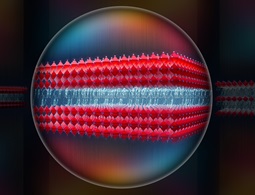
Electron movie guides design of layered perovskite materials
Tracking how charge flows across the surfaces of 2D perovskites should help to design better solar cells and light-emitting diodes.
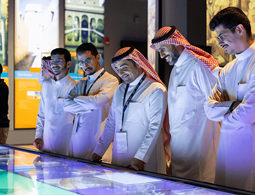
NextEra bootcamp ignites Saudi deep tech ecosystem: 16 startups poised to reshape industries
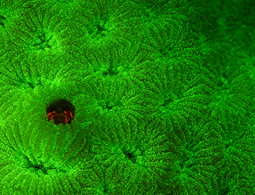
Tiny crabs glow to stay hidden
Symbiotic crabs use fluorescence to camouflage themselves in coral reefs.
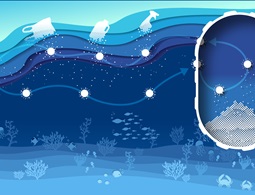
Magnetic nanoparticles capture microplastics from water
Machine learning helps to find the most efficient approach to trap plastic fragments.

Powering geothermal in Saudi Arabia

KAUST develops nanotechnology that improves crop yields