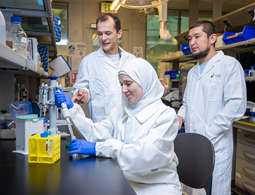
New genetic maps expected to improve personalized medicine for underrepresented populations
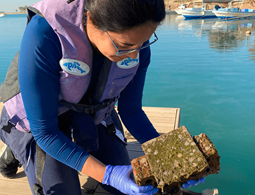
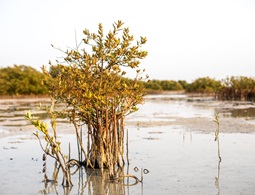
KAUST and National Center for Wildlife partner to protect marine ecosystems

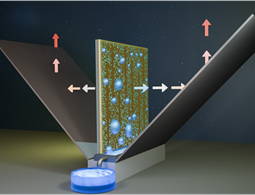
Falling water forms beautiful fluted films
Studying the physics behind this fleeting fluid phenomenon could improve various industrial processes.
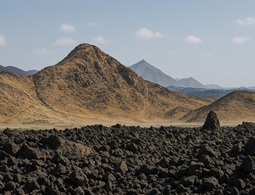
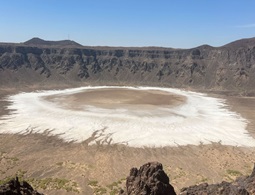
The Saudi Geological Survey is using KAUST AI technology to monitor earthquakes in the Kingdom
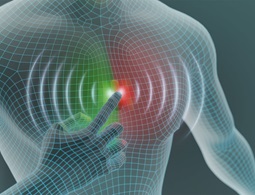
Promising patch for blood pressure monitoring
A wearable, optoelectronic patch worn on the skin could transform blood pressure monitoring for patients with chronic health conditions.
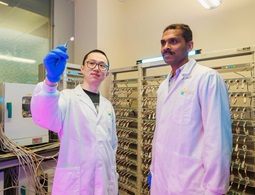
A little salt is good for battery health
Proud to share a significant discovery from KAUST's Center of Excellence for Renewable Energy and Storage Technologies (CREST). Our scientists have identified a critical molecular solution to enhance aqueous battery life and performance: the strategic use of sulfate ions.
Published in Science Advances, this research reveals how sulfate ions stabilize water molecules to dramatically reduce parasitic reactions that degrade the battery anodes. The study shows that this simple, cost-effective addition can extend battery lifespan by over 10 times, paving the way for safer and more economical energy storage solutions.
This collaborative effort, bringing together diverse expertise in battery design, electrochemical modeling, and advanced spectroscopy, underscores CREST's commitment to leading renewable energy innovation. This breakthrough has immense potential for large-scale energy storage, supporting the integration of solar power into grids and contributing to the Kingdom's ambitious energy transition.
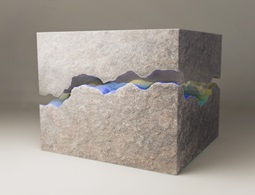
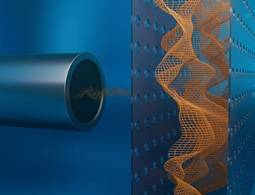
Stylolites complicate sound wave propagation in sedimentary rock samples
Weak discontinuities in limestone rock samples introduce noise into acoustic imaging with implications for monitoring lab-scale hydraulic fracturing.
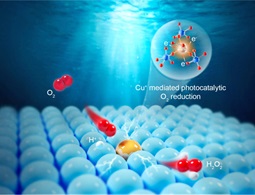
Catalysts provide the right pathway to green energy
A novel material is shown to be one of the most efficient photocatalysts for solar-driven production of hydrogen peroxide.
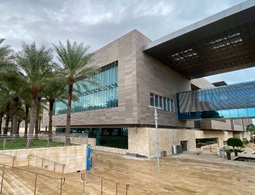
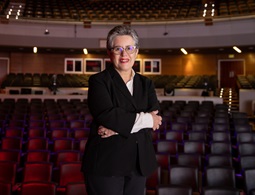
KAUST startup Saee delivers logistics innovation, reflecting University’s entrepreneurial impact
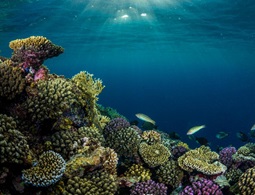
Adoption of AI to accelerate world's largest coral restoration project
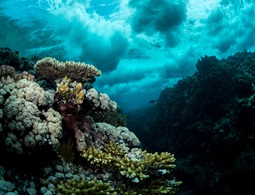
AI reveals the universal beauty of coral reef growth
A study of global coral reef distributions reveals that reefs exhibit universal spatial properties conforming to mathematical power laws.