



We hope the Center of Excellence for Generative AI will contribute to a new Golden Age for science, analogous to the Islamic Golden Age that started over a millennium ago when the Middle East was leading the world in science and technology.
Program Affiliations
Center of Excellence
Biography
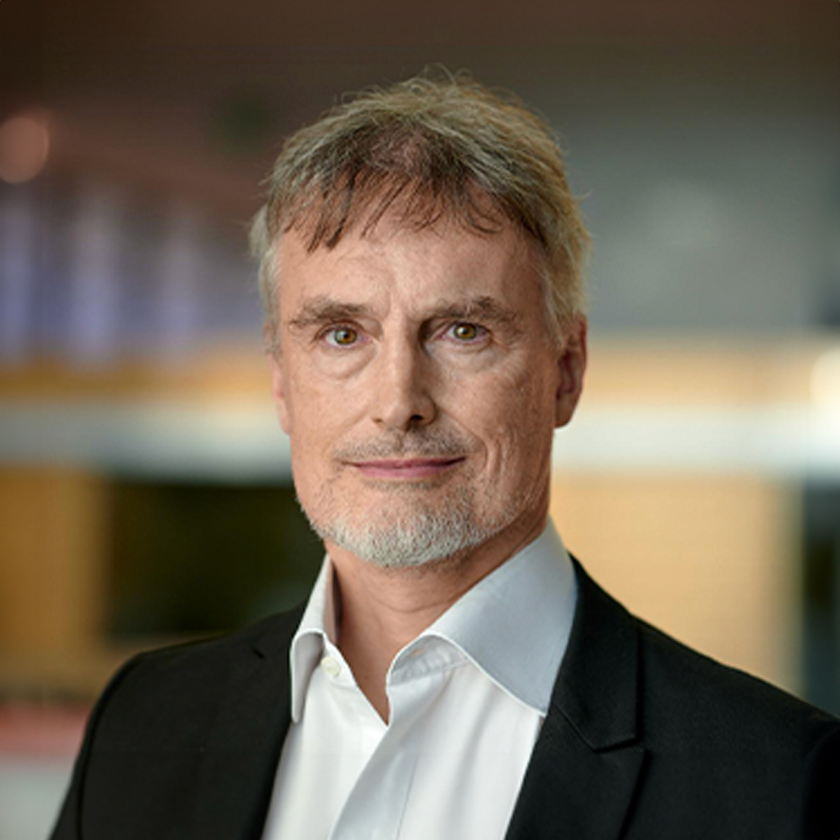
Jürgen Schmidhuber is the co-chair of the Center of Excellence for Generative AI (GenAI) at KAUST and a professor in the Computer Science Program.
His pioneering work in deep learning neural networks has shaped modern AI. The New York Times captured this influence with the headline: "When A.I. Matures, It May Call Jürgen Schmidhuber' Dad.'"
Between 1990 and 1991, he laid foundations of Generative AI by introducing the principles of Generative Adversarial Networks, the basis for deepfakes; unnormalised linear Transformers, embodying principles behind the "T" in ChatGPT; self-supervised Pre-Training for deep learning, e.g., for the "P" in ChatGPT; and neural network distillation, the “teacher–student” method that underpins efficient training and deployment of many modern AI models, including systems such as DeepSeek.
His lab developed Long Short-Term Memory (LSTM), the most cited AI of the 20th century, and the Highway Net, a variant of which has become the most cited AI of the 21st century.
He has pioneered meta-learning, machines that learn to learn, since 1987, and neural AIs that set their own goals since 1990. His formal theory of creativity, curiosity & fun (2006-2010) mathematically explains art, science, music, and humor.
His contributions became embedded in everyday technologies, underpinning large-scale deployment of AI systems in smartphones, speech recognition, and machine translation during the rapid expansion of consumer AI.
Before joining KAUST, he served as the Director of the Swiss AI Lab, IDSIA, and was a professor of Artificial Intelligence at the University of Lugano (USI) from 2009 to 2021.
Schmidhuber earned his doctorate in Computer Science from the Technical University of Munich (TUM), Germany, in 1991. He has co-founded various Swiss AI companies and authored over 400 peer-reviewed papers. He is a frequent keynote speaker and adviser on AI strategies to multiple governments.
At KAUST, Schmidhuber leads various AI research projects, contributes to the development of AI-related educational programs, and engages with public and private sector organizations in Saudi Arabia and globally.
Research Interests
Since his mid-teens, Schmidhuber's long-term ambition has been to build a self-improving AI that surpasses human intelligence, at which point he envisages stepping back, having achieved that goal. At KAUST, he works with many faculty members with research interests in AI. He spearheads research on AI applications across various fields, including health care, drug design, chemistry, materials science, natural language processing, automation, robotics, and soft robotics.

Education Profile
Habilitation, Computer Science, Technical University of Munich, Germany, 1993
Doctor of Philosophy (Ph.D.), Computer Science, Technical University of Munich, Germany, 1991
Diploma, Computer Science and Mathematics, Technical University of Munich, Germany, 1987
Awards and Recognitions
Research Areas
- Computer Science