

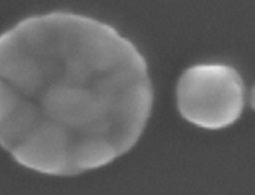
Silver nanospheres expose cancer’s single flaw
Arrays of tiny silver nanolenses can detect a unique mutation with the potential to cause cancer among a mix of human peptides.
Arrays of tiny silver nanolenses can detect a unique mutation with the potential to cause cancer among a mix of human peptides.

Conflict and economic crises, combined with pollution control measures, are changing the air above the Middle East.
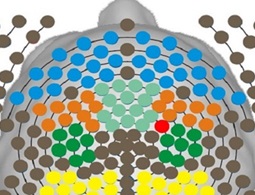
A statistical method helps to identify abnormal signals in electroencephalograms and locate their source in the brain.
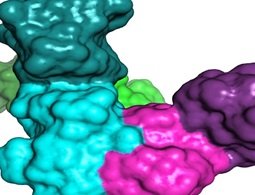
Insight into additional functions of a key cancer protein could pave the way for new anti-cancer drugs.
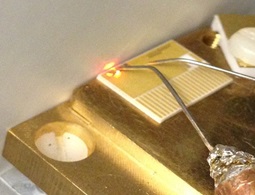
Subtle changes to the composition of a semiconductor structure enable laser light at colors previously not thought possible.

Detailed analysis of nutrient distribution and circulation in the Red Sea could provide a model for the future of the world’s oceans.
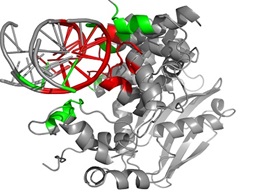
Functions of interacting molecular complexes are uncovered through a novel method of aligning the interaction interface of each complex.
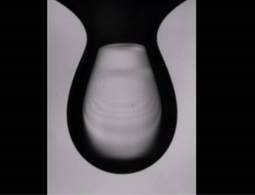
Stable air layers that wrap around liquid drops can retain their remarkable geometries a thousand times longer than theory predicts.

Proteins that have dual roles in the molecular processing of RNA could be manipulated to produce tougher plants.
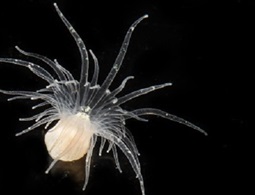
Analysis of sea anemone genome yields unprecedented detail of anemone-algae symbiosis, and may provide a model for coral symbiosis.
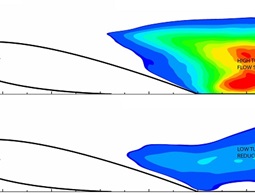
Simulations show that an actuated jet of air from the wing can dramatically improve the aerodynamic performance of micro-aircraft such as drones.
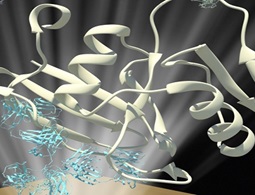
A modern twist on a traditional biochemistry technique lets scientists study interactions that trap cells in circulation.
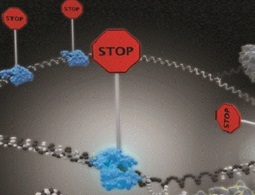
Termination sites of DNA are shown to stop slow-moving replication forks but not faster ones.

A novel computing technique recognizes and captures the distinctive surface patterns appearing in videos and images.

Chemical tricks improve the efficiency and durability of photothermal membranes that use sunlight to turn water into steam.
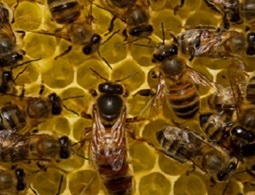
An integrated set of genetic mechanisms controls whether bees behave as foragers or nurses.
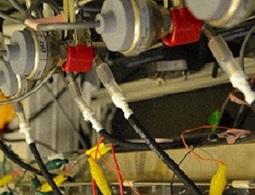
Wastewater treatments based on bioelectrochemical systems can generate energy while removing potentially toxic compounds.

Performance analysis reveals how different resource allocation schemes may impact the energy efficiency of a cognitive radio system.
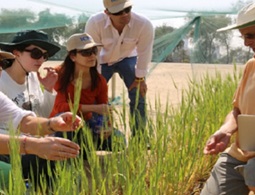
Novel use of sensors and associated high-resolution imaging in agriculture aims to facilitate a more sustainable future.
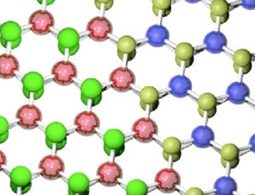
Perfect interfaces between sheets of two-dimensional semiconductors enable advanced electronic devices.