


Catching a glimpse of the double helix
Direct imaging of a single DNA molecule provides insights into fundamental biological processes.
Direct imaging of a single DNA molecule provides insights into fundamental biological processes.

Growing high-quality films of hybrid perovskite materials takes solution-processed phototransistors to new levels of performance.
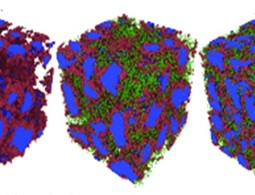
The right blend of polymers enables rapid and molecule-selective filtering of tiny particles from water.

Dust plays a critical role in determining rainfall over the Middle East and North Africa.

Experimental and numerical studies reveal the combustion properties of blended fuels at elevated pressures.

Ship-based studies of dust levels above the Red Sea reveal significant variations and confirm the reliability of satellite monitoring.
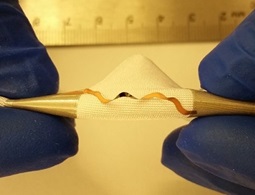
A low-cost, copper-based flexible and stretchable antenna improves far-field data communication in wearable electronics.
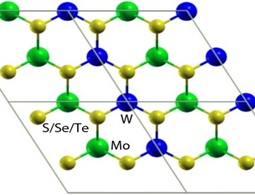
Atomically thin heterogeneous semiconductors with tunable electronic properties pave the way for next-generation two-dimensional devices.

Capturing the hidden details of coalescence cascades that connect bubbles and droplets may improve oil extraction practices.

A new biosensor made of laser-etched electrodes on a gold-coated polymer may provide an effective and cost-efficient way to assess heart disease risk.
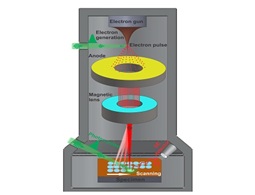
An electron microscope fitted with a femtosecond laser visualizes the dynamics of excited carriers on the surface of a material in real space and time.
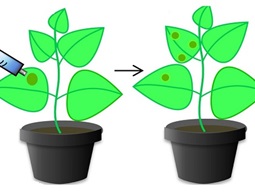
Harnessing a bacterial system of defense can protect plants against viral pathogens.

Chemical reaction modeling and combustion experiments reveal how 2-methylbutanol would behave in advanced engines.

A combination of state-of-the-art sensors and standardized data analysis will transform research for tracking animals and humans.

Modelling reveals how atmospheric dust influences daytime patterns of energy transfer from sunlight.

Biocompatible tactile sensors based on magnetic hair-like structures enable new applications for touch sensors.

Environmentally friendly butanol additives improve gasoline performance in spark ignition engines.
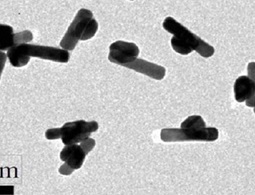
Metallic nanostructures absorb light better than any other known structures.

A solvent-free technique for creating adsorbent materials could reduce carbon dioxide emissions.
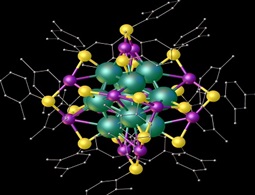
An atomically precise investigation reveals close similarities between silver and gold nanoparticles.