Menu
Top
Background image

Biomedical Sciences Division (BioMed)

Decoding Life, Advancing Health
Overview


The Biomedical Sciences (BioMed) division at KAUST brings together world-class science, technology, and education to address today’s most pressing health challenges. Through interdisciplinary research, advanced computational and digital tools, and strong partnerships across the healthcare ecosystem, BioMed connects discovery with real-world impact - supporting national priorities while contributing to global advances in health and disease.

Vision

BioMed will improve health in Saudi Arabia and beyond by harnessing cutting edge science and technology to investigate, educate on, and translate discoveries that make people’s lives better.

Mission

BioMed applies the scientific and technical expertise of KAUST by interdisciplinary collaboration and intersectional partnerships both within and beyond the university, leveraging and boosting the efforts of the health care ecosystem to understand, prevent, and treat disease.

We will encourage, educate, and promote expertise in the study and taming of disease to help engineer a healthier life for all, using knowledge generation with widespread deployment of health-translated advances underpinned by our cutting edge, world class technical expertise.

A Message from the Dean of Biomedical Sciences (BioMed)

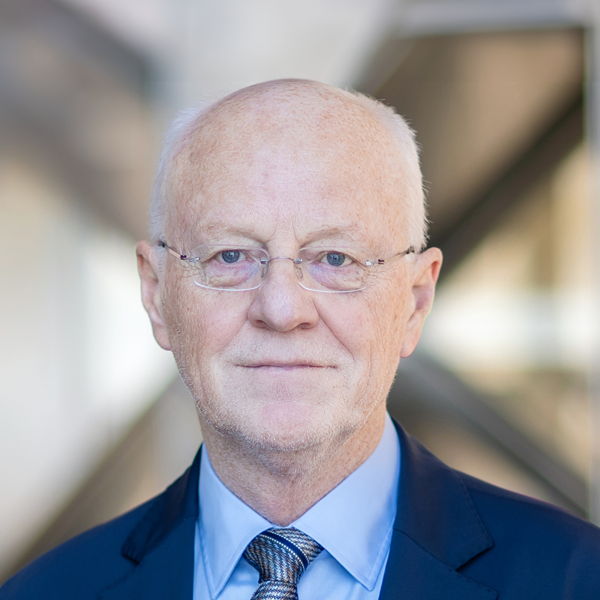
Professor Peter J Goadsby FMedSci FRS


BioMed is KAUST's newest division, harnessing the University's world-class science and technology to advance healthcare outcomes in Saudi Arabia and beyond. We apply cutting-edge computational and digital tools to understanding, combating and preventing disease.

BioMed is at the start of an exciting journey. The division offers a collaborative environment where scientific excellence meets a passion for teaching and mentoring a new generation of graduates who will advance health in the 21st century.

Our priorities are those of the Kingdom, our mission aligned with Vision 2030's aspirations for better health. Our graduate programs uniquely integrate biology with engineering and bioinformatics and, our faculty and students strive to be future-ready for the rapidly emerging challenges and opportunities in biomedical science.

BioMed draws on the KAUST ecosystem of outstanding research and technical capabilities, all set against the backdrop of the Red Sea. We are beginning an ambitious journey, and invite those who share our vision of a healthier life for all.
View the Dean’s Biography 

Samir M. Hamdan

Professor, Bioscience

Deputy Vice President, Research

Biomedical Sciences

Program Affiliations

Center of Excellence

Research Interests

​Professor Hamdan's research interest is focused on the reconstitution, imaging and characterization of multi-protein nucleic acid binding machinaries at the single molecule level. Toward achieving this goal his lab uses an approach that combines conventional biochemical and biophysical tools with wide range of force and fluorescence single-molecule imaging techniques. The ability to observe enzymatic activities in real time at the single molecule level has profoundly changed how biochemical reactions are studied. By eliminating ensemble averaging, the distributions and fluctuations of molecular properties can be characterized, transient intermediates can be observed and identified, and catalytic mechanisms can be elucidated. Applying this multidisciplinary approach will provide a true molecular understanding of the mechanisms involved in replication, repair, and recombination. It will also extend the technique of single-molecule analysis from a few proteins to large multi-protein complexes, often containing many enzymatic activities.

Education Profile

  • Ph.D. Chemistry, Research School of Chemistry, Australian National University, Canberra, 2002

  • M.S. Chemistry, Western Michigan University, 1998

  • B.S. Chemistry, Yarmouk University, Jordan, 1995
Publications

  • Hamdan SM, Marintcheva B, Cook T, Lee SJ, Tabor S, and Richardson CC. A unique loop in T7 DNA polymerase mediates the binding of helicase-primase, DNA binding protein, and processivity factor. Proceedings of the National Academy of Sciences of the USA. 2005, 102(14): 5096–5101. doi:10.1073/pnas.0501637102

  • Lee J-B, Hite RK, Hamdan SM, Xie XS, Richardson CC, and van Oijen AM. DNA primase acts as a molecular brake in DNA replication. Nature. 2006, 439(7076): 621–624.doi:10.1038/nature04317

  • Hamdan SM, Johnson DE, Tanner NA, Lee, J-B, Qimron U, Tabor S, van Oijen AM, and Richardson CC. Dynamic DNA helicase-DNA polymerase interactions assure processive replication fork movement. Molecular Cell. 2007, 27(4): 539–549 doi:10.1016/j.molcel.2007.06.020

  • Hamdan SM, Loparo JJ, Takahashi M, Richardson CC, and van Oijen AM. Dynamics of DNA replication loops reveal temporal control of lagging-strand synthesis. Nature. 2009, 457(7227): 336–339. doi:10.1038/nature07512

  • Hamdan SM and Richardson CC. Motors, switches, and contacts in the replisome. Annual Review of Biochemistry. 2009, 78: 205–243.doi:10.1146/annurev.biochem.78.072407.103248

  • Sobhy MA, Joudeh LI, Huang X, Takahashi M, and Hamdan SM. Sequential and multistep substrate interrogation provides the scaffold for specificity in human flap endonuclease 1.Cell Reports. 2013, 3(6): 1785–1794. doi:10.1016/j.celrep.2013.05.001

  • Iwata Y, Takahashi M, Fedoroff NV and Hamdan SM. Dissecting the interactions of SERRATE with RNA and DICER-LIKE 1 in Arabidopsis microRNA precursor processing. Nucleic Acids Research. 2013, 41(19): 9129-40. doi:10.1093/nar/gkt667

  • Elshenawy MM, Jergic S, Xu Z-Q, Sobhy MA, Takashi M, Oakley AJ, Dixon NE, and Hamdan SM. Replisome speed determines the efficiency of the Tus−Ter replication termination barrier. Nature. 2015, 525(7569): 394–398. doi:10.1038/nature14866.

  • Rashid F, Harris PD, Zaher MS, Sobhy MA, Joudeh IL, Yan C, Piwonski H, Tsutakawa SE, Ivanov I, Tainer JA, Habuchi S, and Hamdan SM. Single-molecule FRET unveils induced-fit mechanism for substrate selectivity in flap endonuclease 1. Elife. 2017, 6.pii: e21884. doi:10.7554/elife.21884

  • Takahashi M, Takahashi E, Joudeh LI, Marini M, Das G, Elshenawy MM, Akal A, Sakashita K, Tehseen M, Sobhy MA, Stingl U, Merzaban JS, Di Fabrizio E, and Hamdan SM. Dynamic structure mediates halophilic adaptation of a DNA polymerases from the deep-sea brines of the Red sea. FASEB J. 2018. doi:10.1096/fj.201700862RR

  • Zaher MS, Rashid F, Song B, Joudeh LI, Sobhy MA, Tehseen M, Hingorani MM, and Hamdan SM. Missed Cleavage opportunities by FEN1 lead to Okazaki fragments maturations via the long-flap pathway. Nucleic Acids Research. 2018. doi:10.1093/nar/gky082

  • Sobhy MA, Bralic A, Raducanu VS, Takahashi M, Teshseen M, Rashid F, Zaher MA and Hamdan SM. Resolution of the Holliday junction recombination intermediate by human GEN1 at the single-molecule level. Nucleic Acids Research. 2019. doi:10.1093/nar/gky1280.

  • Rashid F, Raducanu VS, Zaher MS, Tehseen M, Habuchi S, and Hamdan SM. Initial state of DNA-dye complex sets the stage for protein induced fluorescence modulation. Nature Communications. 2019. doi:10.1038/s41467-019-10137-9.

  • Lancey C, Tehseen M, Raducanu VS, Rashid F, Merino N, Ragan TJ, Savva C, Zaher MS, Blanco FJ, Hamdan SM# and De Biasio A#. Structure of the processive human Pol δ holoenzyme. Nature Communications. 2020. doi:10.1038/s41467-020-14898-6.

Research Areas

  • Chemical Science