Biomedical Sciences Division (BioMed)
Decoding Life, Advancing Health
Decoding Life, Advancing Health

The Biomedical Sciences (BioMed) division at KAUST brings together world-class science, technology, and education to address today’s most pressing health challenges. Through interdisciplinary research, advanced computational and digital tools, and strong partnerships across the healthcare ecosystem, BioMed connects discovery with real-world impact - supporting national priorities while contributing to global advances in health and disease.
BioMed will improve health in Saudi Arabia and beyond by harnessing cutting edge science and technology to investigate, educate on, and translate discoveries that make people’s lives better.
BioMed applies the scientific and technical expertise of KAUST by interdisciplinary collaboration and intersectional partnerships both within and beyond the university, leveraging and boosting the efforts of the health care ecosystem to understand, prevent, and treat disease.
We will encourage, educate, and promote expertise in the study and taming of disease to help engineer a healthier life for all, using knowledge generation with widespread deployment of health-translated advances underpinned by our cutting edge, world class technical expertise.
BioMed is KAUST's newest division, harnessing the University's world-class science and technology to advance healthcare outcomes in Saudi Arabia and beyond. We apply cutting-edge computational and digital tools to understanding, combating and preventing disease.
BioMed is at the start of an exciting journey. The division offers a collaborative environment where scientific excellence meets a passion for teaching and mentoring a new generation of graduates who will advance health in the 21st century.
Our priorities are those of the Kingdom, our mission aligned with Vision 2030's aspirations for better health. Our graduate programs uniquely integrate biology with engineering and bioinformatics and, our faculty and students strive to be future-ready for the rapidly emerging challenges and opportunities in biomedical science.
BioMed draws on the KAUST ecosystem of outstanding research and technical capabilities, all set against the backdrop of the Red Sea. We are beginning an ambitious journey, and invite those who share our vision of a healthier life for all.
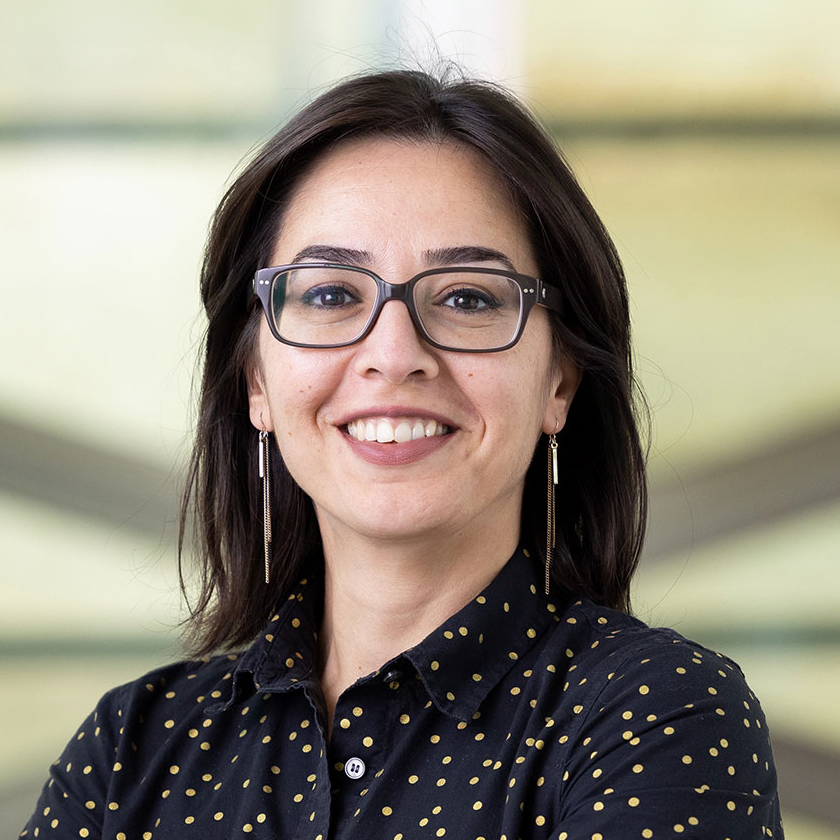
We bridge the fields of electronics and biology, develop bioelectronic materials and devices for real-time health monitoring and intervention.
Professor Sahika Inal earned her B.Sc. in Textile Engineering from Istanbul Technical University, Turkey, followed by an M.Sc. in Polymer Science, a joint program offered by Humboldt University, Free University, Technical University of Berlin, and the University of Potsdam, Germany. In 2013, she completed her Ph.D. in Experimental Physics at the University of Potsdam, focusing on electronic polymer-based optical sensors for pathogen detection. Following her doctoral studies, she conducted postdoctoral research at the Center of Microelectronics of Provence, École Nationale Supérieure des Mines de Saint-Étienne in France, where she developed microelectronic devices for bioelectronic applications.
Since 2016, Professor Inal has led the Organic Bioelectronics Lab at KAUST. Her research explores the mixed ionic and electronic charge transport in organic materials and the development of electronic devices that interface with biological systems for biosignal recording and stimulation. She currently serves as the program chair of the Bioengineering program at KAUST. She has received numerous awards, delivered more than 70 keynote lectures and invited talks at major international conferences across 15 countries, published over 135 articles, and is the owner of 10 patent applications. Her innovative contributions help advance the field of bioelectronics and open new possibilities for understanding and interacting with biological systems.
Professor Inal’s expertise lies in polymer science and bioelectronic devices. She specializes in photophysics of conjugated polymers, characterization of polymer thin films, behavior of polymer films in aqueous environment, and the design of biosensors and actuators comprising conjugated polymers. She currently investigates ion/electron conduction in organic electronic materials and designs bioelectronic devices that can record/stimulate biological signals.
Combining in-situ techniques to monitor ion and electron motion in films, fibers, and porous scaffolds of organic materials, her team aims to find the best-performing materials, formulations, processing conditions, and form factors for applications in biological electrolytes.
These optimized materials are then applied to build specific devices (transistors, fuel cells, electrodes, electrochemical actuators, or drug delivery devices) that can sense or stimulate biological signals.

Postdoctoral Fellow, Bioelectronics, Ecole Nationale Superieure des Mines de Saint Etienne, France, 2016.
Ph.D. Experimental Physics, University of Potsdam (UP), Germany, 2013.
M.Sc. Polymer Science, TU, HU, FU Berlin, UP, Germany, 2009.
B.Sc. Textile Engineering, Istanbul Technical University, Turkey, 2007.