Biomedical Sciences Division (BioMed)
Decoding Life, Advancing Health
Decoding Life, Advancing Health

The Biomedical Sciences (BioMed) division at KAUST brings together world-class science, technology, and education to address today’s most pressing health challenges. Through interdisciplinary research, advanced computational and digital tools, and strong partnerships across the healthcare ecosystem, BioMed connects discovery with real-world impact - supporting national priorities while contributing to global advances in health and disease.
BioMed will improve health in Saudi Arabia and beyond by harnessing cutting edge science and technology to investigate, educate on, and translate discoveries that make people’s lives better.
BioMed applies the scientific and technical expertise of KAUST by interdisciplinary collaboration and intersectional partnerships both within and beyond the university, leveraging and boosting the efforts of the health care ecosystem to understand, prevent, and treat disease.
We will encourage, educate, and promote expertise in the study and taming of disease to help engineer a healthier life for all, using knowledge generation with widespread deployment of health-translated advances underpinned by our cutting edge, world class technical expertise.
BioMed is KAUST's newest division, harnessing the University's world-class science and technology to advance healthcare outcomes in Saudi Arabia and beyond. We apply cutting-edge computational and digital tools to understanding, combating and preventing disease.
BioMed is at the start of an exciting journey. The division offers a collaborative environment where scientific excellence meets a passion for teaching and mentoring a new generation of graduates who will advance health in the 21st century.
Our priorities are those of the Kingdom, our mission aligned with Vision 2030's aspirations for better health. Our graduate programs uniquely integrate biology with engineering and bioinformatics and, our faculty and students strive to be future-ready for the rapidly emerging challenges and opportunities in biomedical science.
BioMed draws on the KAUST ecosystem of outstanding research and technical capabilities, all set against the backdrop of the Red Sea. We are beginning an ambitious journey, and invite those who share our vision of a healthier life for all.
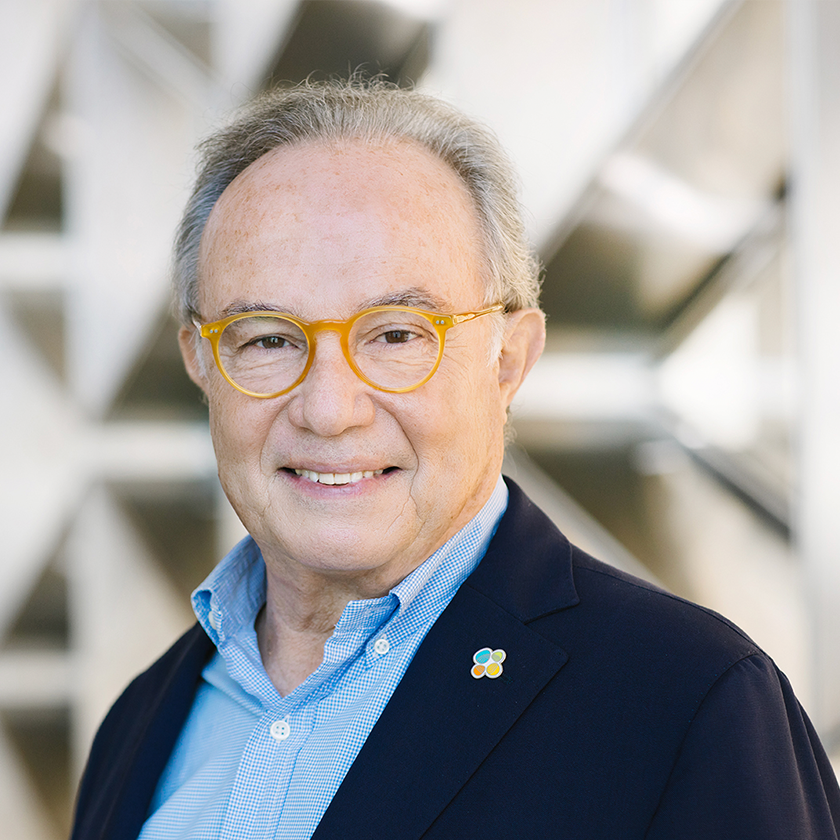
Ibn Sina Distinguished Professor , Bioscience
Vice President, Research
At the heart of brain function lies a partnership: the metabolic dialogue between astrocytes and neurons. By decoding how glial cells fuel and modulate neuronal activity, we gain insight into the biological roots of cognition. This knowledge not only deepens our understanding of how the brain sustains mental effort, but also paves the way for novel strategies to treat neurodegenerative and psychiatric disorders, where this delicate balance is often disrupted
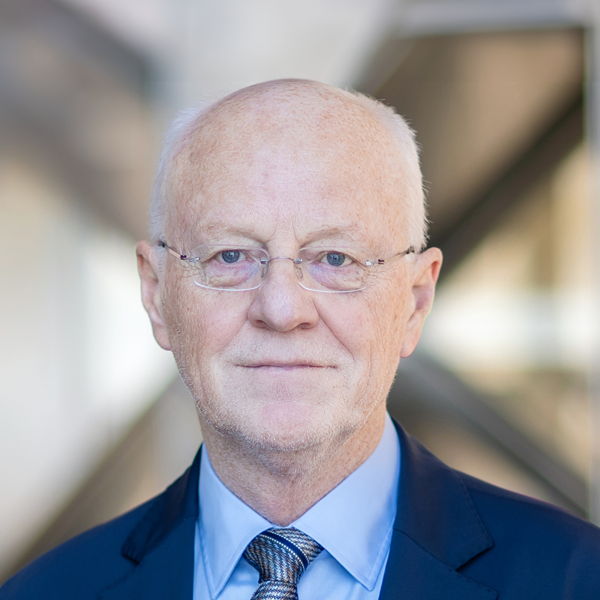
Professor Pierre J. Magistretti is a Distinguished Professor of Biosciences and Vice-President for Research at KAUST, where he previously served as Dean of the Biological and Environmental Sciences and Engineering Division. He is Professor Emeritus at EPFL’s Brain Mind Institute and at the Universities of Lausanne and Geneva, Switzerland, where his pioneering research revealed the key role of astrocytes in brain energy metabolism and neuroprotection. Author of over 300 peer-reviewed publications and co-founder of three biotech startups, he has received numerous international awards and is a member of the Accademia dei Lincei, Academia Europaea, and the Norwegian Academy of Sciences and Letters. He is a past president of both IBRO and FENS and currently serves on multiple scientific advisory boards worldwide.
Professor Magistretti’s research explores the cellular and molecular mechanisms of brain energy metabolism, with a central focus on the metabolic cooperation between astrocytes and neurons. His work has revealed how astrocyte-derived lactate supports synaptic activity, plasticity, and neuroprotection, forming the basis of the astrocyte-neuron lactate shuttle hypothesis. His group employs a combination of molecular biology, imaging, electrophysiology, and transcriptomics to uncover how metabolic signaling regulates brain function and contributes to neurological and psychiatric disorders. This research helps identify novel therapeutic targets for conditions such as Alzheimer’s disease, depression, and cognitive dysfunction by elucidating how energy metabolism sustains mental activity and resilience.

Ph.D., Biology, University of California, San Diego, U.S., 1982
M.D. Doctorate en Médecine, University of Geneva, Switzerland, 1979
Diplôme Fédéral de Médecin, University of Geneva, Switzerland, 1977
Educational Commision for Foreign Medical Graduates Examination, 1977
Maturité Fédérale Type A (Classical Studies), 1977