Biomedical Sciences Division (BioMed)
Decoding Life, Advancing Health
Decoding Life, Advancing Health

The Biomedical Sciences (BioMed) division at KAUST brings together world-class science, technology, and education to address today’s most pressing health challenges. Through interdisciplinary research, advanced computational and digital tools, and strong partnerships across the healthcare ecosystem, BioMed connects discovery with real-world impact - supporting national priorities while contributing to global advances in health and disease.
BioMed will improve health in Saudi Arabia and beyond by harnessing cutting edge science and technology to investigate, educate on, and translate discoveries that make people’s lives better.
BioMed applies the scientific and technical expertise of KAUST by interdisciplinary collaboration and intersectional partnerships both within and beyond the university, leveraging and boosting the efforts of the health care ecosystem to understand, prevent, and treat disease.
We will encourage, educate, and promote expertise in the study and taming of disease to help engineer a healthier life for all, using knowledge generation with widespread deployment of health-translated advances underpinned by our cutting edge, world class technical expertise.
BioMed is KAUST's newest division, harnessing the University's world-class science and technology to advance healthcare outcomes in Saudi Arabia and beyond. We apply cutting-edge computational and digital tools to understanding, combating and preventing disease.
BioMed is at the start of an exciting journey. The division offers a collaborative environment where scientific excellence meets a passion for teaching and mentoring a new generation of graduates who will advance health in the 21st century.
Our priorities are those of the Kingdom, our mission aligned with Vision 2030's aspirations for better health. Our graduate programs uniquely integrate biology with engineering and bioinformatics and, our faculty and students strive to be future-ready for the rapidly emerging challenges and opportunities in biomedical science.
BioMed draws on the KAUST ecosystem of outstanding research and technical capabilities, all set against the backdrop of the Red Sea. We are beginning an ambitious journey, and invite those who share our vision of a healthier life for all.
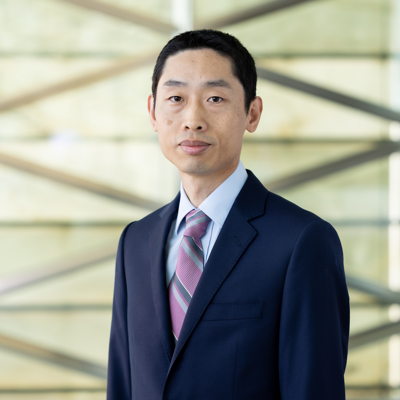
Associate Professor, Bioscience
We strive to decode the molecular blueprint of human regeneration through stem cell science and engineering, with the vision of transforming our understanding of healing into transformative therapies for the future.
Professor Mo Li earned his B.S. from Peking University, China, and his Ph.D. from the University of Georgia, U.S., before training as a postdoc at the Salk Institute, U.S. His research focuses on modeling human diseases, human embryonic development, and regeneration using pluripotent stem cells, cellular reprogramming, and genome editing technologies. His lab develops novel nanopore sequencing methods for identifying mutations in genetic diseases, genome editing, and the aging process. To date, he has published 80 articles in prestigious journals, including Nature, Science, and the New England Journal of Medicine. His work has been featured in the New York Times and China Science and Technology Daily. He serves as an editorial board member of Communications Biology, Science China Life Sciences, Blood Science, and Life Medicine.
Professor Li’s research attempts to understand the molecular basis of the regenerative mechanisms that maintain the proper form and function of the human body. His research programs build on a multidisciplinary platform that integrates stem cell models with genome engineering, functional genomics, bioengineering, and chemical screening to gain a holistic understanding of regeneration in its broadest sense, while keeping a commitment to fulfilling the translational promise of stem cell research.

Postdoctoral Fellow, Salk Institute for Biological Sciences, 2009
Ph.D., University of Georgia, 2007
B.Sc., Peking (Beijing) University, 2001