Biomedical Sciences Division (BioMed)
Decoding Life, Advancing Health
Decoding Life, Advancing Health

The Biomedical Sciences (BioMed) division at KAUST brings together world-class science, technology, and education to address today’s most pressing health challenges. Through interdisciplinary research, advanced computational and digital tools, and strong partnerships across the healthcare ecosystem, BioMed connects discovery with real-world impact - supporting national priorities while contributing to global advances in health and disease.
BioMed will improve health in Saudi Arabia and beyond by harnessing cutting edge science and technology to investigate, educate on, and translate discoveries that make people’s lives better.
BioMed applies the scientific and technical expertise of KAUST by interdisciplinary collaboration and intersectional partnerships both within and beyond the university, leveraging and boosting the efforts of the health care ecosystem to understand, prevent, and treat disease.
We will encourage, educate, and promote expertise in the study and taming of disease to help engineer a healthier life for all, using knowledge generation with widespread deployment of health-translated advances underpinned by our cutting edge, world class technical expertise.
BioMed is KAUST's newest division, harnessing the University's world-class science and technology to advance healthcare outcomes in Saudi Arabia and beyond. We apply cutting-edge computational and digital tools to understanding, combating and preventing disease.
BioMed is at the start of an exciting journey. The division offers a collaborative environment where scientific excellence meets a passion for teaching and mentoring a new generation of graduates who will advance health in the 21st century.
Our priorities are those of the Kingdom, our mission aligned with Vision 2030's aspirations for better health. Our graduate programs uniquely integrate biology with engineering and bioinformatics and, our faculty and students strive to be future-ready for the rapidly emerging challenges and opportunities in biomedical science.
BioMed draws on the KAUST ecosystem of outstanding research and technical capabilities, all set against the backdrop of the Red Sea. We are beginning an ambitious journey, and invite those who share our vision of a healthier life for all.
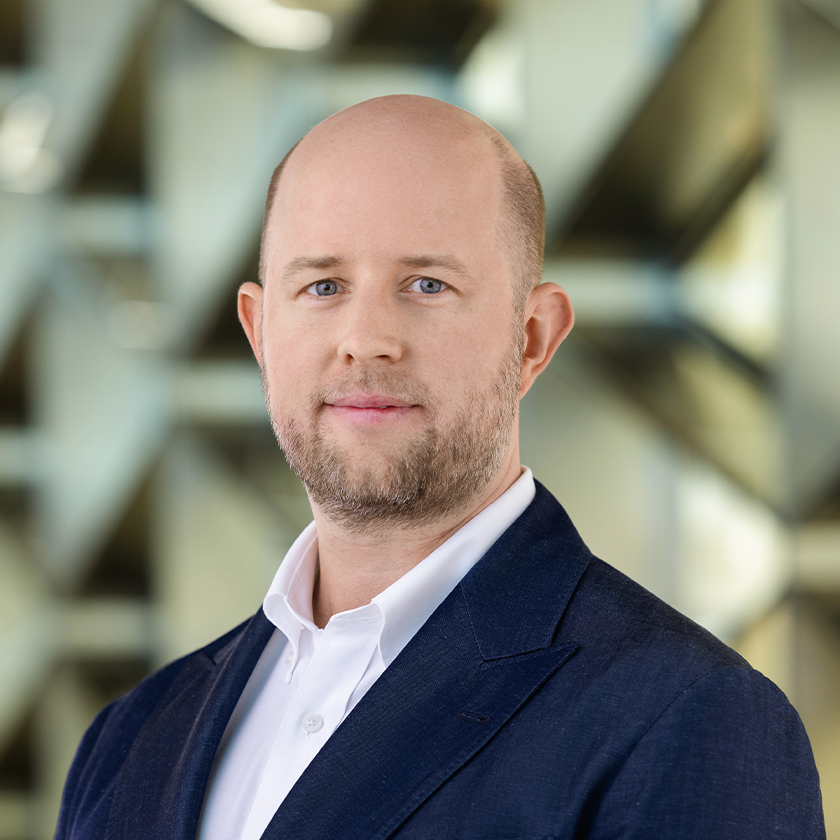
Associate Professor, Bioengineering
Chair, Bioengineering Program and Bioscience Program
We investigate local algal species and engineer algae to produce specialty chemicals, novel phenotypes, and bioprocesses that support resource circularity.
Dr. Kyle J. Lauersen is an Associate Professor of Bioengineering and leads the Sustainable & Synthetic Biotechnology group at KAUST. Since 2023, he has also been an Adjunct Associate Professor at the Arizona Center for Algae Technology and Innovation (AzCATI) at Arizona State University, U.S. In 2024, Professor Lauersen won the KAUST 2024 Distinguished Teaching Award for his innovative contributions to the Bioengineering and Biosciences programs. His research group at KAUST focuses on innovations in algal metabolic and bioprocess engineering technologies. In 2014, Professor Lauersen received his Doctorate of Natural Sciences at Bielefeld University in Germany after receiving his Master’s and Bachelor’s degrees in Science and Education from Queen’s University in Canada. He is an editorial board member of several journals including Critical Insights in Plant Science, New Biotechnology, Blue Biotechnology, Planta and has served as a guest editor for special issues in Algal Research.
In addition to engineering process design for algal cultivation optimization, Professor Lauersen’s team applies the technologies collectively known as ‘synthetic biology’ to optimize genetic tools for algal hosts with the aim of making them produce desired (high value) products. Why? Because algae convert low-value chemicals found in waste-streams, like nitrogen, phosphorous and CO2 into higher-order chemicals in their biomass, by adding new chemicals to their biology, the value attainable from light-driven algal waste conversion concepts can be increased. His lab has also founded and curates the KSA Living Library of >150 local algal isolates from the Arabian Peninsula.

Universität Bielefeld, Germany – Doktors der Naturwissenschaften (Dr. rer. nat./Ph.D.). Biology 2011-2014. Thesis: Heterologous expression of an ice binding protein from the microalgae Chlamydomonas reinhardtii with an optimized nuclear gene expression system. Scholar in the Cluster of Industrial Biotechnology - Graduate Cluster (CLIB-GC);
Queen's University, Canada – Master of Science. Biology 2009-2011. Thesis: Lolium perenne antifreeze protein, part of a freeze-tolerance strategy';
Queen's University – Bachelor of Education. Specialty: Intermediate-Senior division 2008-2009;
Queen's University – Bachelor of Science (Honours). Biology Major 2004-2008. Honours Thesis: Using an antisense strategy to confirm the identity of a candidate gene in the shrivelled leaf activation tagged mutant poplar and identifying the role of epigenetic modification in the regulation of phenotype in activation tagged Populus.