Biomedical Sciences Division (BioMed)
Decoding Life, Advancing Health
Decoding Life, Advancing Health

The Biomedical Sciences (BioMed) division at KAUST brings together world-class science, technology, and education to address today’s most pressing health challenges. Through interdisciplinary research, advanced computational and digital tools, and strong partnerships across the healthcare ecosystem, BioMed connects discovery with real-world impact - supporting national priorities while contributing to global advances in health and disease.
BioMed will improve health in Saudi Arabia and beyond by harnessing cutting edge science and technology to investigate, educate on, and translate discoveries that make people’s lives better.
BioMed applies the scientific and technical expertise of KAUST by interdisciplinary collaboration and intersectional partnerships both within and beyond the university, leveraging and boosting the efforts of the health care ecosystem to understand, prevent, and treat disease.
We will encourage, educate, and promote expertise in the study and taming of disease to help engineer a healthier life for all, using knowledge generation with widespread deployment of health-translated advances underpinned by our cutting edge, world class technical expertise.
BioMed is KAUST's newest division, harnessing the University's world-class science and technology to advance healthcare outcomes in Saudi Arabia and beyond. We apply cutting-edge computational and digital tools to understanding, combating and preventing disease.
BioMed is at the start of an exciting journey. The division offers a collaborative environment where scientific excellence meets a passion for teaching and mentoring a new generation of graduates who will advance health in the 21st century.
Our priorities are those of the Kingdom, our mission aligned with Vision 2030's aspirations for better health. Our graduate programs uniquely integrate biology with engineering and bioinformatics and, our faculty and students strive to be future-ready for the rapidly emerging challenges and opportunities in biomedical science.
BioMed draws on the KAUST ecosystem of outstanding research and technical capabilities, all set against the backdrop of the Red Sea. We are beginning an ambitious journey, and invite those who share our vision of a healthier life for all.
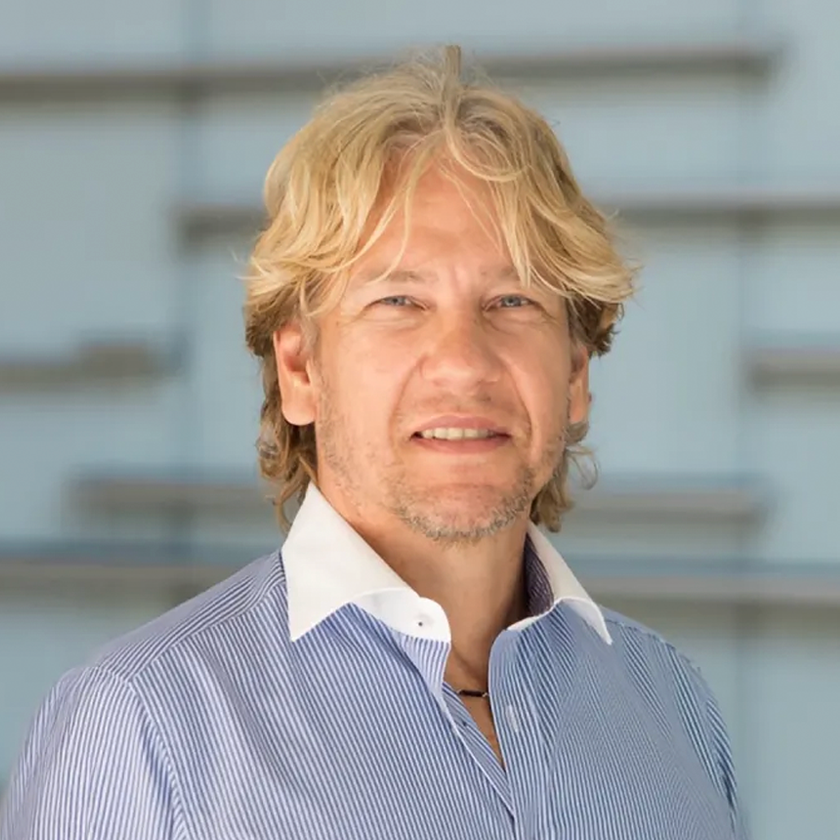
Professor, Bioscience
Associate Dean, Students, Biomedical Sciences
By unraveling the logic of cells and brain circuits, we unlock the future of medicine and drive the next generation of AI
Professor Jesper Tegner is an M.D./Ph.D. Doctor of Medicine and has a Ph.D. in Experimental and Computational Neuroscience from the Karolinska Institute, Sweden. He also holds three distinct undergraduate degrees: Mathematics (minor in Theoretical Physics), Medicine (Medical School), and Philosophy (minor in Psychology), and two years of postgraduate education in Pure and Applied Computational Mathematics.
Following his M.D./Ph.D., he received a faculty position as Assistant Professor in Computer Science. While on leave, he was a visiting scientist as a five-year fellow at Wenner-Gren in New York, and an Alfred P Sloan Fellow in Boston, U.S.
Upon his return, he was recruited as an Assistant Professor in Computer Science & Bioinformatics. Next, he became a chaired full Professor 4.5 years after his Ph.D., serving as the Head of the Division (Chaired Full Professor) for Computational Biology, Department of Physics (2002-2010). He was then recruited as a Director and received a lifetime named Strategic Chaired Professorship in Computational Medicine at the Center for Molecular Medicine (Karolinska Institute and Karolinska University Hospital, 2010-2021).
He is the Founder of two Biotech startups and serves as an Executive Director at Immune Algorithmics.
Professor Tegner has been at KAUST since 2016 and is affiliated with the Bioscience, Computer Science, Bioengineering, and Statistics programs.
Professor Tegner’s research and teaching interests range from developing bioinformatics to artificial intelligence technologies for life sciences and medical research. His research team targets fundamental genomics, such as the dynamical regulatory architecture of cells, with special reference to causality and foundational machine learning for AI and the understanding of the brain. His group’s translational work includes focus on cancer (melanoma, breast cancer) and neurodegenerative diseases (multiple sclerosis, Alzheimer's, frontal dementia). Professor Tegner has published 400 papers, has more than 20,000 citations, and an H-index > 65.

Ph.D. Medicine/Medicine Doctor, Karolinska Institutet, 1997
Advanced Ph.D. courses in pure and computational mathematics (corresponding 2 years full time), Royal Institute for Technology & Stockholm University, 1992-1996
B.Sc. Medicine (Med Kand, Physician Program), Karolinska Institutet, 1990
B.Sc. Philosophy, Stockholm University, 1990
B.Sc. Mathematics, Stockholm University, 1988