Biomedical Sciences Division (BioMed)
Decoding Life, Advancing Health
Decoding Life, Advancing Health

The Biomedical Sciences (BioMed) division at KAUST brings together world-class science, technology, and education to address today’s most pressing health challenges. Through interdisciplinary research, advanced computational and digital tools, and strong partnerships across the healthcare ecosystem, BioMed connects discovery with real-world impact - supporting national priorities while contributing to global advances in health and disease.
BioMed will improve health in Saudi Arabia and beyond by harnessing cutting edge science and technology to investigate, educate on, and translate discoveries that make people’s lives better.
BioMed applies the scientific and technical expertise of KAUST by interdisciplinary collaboration and intersectional partnerships both within and beyond the university, leveraging and boosting the efforts of the health care ecosystem to understand, prevent, and treat disease.
We will encourage, educate, and promote expertise in the study and taming of disease to help engineer a healthier life for all, using knowledge generation with widespread deployment of health-translated advances underpinned by our cutting edge, world class technical expertise.
BioMed is KAUST's newest division, harnessing the University's world-class science and technology to advance healthcare outcomes in Saudi Arabia and beyond. We apply cutting-edge computational and digital tools to understanding, combating and preventing disease.
BioMed is at the start of an exciting journey. The division offers a collaborative environment where scientific excellence meets a passion for teaching and mentoring a new generation of graduates who will advance health in the 21st century.
Our priorities are those of the Kingdom, our mission aligned with Vision 2030's aspirations for better health. Our graduate programs uniquely integrate biology with engineering and bioinformatics and, our faculty and students strive to be future-ready for the rapidly emerging challenges and opportunities in biomedical science.
BioMed draws on the KAUST ecosystem of outstanding research and technical capabilities, all set against the backdrop of the Red Sea. We are beginning an ambitious journey, and invite those who share our vision of a healthier life for all.
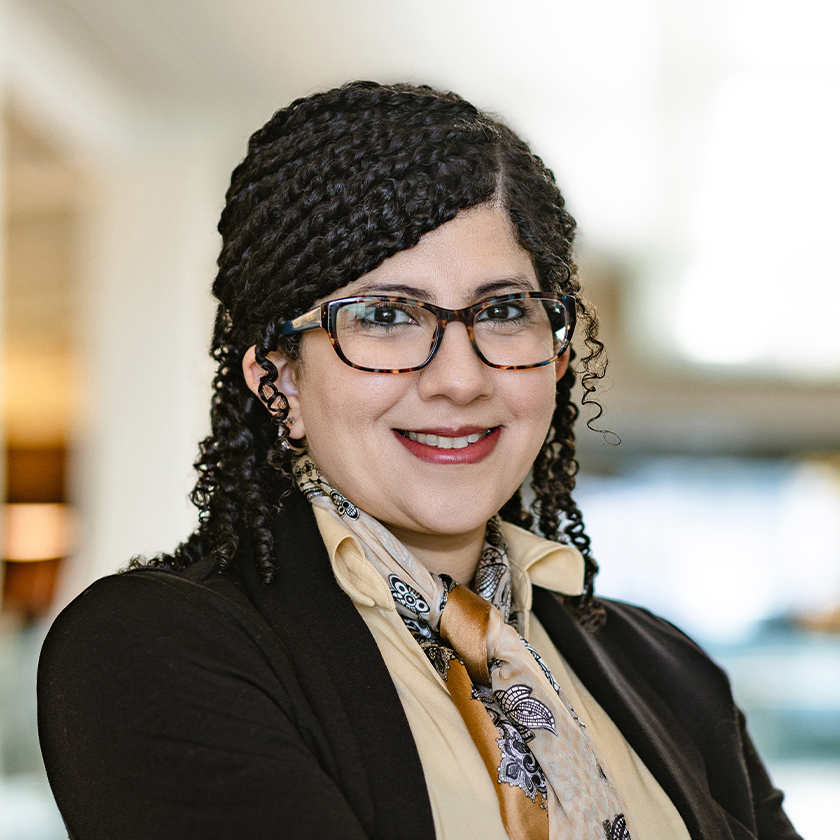
By delving into the intricate mechanisms of cell migration and engineering cell surface glycans, we pave the way for innovative therapeutic strategies that can transform treatments for diseases like cancer and autoimmune disorders, ultimately enhancing patient outcomes and fostering a healthier future.
Professor Jasmeen Merzaban is an Associate Professor and a founding faculty member at KAUST, primarily affiliated with the Bioscience Program and the Center of Excellence for Smart Health. Since joining KAUST in 2009 and following her Ph.D. studies at the University of British Columbia, Canada, and postdoctoral research at Harvard, USA, she has been instrumental in cultivating stem cell research within the Arab world. Her extensive research contributions include over 80 peer-reviewed publications and several patents in her field. Beyond her scientific contributions, she is deeply devoted to nurturing the next generation of scientists, having mentored dozens of Master's and Ph.D. students, many of whom are Arab nationals. She is also frequently recognized for her engaging teaching. Her leadership extends to serving as the Bioscience Program Chair and Chair of the Animal Resource Core Lab Steering Committee, reflecting her commitment to advancing scientific excellence and education.
Professor Merzaban's research is driven by a profound mission: to transform foundational glycobiology into impactful tools for real-world diagnosis and intervention. Her laboratory passionately investigates how glycosylation, the intricate language of sugars on cell surfaces, profoundly shapes the behavior of cancer and stem cells, with a particular focus on hematopoietic cells and leukemias.
Her team has achieved significant breakthroughs including, identifying glycosyltransferase-based gene signatures that precisely classify tumors, predict subtypes, and guide prognosis, laying a robust foundation for RT-PCR-based diagnostic tools currently under development. In parallel, Professor Merzaban’s group is advancing translational research by engineering of novel small molecules designed to target glycan-mediated adhesion, such as E-selectin ligands and specific glycosyltransferases such as fucosyltransferases (i.e., FUT6), aiming to effectively block metastasis and sensitize leukemic cells to treatment. Complementing these efforts, her research also delves into how the activation of the surface receptor CD44 leads to metabolic reprogramming and differentiation in acute myeloid leukemia, uncovering crucial links between succinate metabolism and epigenetic shifts. Most recently, her lab has launched groundbreaking work into glycoRNAs, a new and exciting layer of RNA modification that holds immense potential for regulating communication between cancer cells and their environment.Across all these integrated projects, Professor Merzaban's ultimate goal is to translate complex biological insights into innovative strategies that directly address critical challenges in human health and disease.

Ph.D., Experimental Medicine, University of British Columbia, Canada, 2005
B.S., Biochemistry, University of British Columbia, Canada, 2000