Biomedical Sciences Division (BioMed)
Decoding Life, Advancing Health
Decoding Life, Advancing Health

The Biomedical Sciences (BioMed) division at KAUST brings together world-class science, technology, and education to address today’s most pressing health challenges. Through interdisciplinary research, advanced computational and digital tools, and strong partnerships across the healthcare ecosystem, BioMed connects discovery with real-world impact - supporting national priorities while contributing to global advances in health and disease.
BioMed will improve health in Saudi Arabia and beyond by harnessing cutting edge science and technology to investigate, educate on, and translate discoveries that make people’s lives better.
BioMed applies the scientific and technical expertise of KAUST by interdisciplinary collaboration and intersectional partnerships both within and beyond the university, leveraging and boosting the efforts of the health care ecosystem to understand, prevent, and treat disease.
We will encourage, educate, and promote expertise in the study and taming of disease to help engineer a healthier life for all, using knowledge generation with widespread deployment of health-translated advances underpinned by our cutting edge, world class technical expertise.
BioMed is KAUST's newest division, harnessing the University's world-class science and technology to advance healthcare outcomes in Saudi Arabia and beyond. We apply cutting-edge computational and digital tools to understanding, combating and preventing disease.
BioMed is at the start of an exciting journey. The division offers a collaborative environment where scientific excellence meets a passion for teaching and mentoring a new generation of graduates who will advance health in the 21st century.
Our priorities are those of the Kingdom, our mission aligned with Vision 2030's aspirations for better health. Our graduate programs uniquely integrate biology with engineering and bioinformatics and, our faculty and students strive to be future-ready for the rapidly emerging challenges and opportunities in biomedical science.
BioMed draws on the KAUST ecosystem of outstanding research and technical capabilities, all set against the backdrop of the Red Sea. We are beginning an ambitious journey, and invite those who share our vision of a healthier life for all.
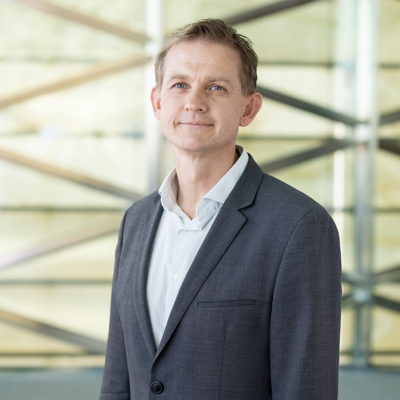
We develop synthetic biology approaches in C. elegans to understand fundamental biology and engineer novel functions into a multicellular organism.
Professor Christian Frøkjær-Jensen is an Associate Professor of Bioscience at KAUST, where he has been a faculty member since 2017. Prior to KAUST, he was a visiting instructor at Stanford University, U.S., working with Professor Andrew Fire, and he was a postdoctoral researcher at the University of Utah, U.S., with Howard Hughs Medical Institute Investigator Professor Erik M. Jorgensen. Dr. Frøkjær-Jensen earned his Ph.D. in Biomedical Science from the University of Copenhagen in Denmark, an M.Sc. in Neuroscience from the University of Oregon, U.S., and an M.Sc. in Biophysics from the University of Copenhagen. His research focuses on genome engineering, gene regulation, and synthetic biology in C. elegans. His lab has made significant contributions to developing broadly adopted genetic tools and methodologies.
Professor Frøkjær-Jensen's research is centered on understanding genome organization and epigenetic gene regulation, primarily utilizing the nematode C. elegans as a model system. His lab explores how noncoding DNA elements, such as Periodic A/T Clusters (PATCs), protect genes from epigenetic silencing, and investigates gene features that permit expression from normally repressive chromatin environments. A major focus is the development and application of high-throughput genome editing technologies, including CRISPR/Cas9 and transposon-based systems, to enable genome-scale manipulations. His group has also worked on reprogramming small RNA pathways, like the piRNA pathway, for precise and transgenerational gene silencing, and has defined engineering rules for robust transgene expression and explored non-Mendelian inheritance patterns. The overarching goal of his group is to apply principles of synthetic biology and biological engineering to dissect fundamental biological mechanisms and build novel genetic systems from first principles.

Research Fellow, Stanford University, 2017
Postdoctoral Fellow, University of Utah, 2014
Ph.D., Health Sciences, University of Copenhagen, 2008
MSc, Neuroscience, University of Oregon, 2004
MSc, Biophysics, University of Copenhagen, 2002