Biomedical Sciences Division (BioMed)
Decoding Life, Advancing Health
Decoding Life, Advancing Health

The Biomedical Sciences (BioMed) division at KAUST brings together world-class science, technology, and education to address today’s most pressing health challenges. Through interdisciplinary research, advanced computational and digital tools, and strong partnerships across the healthcare ecosystem, BioMed connects discovery with real-world impact - supporting national priorities while contributing to global advances in health and disease.
BioMed will improve health in Saudi Arabia and beyond by harnessing cutting edge science and technology to investigate, educate on, and translate discoveries that make people’s lives better.
BioMed applies the scientific and technical expertise of KAUST by interdisciplinary collaboration and intersectional partnerships both within and beyond the university, leveraging and boosting the efforts of the health care ecosystem to understand, prevent, and treat disease.
We will encourage, educate, and promote expertise in the study and taming of disease to help engineer a healthier life for all, using knowledge generation with widespread deployment of health-translated advances underpinned by our cutting edge, world class technical expertise.
BioMed is KAUST's newest division, harnessing the University's world-class science and technology to advance healthcare outcomes in Saudi Arabia and beyond. We apply cutting-edge computational and digital tools to understanding, combating and preventing disease.
BioMed is at the start of an exciting journey. The division offers a collaborative environment where scientific excellence meets a passion for teaching and mentoring a new generation of graduates who will advance health in the 21st century.
Our priorities are those of the Kingdom, our mission aligned with Vision 2030's aspirations for better health. Our graduate programs uniquely integrate biology with engineering and bioinformatics and, our faculty and students strive to be future-ready for the rapidly emerging challenges and opportunities in biomedical science.
BioMed draws on the KAUST ecosystem of outstanding research and technical capabilities, all set against the backdrop of the Red Sea. We are beginning an ambitious journey, and invite those who share our vision of a healthier life for all.
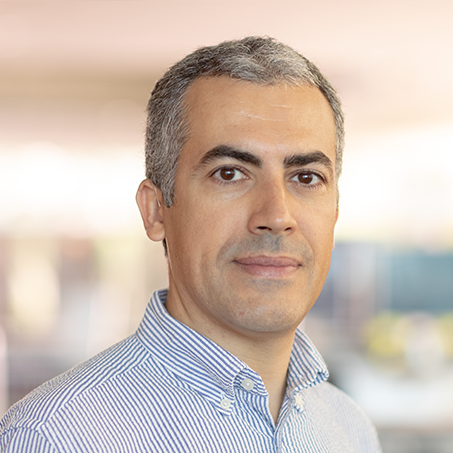
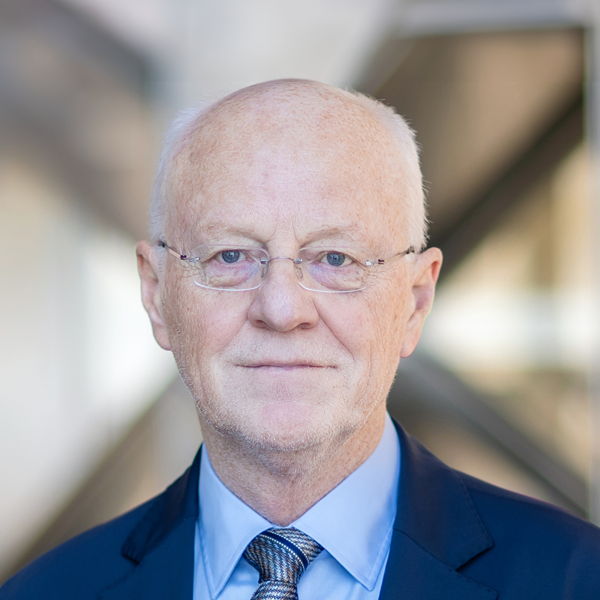
Professor Carlo Liberale leads the Vibrational Imaging Lab at KAUST, where he develops advanced label-free chemical microscopy techniques, focusing on coherent Raman scattering. His group also pioneers the use of two-photon lithography to fabricate miniaturized optical systems.
He has authored over 160 peer-reviewed publications and holds multiple patents. Professor Liberale serves on the editorial boards of Scientific Reports and PhotoniX Life. He is a Senior Member of both the Institute of Electrical and Electronics Engineers (IEEE) and Optica, recognizing his contributions to optics, spectroscopy, and biophotonics.
Notably, Professor Liberale is ranked among the top 2% of scientists worldwide in optics, according to standardized citation indicators developed by Stanford University and Elsevier.
Professor Liberale has devoted his career to advancing the frontiers of optical imaging and photonic microfabrication for biomedical and environmental applications. His research focuses on label-free chemical imaging, particularly through coherent Raman scattering techniques, which enable nondestructive, high-resolution visualization of molecular composition in complex samples. These methods are instrumental in investigating cellular biochemistry and have been applied by his group not only in disease diagnostics but also to assess environmental pollution, such as detecting and characterizing microplastics and microfibers.
His group also pioneers the development of miniaturized photonic systems using high-resolution two-photon lithography. By printing micro-optical elements directly onto optical fiber facets, his team creates compact, multifunctional devices for beam shaping, optical manipulation, and in vivo imaging — extending the reach of photonic technologies to previously inaccessible environments.
Through the synergistic integration of nonlinear optics, microscale engineering, and chemical imaging, Professor Liberale’s research contributes to the development of next-generation optical tools aimed at improving diagnostics, monitoring environmental contaminants, and deepening our understanding of biological and ecological systems.

Ph.D., University of Pavia, Italy, 2004
M.Sc., University of Pavia, Italy, 2000